 53
53  PC
PCWhere to buy

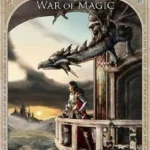
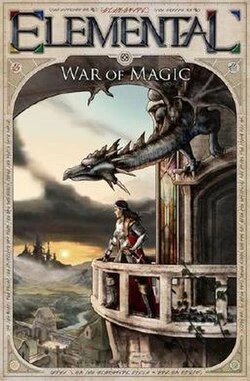
Elemental: War of Magic is a turn-based fantasy grand strategy 4X video game developed and published by Stardock Entertainment. Released on August 24, 2010, for Microsoft Windows, the title is historically remembered as one of the most infamous, ambitious, and fundamentally transformative releases in the history of PC strategy gaming.
Conceived as a spiritual successor to classic fantasy strategy games like Master of Magic, the game attempted a massive genre fusion: seamlessly blending deep empire building with localized tactical turn-based combat, detailed RPG character customization, and hereditary family trees.
While the original 2010 launch suffered a legendary critical and technical meltdown due to severe 32-bit engine limitations and erratic bugs, Stardock’s historic multi-decade commitment to rectifying the franchise eventually culminated in an ultimate redemption arc: the March 17, 2026, release of the definitive unified overhaul, Elemental: Reforged.
Technical Specifications
| Attribute | Details |
| Developer | Stardock Entertainment |
| Publisher | Stardock Entertainment |
| Lead Designer | Brad Wardell |
| Original Engine | Proprietary 32-bit Elemental Engine |
| Modern Engine (2026) | Upgraded 64-bit Multi-threaded 3D Engine |
| Platform | Microsoft Windows (PC) |
| Original Release Date | August 24, 2010 |
| Reforged Release Date | March 17, 2026 |
| Genre(s) | Turn-based strategy, 4X Fantasy Grand Strategy, Tactical RPG |
| Mode | Single-player |
The Shattered World of Anthys: Lore
The narrative context of Elemental is set in the fractured, scarred fantasy world of Anthys. Centuries prior, immortal cosmic beings known as the Titans descended upon the world, draining its natural magic and locking the raw power away into glowing elemental crystal shards buried deep within the earth.
Mortal human sorcerers eventually rose to challenge the Titans, but the resulting magical conflict—known as The Cataclysm—shattered the continents, leveled ancient human civilizations, and wiped out the Titans entirely.
Generations later, players step into the sandbox as a Sovereign, an elite channeler capable of directly tapping into the lingering power of the shards to shape the land. The geopolitical landscape is divided by a fierce ideological conflict over the nature of magic:
- The Kingdoms: Human civilizations utilizing Life Magic to steadily restore, heal, and regrow the broken terrain.
- The Empires: Factions populated by the Fallen—corrupted, Titan-blooded life-forms—who harvest Death Magic to dominate, enslave, and twist the landscape to their absolute will.
The Infamous 2010 Debut & Institutional Fallout
The initial retail launch of Elemental: War of Magic in August 2010 is widely cited as a major cautionary tale in software development. Despite immense structural hype, the launch code was severely broken. The custom 32-bit engine was plagued by immediate desktop crashes, catastrophic memory-leaks, broken pathfinding, and a highly unoptimized user interface.
Rather than abandoning the IP, Stardock CEO Brad Wardell issued a public apology and executed an unprecedented corporate restoration campaign:
“Stardock made a sweeping, long-term vow to its community: anyone who purchased the broken original War of Magic in 2010 was officially promised all subsequent standalone sequels and expansions completely free of charge.”
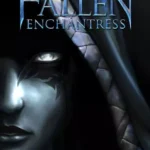
To save the franchise, Stardock hired prominent community modders and industry veterans—including Derek Paxton (acclaimed creator of the Civilization IV: Fall from Heaven mod) and Jon Shafer. This collaborative shift resulted in the development of Elemental: Fallen Enchantress (2012) and the character-driven spin-off Elemental: Sorcerer King (2015), which systematically re-engineered the game’s core combat and performance layers.
Core Mechanical Pillars
Throughout its evolution, the Elemental series defined its 4X footprint through three highly unique, RPG-infused systems:
1. Sovereigns & Hereditary Dynasties
Players do not control a faceless government entity. You custom-design a physical Sovereign character down to their specific traits, starting armor, and specialized magical casting schools.
Sovereigns move across the map as active heroes, venture into dungeons on narrative-driven quests, and contract political marriages. The game tracks a functional hereditary dynasty loop: your children actively inherit physical and magical traits from both parents, growing into your next generation of tactical champions.
2. RPG Custom Unit Blueprinting
The game completely bypasses generic recruitment pools. Instead, players utilize an interactive character designer to build custom troop classes from scratch. You harvest raw world commodities (such as iron, horses, crystal mana, or leather) and manually outfit your squads with customized weapons, boots, shields, and traits. Every unit tracks an individual name, growing in physical scale and veteran combat capabilities with every tactical victory.
3. Magic-Driven Terraforming
Capturing the buried elemental crystal shards grants more than simple resource ticks; it yields the power to physically rewrite the geographic map. Sovereigns cast high-tier strategic world spells to transform scorched wastelands into fertile farming plains, forcefully summon massive mountain ranges to seal off vulnerable border bottlenecks, or choke green valley forests into corrupted, death-aspected Fallen terrain.
The 2026 Resurrection: Elemental: Reforged
Nearly two decades after Stardock’s original vision faltered under 32-bit constraints, the franchise achieved full-circle vindication. Emerging from a surprise Early Access cycle, Stardock officially launched Elemental: Reforged on March 17, 2026.
Elemental: Reforged functions as a massive, standalone “megagame” reconstruction compiled inside a brand-new 64-bit multi-threaded 3D graphics engine.
Priced as a budget-friendly modern release at €22.99 with comprehensive Steam Workshop modding kits out-of-the-box, the 2026 title flawlessly stitches together the core innovations of all three original entries: the dynasty and terraforming rules of War of Magic, the tactical balance and advanced AI parameters of Fallen Enchantress, and the immersive questing and item-crafting systems of Sorcerer King.
The package natively hosts all three historical story-driven campaigns (Prelude, Fallen Enchantress, and Legendary Heroes) running under native DirectX 11 visuals and seamless camera zooming—while newly deployed content drops like May 2026’s Treasures of the Magi DLC ensure the game remains actively supported for modern grand strategy fans.