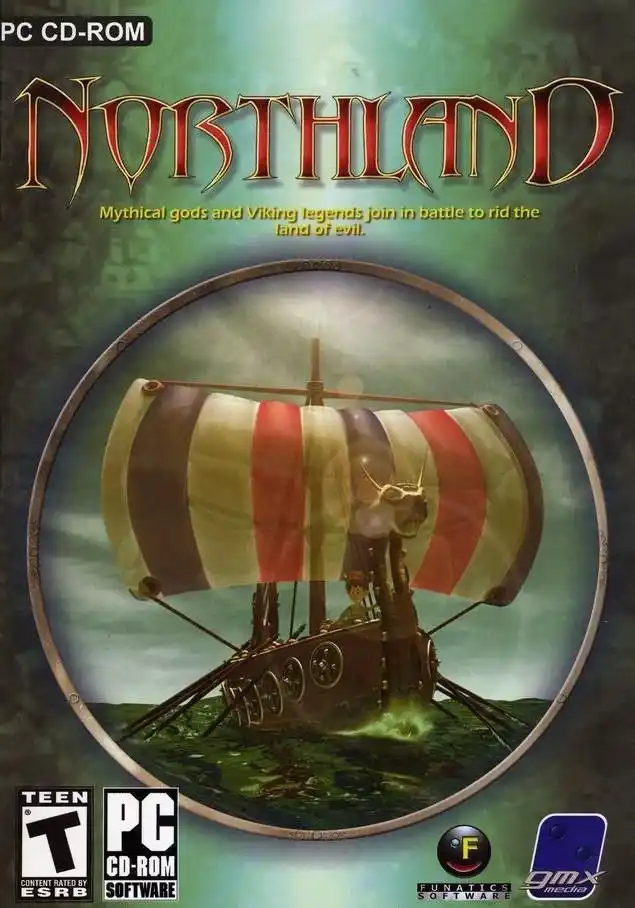
Cultures: Northland
 62
★ /10
62
★ /10
 Android,
  iOS (iPhone/iPad),
  PC
PC


Cultures: Northland (2003) stands as one of the most critical turning points in the history of the legendary real-time strategy and city-building franchise. Following the exhausting market fatigue of traditional military-focused clones and the subsequent structural consolidation of the Cultures lineage after the massive success of The Gates of Asgard, the future of the micro-management economic genre was highly ambitious.
German developer Funatics Software stepped in, boldly expanded their highly detailed simulation framework, and focused development duties on a tightly woven, narrative-driven adventure pacing. Faced with the intense task of building upon a deeply passionate community after the polarizing experiments of contemporary micro-intensive rivals, Funatics delivered a stellar, redemptive chapter that beautifully bridged complex individual citizen logistics with highly choreographed campaign scripting.
The Grand Reset: A Divine Intrigue
Northland completely severed ties with the isolated, unguided sandbox colonization layouts of traditional real-time strategy clones. Instead, it established a completely fresh, mythologically complex lore continuity: The Machinations of Loki.
The world’s mystical landscapes, ancient ruins, and faction alignments are strictly governed by the vengeful plots of the Norse god of lies. Banned from Asgard by Odin as punishment for the chaos caused by the Midgard Serpent, a bitter Loki seeks absolute retribution. The massive 8-mission standalone campaign plays out like an interconnected political thriller, tracking the returning four human heroes from Cultures 2—Bjarni (the Viking), Cyra, Hatschi (the Saracen), and Sigurd (the Frank)—as Loki ruthlessly abuses them with insidious traps and illusions.
Players must lead their clans to vanquish a widespread serpent plague, travel the treacherous depths of the underworld to rescue an abducted Cyra, and assemble a miraculous amulet to stop the demon wolf Fenris from freezing the world’s deities in an eternal winter.
The Core Evolution: Adventure Scripting & Polished Roots
Funatics deliberately looked back at Cultures 2 as their mechanical anchor, retaining the deeply detailed individual citizen simulation where every worker has a name, a family tree, and persistent daily needs. However, they heavily evolved the engine:
- The Leap to Quest-Driven Strategic Maps: The gameplay completely abandoned aimless territorial expansion. Northland was a distinct entry that transformed maps into dynamic adventure stages. Players must balance city building with complex main and side objectives—such as blowing a magic horn, locating hidden underground levers, and solving riddles—intertwining classic puzzle-solving with macro-economic stability.
- The Refined Worker UI and Automation Loops: The micro-management grid received significant ease-of-use upgrades. Funatics implemented highly efficient automated job assignment panels and cleaner tooltips. Rulers can effortlessly manage the complex demographic vectors of their citizens, preventing scrolling fatigue while tracking multiple production chains.
- The Veteran Renown System: Combat and troop deployment became significantly more tactical. Units accumulate individual “Renown” experience points directly in the heat of battle. Watching inexperienced town militia fighters naturally grow into fearless heroes of great renown completely alters defensive layouts when shielding vulnerable worker nodes from hostile creature swarms.
The Deep Meta: The Allied Cultures & Profession Matrix
To maximize settlement asymmetry within its narrative framework, Northland elegantly unifies the distinct regional cultures introduced in the previous games under a singular cooperative banner. Rather than locking players into a single tech layout per match, the campaign forces players to balance overlapping architectural lines:
- The Norse Foundation: Handles deep raw material extraction, heavy timber harvesting, and structural basic village expansion.
- The Frankish Feudal Grid: Dominates advanced blacksmithing and armor fabrication, converting raw ore into elite weaponry.
- The Saracen Elements: Focuses on premium luxury commodities, complex spice routing, and advanced logistical networks to maintain citizen morale.
The Hidden Experience Specialization Matrix
Progression remains governed by a massive, intricately complex web of citizen job-leveling. A citizen cannot merely pick up a sword or construct an advanced bakery out of thin air; they must spend generations gathering experience points across lower-tier professions. To unlock game-breaking endgame metalworking shops or elite military divisions, players have to precisely manage individual careers—as a master craftsman or an elite soldier must trace their lineage back through baseline labor loops, turning citizen cultivation into a precise science of human specialization.
| Base Citizen Class | Primary Profession Path | Alternate Upgrade Path (Campaign Meta) |
| Laborer (Unskilled Worker) | Farmer / Miller / Baker: Establishes the core caloric foundation of the town, ensuring a steady stream of luxury bread. | Clay Digger: Feeds raw bricklaying and pottery lines, essential for high-tier building structural evolution. |
| Woodcutter | Carpenter: Transforms raw timber into advanced housing materials, furniture, and wheel shafts. | Bowyer: Curates fine wood into high-tension ranged armaments to equip village defense lines. |
| Soldier (Militia Recruits) | Swordsman / Spearman: Heavily armored frontline vanguards built to absorb damage and protect worker nodes during Fenris raids. | Archer: Ranged specialist leveraging distance and height modifiers to safely pick off invading serpent plagues. |
The Modern Standard: The Steam and Widescreen Renaissance
While the official standalone lifecycle concluded in the mid-2000s, Cultures: Northland experiences an incredible casual and archival renaissance today. Following its vintage retail run, running the title on modern PCs was a major hurdle due to legacy DirectX rendering pipelines that triggered catastrophic desktop crashes, display stretching, and broken profile saving on contemporary desktop environments.
The modern standard completely reconstructs the engine stability. Natively available via Steam and GOG (published under Daedalic Entertainment or Kalypso Media), contemporary versions feature full Steam Deck Compatibility out-of-the-box. Strategy communities utilize simple open-source wrapper tools (such as dgVoodoo2) and custom widescreen registry edits to bypass legacy 4:3 display limits. This locks the classic game into sharp 1080p, 2K, or 4K configurations, ensuring that the bustling multi-cultural villages and deep demographic simulation vectors operate beautifully on Windows 10 and Windows 11 without requiring any manual code modification.
Release History
- Cultures: Northland (Original PC Launch): August 15, 2003 (Europe) / February 23, 2004 (North America)
- The Steam Digital Re-Release: March 26, 2015 (Published by Daedalic Entertainment)
- Modern Packaging: Natively bundled together as part of the definitive digital package, Cultures: Northland + 8th Wonder of the World, or available via standalone storefronts like GOG and Steam.