Cultures 2: The Gates of Asgard
 72
★ /10
72
★ /10
 PC
PC
 Russobit-m
Where to buy

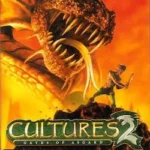
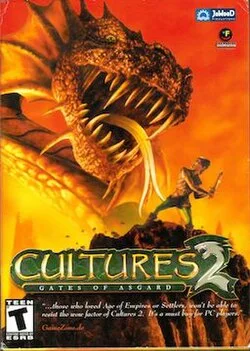
Cultures 2: The Gates of Asgard (2002) stands as one of the most critical turning points in the history of the legendary real-time strategy and city-building franchise. Following the massive international success of Cultures: Discovery of Vinland and the subsequent creative independence of Funatics Software, the future of the micro-management economic genre was highly ambitious.
German developer Funatics stepped in, boldly expanded their detailed simulation framework, and focused development duties on a grand, global narrative scale. Faced with the intense task of scaling up a deeply intimate village builder into an epic world-spanning campaign, Funatics delivered a stellar, redemptive chapter that beautifully bridged complex economic chains with modern role-playing elements.
The Grand Reset: A Brand New Universe
Cultures 2 completely severed ties with the isolated, raw wilderness landscapes of Greenland and Vinland seen in the original game. Instead, it established a completely fresh, global mythological continuity: The Prophecy of Ragnarök.
The game’s geopolitical landscapes, divine architecture, and faction alignments are strictly governed by a terrifying vision seen by the returning protagonist, Bjarni. The massive 24-mission base campaign plays out like an interconnected political thriller, tracking Bjarni as he realizes he cannot save the world alone. He must set sail to recruit four legendary heroes across Europe and the Mediterranean—dragging Frankish knights, Byzantine scholars, and Egyptian priests into a grand struggle to defeat the Midgard Serpent and permanently lock the Gates of Asgard before the world plunges into an eternal twilight.
The Core Evolution: RPG Hero Integration & Polished Roots
Funatics deliberately looked back at their debut title as a mechanical anchor, retaining the deeply detailed individual citizen simulation where every worker has a name, a family, and daily needs. However, they heavily evolved the core engine:
- The Leap to Hero RPG Itemization: The tactical layer introduced full role-playing mechanics for primary heroes and high-tier units. Characters are no longer identical sprites; they feature specialized equipment slots for weapons, heavy armor, magical amulets, and custom shoes, shifting the gameplay into a hybrid experience where raiding dungeons is just as vital as building a bakery.
- The Globalized Trade Network: The economic grid completely abandoned manual, single-item hauling lines. Funatics implemented a highly advanced, automated merchant wagon and ship logistics network. Placing Marketplaces allows players to paint explicit trading pathways across the world map, enabling automated cross-border commerce to keep raw goods flowing seamlessly into your production centers.
- The Dynamic Architectural Evolution: Multi-tiered housing blocks received a major upgrade. The engine introduced an interior refinement system where residential huts dynamically level up and expand their maximum citizen capacity based on the quality of their furniture, access to premium luxury foods (like oil and wine), and localized proximity to decorative fountains and shrines.
The Deep Meta: Global Cultural Alignments & The Profession Tree
To maximize settlement asymmetry within its grand narrative framework, Cultures 2 expanded beyond a single Viking archetype. Every region you navigate introduces completely unique structural blueprints, custom processing buildings, and architectural requirements that dictate your macro-strategy:
- The Vikings (Norse Production): The foundational masters of raw material extraction. They excel at rapid woodcutting, heavy mining, and basic agricultural stabilization, relying on heavy mead production to maintain citizen happiness.
- The Franks (Feudal Architecture): Masters of stone masonry and heavy defensive military warfare. They utilize complex stone quarries and advanced metal-smelting workshops to craft high-tier plate armor and broadswords.
- The Byzantines (Advanced Logistics): Cultural and economic powerhouses emphasizing luxury commodities. They utilize specialized olive groves and textile mills to manufacture fine oil and silk clothing, dominating global trade margins.
- The Egyptians (Desert Irrigation): Advanced hydrological engineers. They bypass barren desert penalties by constructing extensive irrigation networks to farm fertile silt beds, refining gold and premium bricks to build massive monument complexes.
The Hidden Tech-Upkeep Matrix
Progression remained governed by a massive, intricately complex web of citizen job-leveling. A worker cannot become a master armorer or a high-tier siege engineer out of thin air; they must spend generations gathering experience points across lower-tier professions like digging clay or forging basic copper tools. To unlock game-breaking endgame military divisions, players have to precisely balance individual careers while managing civilian upkeep—as high-tier artisans will actively refuse to work if their demands for high-tier foods, footwear, and religious entertainment are neglected by your administration.
The Standalone Successors and Alternate Upgrades
The foundational engine improvements engineered for Cultures 2 proved so robust that Funatics utilized them to launch two highly celebrated standalone expansions: Cultures 3: Northland (2003) and Cultures 4: 8th Wonder of the World (2003).
These standalone updates permanently integrated advanced campaign scripting, randomized puzzle challenges, and comprehensive skirmish systems. More importantly, they finalized Alternate Upgrades for your baseline military and civilian professions via specialized workshop branches, expanding your layout utility. For example:
| Base Profession (Trainee Tier) | Upgrade Path A | Upgrade Path B (Alternate) |
| Laborer (Basic Worker) | Farmer: Specializes in open-field crop cultivation, resource transport, and grain milling. | Clay Digger: Extracts raw materials from pit beds to feed pottery and heavy bricklaying lines. |
| Scout (Exploration Tier) | Merchant: Commands automated cargo wagons and merchant ships to establish cross-border trade loops. | Diplomat: Sent directly to rival faction keeps to negotiate non-aggression pacts and trade tariffs. |
| Soldier (Militia Tier) | Swordsman: Heavily armored frontline melee vanguard built to absorb damage and execute siege breaches. | Archer: Lightly armored ranged specialist utilizing high-tension longbows to defend town walls. |
The Modern Standard: The 2026 Digital Legacy Meta
While the official physical retail lifecycle concluded in the mid-2000s under JoWooD Productions, Cultures 2 experiences an incredible casual and archival renaissance today. Following its vintage launch, running the original game on modern operating systems was a major hurdle due to its reliance on legacy DirectX 8 rendering, which triggered catastrophic display stretching, desktop crashes, and broken profile saving.
The modern standard completely reconstructs the engine stability. Natively available on GOG (frequently packaged alongside its predecessor as the definitive Cultures 1+2 compilation or sold via the Cultures 3+4 standalone expansions pack), contemporary players utilize open-source graphical wrappers like dgVoodoo2 alongside simple widescreen configuration edits. This locks the classic game into flawlessly sharp, high-definition 1080p, 2K, or 4K layouts out-of-the-box, ensuring that the sprawling multi-cultural settlements, complex trading lines, and deep genealogical simulation vectors operate beautifully on Windows 10 and Windows 11.
Release History
- Cultures 2: The Gates of Asgard (Base Game Launch): July 12, 2002 (Europe) / 2003 (North America)
- Cultures: Northland (Standalone Expansion / Cultures 3): 2003
- Cultures: 8th Wonder of the World (Standalone Expansion / Cultures 4): 2003
- Modern Packaging: Natively bundled together as a pristine digital collection, available globally on storefronts like GOG, serving as a definitive monument to the absolute golden age of detailed real-time strategy and city-building hybrids.