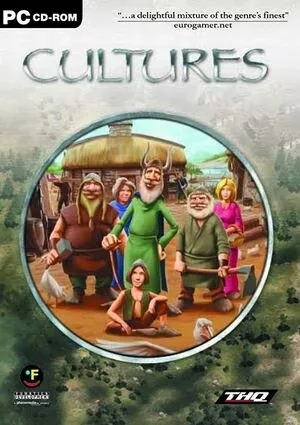
Cultures: Discovery of Vinland
 62
★ /10
62
★ /10
 Android,
  iOS (iPhone/iPad),
  PC
PC
 THQ
THQ
Where to buy

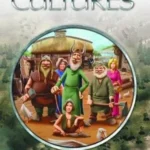
Cultures: Discovery of Vinland (2000) stands as one of the most critical turning points in the history of the legendary real-time strategy and city-building franchise. Following the exhausting market fatigue of traditional military-focused clones and the subsequent structural division of The Settlers lineage after the departure of core designers from Blue Byte, the future of the peaceful, production-heavy sub-genre was highly uncertain.
German indie developer Funatics Software—formed by elite ex-Blue Byte veterans—stepped in, boldly re-engineered the resource management rules, and focused development duties on a deeply personal, simulation-heavy tactical pacing. Faced with the intense task of creating a completely fresh community after the highly polarizing experiments of contemporary micro-intensive rivals, Funatics delivered a stellar, redemptive chapter that bridged classic economic logistics with an unprecedented genealogical simulation leap.
The Grand Reset: A Brand New Universe
Cultures completely severed ties with the traditional fantasy or rigid historical battlefields of early RTS clones. Instead, it established a completely fresh, tightly constructed mythological-historical continuity: The Discovery of Vinland.
The game’s geopolitical landscapes, environmental logistics, and territorial progression are strictly governed by the saga of Bjarni, a young Viking hunter on the coast of Greenland. The massive multi-chapter campaign plays out like an interconnected political thriller, tracking a small Viking clan as a strange meteor crash disrupts their homeland, sparking a global journey of discovery that drags Norsemen, native Skraelings (Native Americans), and dangerous environments into a grand struggle to recover the scattered magical shards of the cosmic stone to prevent a localized collapse.
The Core Evolution: Demographic Simulation & Polished Roots
Funatics deliberately looked back at The Settlers II as their mechanical anchor, discarding anonymous, automated worker units and instant building queues. However, they heavily evolved the engine:
- The Leap to Individual Agency: Running on a beautifully detailed 2D isometric graphics engine, Cultures was the first entry to ditch faceless drone workforces. Every single citizen moving across your real-time map is a fully realized person with a unique name, an interactive family tree, a dedicated home, and a persistent set of shifting psychological desires—completely reshaping the genre around localized human scaling.
- The Dynamic Marriage and Heredity Engine: The population loop completely abandoned automated town-hall spawning. Funatics implemented a strict domestic reproduction timeline. To grow your labor force, players must manually marry off single males and females, construct private residential huts, and issue direct commands to produce children—even allowing you to explicitly select the baby’s gender to perfectly balance future workforce ratios.
- The Comprehensive Needs Matrix: The economic grid completely threw out unpunished, endless 24-hour labor lines. Individual Vikings do not work indefinitely; their efficiency is tightly bound to a complex cycle of personal needs. Workers must routinely stop their shifts to walk home, eat baked bread or roasted meat, sleep in their own beds, socialize with fellow villagers, and pray at local shrines, creating a massive layer of micro-logistics and spatial planning.
The Deep Meta: Job Leveling & The Profession Tree
To maximize settlement asymmetry within its macro-framework, Cultures completely threw out instant worker recruitment. Every single citizen begins as an unskilled laborer, requiring a mandatory, entirely progressive job-evolution structure that dictates their role:
- The Farmer/Miller/Baker Pipeline: The baseline engine of village health. Workers must build experience clearing grain fields before they earn the skill cap to manage flour mills, which in turn unlocks high-tier bakery output.
- The Clay/Bricklayer Matrix: Civil engineering requires historical progression. A Viking must spend years digging raw clay blocks from pits to unlock the advanced architectural insight required to construct stone foundations and modern brick structures.
- The Hunter/Shoemaker Grid: Domestic comfort and health rely on resource refinement. Wild animals are hunted for meat and raw hides, which are then funneled directly to an artisan’s hut to forge protective shoes, preventing severe worker slowdowns.
The Hidden Experience Tree
Progression was governed by a massive, intricately complex web of technological escalation. The entire city’s architectural blueprints are hardcoded to the collective experience of your workforce. To unlock game-breaking endgame metalworking shops or massive military armories, players had to precisely manage individual careers—as a blacksmith could not forge iron swords until he had accumulated massive experience points processing copper ore, turning citizen cultivation into a precise science of human specialization.
The Standalone Sequels and Alternate Upgrades
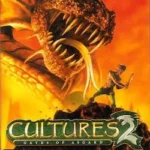
1. Cultures 2: The Gates of Asgard (2002)
The first major sequel expanded the thematic canvas globally, dragging Bjarni and his clan across Europe, the silk routes of the Middle East, and the ancient temples of Egypt to fight against the Midgard Serpent. It introduced fully upgradeable multi-tier housing blocks and advanced hero equipment systems.
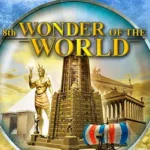
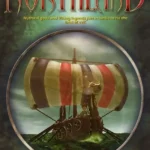
2. Northland & 8th Wonder of the World (2002–2003)
The final standalone iterations heavily refined the trading micro-meta, introducing automated merchant wagon routes and deep multiplayer lobbies. More importantly, they finalized Alternate Upgrades for your baseline civilian and military professions via advanced specialized workshop branches, expanding your layout utility. For example:
| Base Profession (Trainee Tier) | Upgrade Path A | Upgrade Path B (Alternate) |
| Laborer (Unskilled Citizen) | Farmer: Specializes in open-field crop cultivation, resource transport, and grain production. | Clay Digger: Extracts raw materials from pit beds to feed high-tier pottery and bricklaying lines. |
| Woodcutter (Basic Resource Tier) | Carpenter: Matures raw wood into structural housing lumber and specialized wheel shafts. | Bowyer: Refines fine timber into high-tension longbows to supply your military militia units. |
| Miner (Subterranean Worker) | Blacksmith: Forges advanced iron tools to permanently double worker extraction and tool speeds. | Armorer: Smelts copper and iron into plated breastplates and heavy shields for combat lines. |
The Modern Standard: The GOG and Widescreen Meta
While the official retail lifecycle concluded in the mid-2000s under THQ and JoWooD, Cultures experiences an incredible casual and archival renaissance today through modern digital distribution. Following its launch, the game’s long-term playability was heavily crippled by its vintage DirectX 7 rendering pipeline, which triggered catastrophic graphical glitches, memory exceptions, and display stretching on contemporary desktop environments.
The modern digital community completely reconstructed the engine stability. Natively available via GOG as a unified Cultures 1+2 or Cultures 8th Wonder compilation pack, contemporary players utilize simple open-source wrapper tools (such as dgVoodoo2) and custom widescreen registry edits to bypass legacy 4:3 display scaling. This locks the classic game into flawlessly sharp, ultra-high-definition 1080p, 2K, or 4K configurations out-of-the-box, ensuring that the bustling Viking villages and deep demographic simulation vectors operate beautifully on Windows 10 and Windows 11 without requiring any manual code modification.
Release History
- Cultures: Discovery of Vinland (Base Game Launch): September 1, 2000 (Europe) / July 31, 2001 (North America)
- Cultures 2: The Gates of Asgard: August 26, 2002
- Cultures: Northland & 8th Wonder: 2002 – 2003
- Modern Packaging: Natively bundled together as a definitive digital package, Cultures 1+2, available on storefronts like GOG, serving as a pristine historical monument to the absolute golden age of demographic real-time strategy and city-building games.