 PC
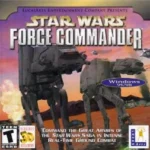
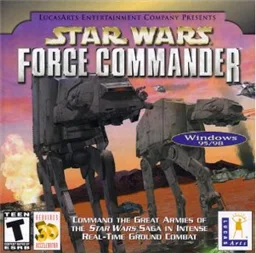
PCStar Wars: Force Commander is a 2000 real-time strategy (RTS) game co-developed by Ronin Entertainment and LucasArts. Releasing right at the turn of the millennium, it holds a very specific, slightly infamous place in gaming history: it was the very first Star Wars strategy game to be rendered entirely in 3D.
While later games like Star Wars: Galactic Battlegrounds and the legendary Star Wars: Empire at War would go on to perfect the formula, Force Commander was a highly ambitious, experimental, and incredibly clunky first step into three-dimensional ground warfare in a galaxy far, far away.
Gameplay and Mechanical Departures
Force Commander completely eschewed the traditional RTS formula of the 90s. There were no peasant units chopping wood or futuristic harvesters mining spice. Instead, the game attempted to simulate actual military logistics.
Key gameplay mechanics included:
- Command Points (CP): Instead of harvesting raw materials, players earned “Command Points” by completing objectives, destroying enemy units, and capturing neutral command bunkers scattered across the map.
- Orbital Drops: You did not build physical factories that magically spawned tanks. You spent your Command Points to requisition units from an orbiting fleet. Massive dropships and shuttles would then fly down to your secured landing zones to physically deliver your AT-ATs, Stormtroopers, and Speeder Bikes to the battlefield.
- The Command Cap Penalty: The game penalized hoarding. If you built a massive, overwhelming army, you would suffer a penalty to your CP generation, preventing you from steamrolling the AI too easily.
- True 3D (and a Terrible Camera): The game featured fully 3D terrain and models, allowing players to rotate, zoom, and pan across the battlefield. However, the camera controls were notoriously complicated and required memorizing a massive list of hotkeys just to keep the action in view.
The Narrative
Despite its mechanical flaws, Force Commander featured one of the most engaging, lore-heavy campaigns of the era. The plot seamlessly interweaves with the events of the original movie trilogy (Episodes IV through VI).
You play as Brenn Tantor, a young, idealistic officer in the Imperial Navy. You begin your career as a lowly Sandtrooper on Tatooine, tasked with tracking down the missing escape pod carrying C-3PO and R2-D2. As you rise through the ranks, you take command of massive Imperial walkers during the assault on Echo Base at the Battle of Hoth.
However, the game features a massive mid-campaign twist. Brenn discovers that the Empire assassinated his father and imprisoned his brother, Dellis. Disillusioned, Brenn defects to the Rebel Alliance. For the second half of the game, you fight against your former Imperial commanders, participating in the Battle of Endor and culminating in a massive siege on the Imperial Palace on Coruscant.
Audio and the “Leviathan Mix”
If there is one thing Force Commander is universally praised for, it is the soundtrack. LucasArts brought in legendary composer Peter McConnell to completely remix John Williams’ iconic, sweeping orchestral scores.
The result was an incredibly aggressive, high-energy soundtrack filled with heavy metal guitar riffs and late-90s techno beats. The absolute standout track is the “Imperial March (Leviathan Mix),” a heavy, thumping, industrial rendition of Darth Vader’s theme that remains a cult-favorite piece of Star Wars media to this day.
Development and Legacy
Released in March 2000, Force Commander received mixed-to-poor reviews. The development was famously troubled; it was originally designed as a 2D sprite-based game, but after seeing it at E3 1998, LucasArts scrapped it entirely to chase the booming 3D trend, licensing an engine from Ronin Entertainment.
Because of this pivot, the final 3D models were highly blocky, the unit pathfinding was dreadful, and the camera was universally loathed. Critics felt it was a great Star Wars story trapped inside a deeply frustrating strategy game.
Today, Star Wars: Force Commander is pure abandonware. Because of its outdated engine and the dissolution of LucasArts as a development studio, the game has never been digitally re-released on modern storefronts like Steam or GOG. It survives purely in the memories of nostalgic fans and retro collectors who keep the 2000 CD-ROMs alive on modern systems via community patches.
Key Features:
- The Imperial Perspective — Start your career as a loyal Imperial officer, commanding AT-ATs and Stormtroopers before defecting to the Rebel Alliance.
- Orbital Requisitions — Abandon traditional resource gathering in favor of earning Command Points to call in massive dropships filled with reinforcements.
- Movie Intersections — Participate directly in iconic movie moments, including the search for the droids on Tatooine and the massive ground assaults on Hoth and Endor.
- A Legendary Soundtrack — Wage war to the beat of heavy metal and techno remixes of classic John Williams themes.
- The First 3D Step — Experience the clunky, highly ambitious game that paved the way for future Star Wars strategy masterpieces like Empire at War.
Release Platforms:
- Microsoft Windows (PC) — March 21, 2000
- (Currently abandonware; never digitally re-released on modern storefronts).