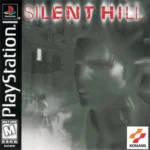
Silent Hill
 86
★ /10
86
★ /10
 PS 1
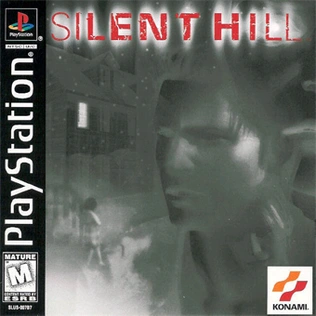
PS 1Silent Hill is a 1999 survival horror game developed by Team Silent (a newly formed, misfit group of developers within Konami Computer Entertainment Tokyo) and published by Konami. Released exclusively for the PlayStation, it is the foundational pillar of the franchise and an industry-shifting pioneer that successfully pivoted the survival horror genre away from action-heavy B-movie zombies and into the realm of suffocating, psychological dread.
Core Concept and Story
The narrative leans heavily into occult themes, taking significant inspiration from the works of Stephen King and David Lynch.
You play as Harry Mason, an ordinary, grieving widower who takes his young adopted daughter, Cheryl, on a vacation to the quiet lakeside resort town of Silent Hill. While driving on the outskirts of town at night, Harry swerves to avoid a mysterious girl stepping into the road and crashes his jeep.
When he regains consciousness, Cheryl is completely gone. He wanders into the town only to find it entirely abandoned, shrouded in an unnaturally thick fog, and experiencing an out-of-season snowfall. As Harry desperately searches for his daughter, he is dragged into a dark, esoteric conspiracy involving a fanatical local religious cult (The Order), a potent hallucinogenic drug, and a dark ritual meant to birth a terrifying deity.
Gameplay and Features
While it shared the basic mechanical framework of Capcom’s Resident Evil (tank controls and fixed camera angles), Silent Hill introduced several brilliant, genre-defining innovations:
- Weaponizing Hardware Limitations: The original PlayStation hardware simply wasn’t powerful enough to render the massive, fully 3D open town of Silent Hill all at once without suffering from terrible “pop-in.” Team Silent brilliantly solved this by blanketing the town in an oppressive, volumetric fog and absolute darkness. This technical workaround became the game’s greatest artistic asset, creating intense claustrophobia and fear of the unknown.
- The Radio and the Flashlight: To navigate the blindness of the fog and dark corridors, Harry is equipped with a pocket flashlight that only illuminates a few feet ahead of him. More importantly, he finds a broken pocket radio that emits a terrifying, screeching burst of static whenever a grotesque monster is nearby, forcing players to rely heavily on audio cues to survive.
- The “Everyman” Protagonist: Unlike the highly trained S.T.A.R.S. police officers of Resident Evil, Harry Mason is just a regular author. He runs out of breath easily, he is clumsy, and his aim with a firearm is notoriously shaky. This intentionally clunky combat design makes every encounter with demonic dogs or winged creatures feel genuinely desperate and dangerous.
- The Otherworld: The game pioneered the concept of the town shifting into a nightmarish alternate dimension. At crucial narrative moments, the foggy town violently transitions into the “Otherworld”—a pitch-black, rusted, blood-soaked industrial nightmare filled with chain-link fences, grating, and grinding mechanical noises.
Reception and Legacy
Upon its release, Silent Hill was a massive critical and commercial success, instantly cementing itself as a titan of the survival horror genre.
Reviewers praised the game for relying on atmosphere, disturbing imagery, and psychological tension rather than cheap jump scares. The game was also lauded for its fully 3D environments (which allowed the camera to dramatically swoop and pan in real-time, unlike the pre-rendered 2D backgrounds of its competitors). Furthermore, legendary composer Akira Yamaoka created a deeply unsettling, harsh, and industrial soundtrack that sounded entirely unlike anything else in gaming at the time.
Quick Note
Silent Hill is the brilliant, terrifying genesis of the psychological horror genre.
In short: It took the technical limitations of the PS1 hardware and spun them into a masterclass of atmospheric tension. While the blocky 1999 polygons and tank controls have aged, its deeply unsettling occult narrative, iconic radio static, and transition into the rusted Otherworld remain some of the most memorable and influential achievements in horror gaming.
Silent Hill news
More news
Konami Eyes Second and Third Waves of Silent Hill Games

Roy Lee Reportedly Developing a New Silent Hill Movie

Konami Targets Annual Silent Hill Releases, Teases Surprises