Sengoku
 70
★ /10
70
★ /10
 PC
PC

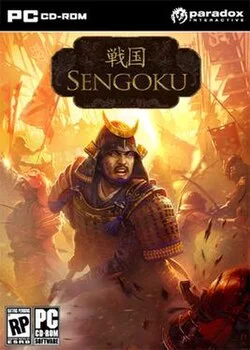
Sengoku (2011) occupies a highly specialized, fascinating, and deeply transitional meta-space in the history of grand strategy. Released in North America on September 13, 2011 (and in Europe on September 16, 2011) on the 3D Clausewitz Engine, this title was famously overshadowed by its massive historical competitor, Creative Assembly’s Total War: Shogun 2, which launched the exact same year.
However, within Paradox’s internal history, Sengoku serves a legendary purpose: it was the literal, live-fire mechanical dress rehearsal and technical prototype for Crusader Kings II. Released just five months before CK2 exploded into a global phenomenon, Sengoku was the title Paradox used to test character-driven diplomacy, dynamic familial successions, and internal vassal betrayal matrices within a fully realized 3D map space.
The Historical Backdrop: The Ōnin War (1467)
Unlike typical Paradox titles that offer modular, century-spanning starting bookmarks, Sengoku is laser-focused on a single, hyper-specific catalyst in time.
The campaign initializes explicitly on May 26, 1467—the historical outbreak of the devastating Ōnin War. The Ashikaga Shogunate has collapsed into absolute geopolitical irrelevance, creating a massive power vacuum that plunges the islands into the brutal, century-long Sengoku Jidai (The Age of the Warring States).
The Feudal Hierarchy Matrix
The gameplay operates strictly through a character-centric model where your real-world adversary isn’t just external borders, but the internal ambitions of your own family and retainers. Power is divided across a strict historical territorial hierarchy:
| Feudal Tier Title | Territorial Jurisdiction | Geopolitical & Mechanical Reality |
| Kokujin | Kori (Individual Castle/District) | The baseline landholding layer. A Kokujin extracts local rice taxes and army levies directly from their castle town. |
| Daimyo | Kuni (Historical Province) | Achieved when a lord or their immediate vassals successfully conquer and consolidate every individual Kori inside a historical provincial boundary. |
| Clan Leader | The Mon (The Unified Family House) | The absolute master of a major noble house. Clan leaders direct high-tier external diplomacy, declare macro-faction wars, and distribute conquered titles to keep internal vassals pacified. |
Key Mechanical Masterstrokes
1. The Economy of Honor
The most defining and restrictive currency in Sengoku is not gold, but Honor. Every major diplomatic or underhanded maneuver is deeply bound to an explicit honor transaction cost.
- Declaring a war without a valid justification, revoking a vassal’s rightful ancestral title, or executing captured prisoners severely drains your ruler’s personal Honor pools.
- The Consequences of Dishonor: Allowing your Honor to drop below baseline thresholds causes your vassals’ opinion scores to crater. Your retainers will openly refuse to march their personal levies to support your armies, drop out of active wartime alliances, and coordinate internal civil wars to forcefully depose your ruler.
2. Underground Ninja Clans
When traditional samurai armies face a bloody stalemate on the battlefield, players can look to the shadows by utilizing the game’s Ninja Clan interaction system.
By dispatching your Master of the Guard to map coordinates, you can locate and contract prominent historical shadow factions like the Iga or Koga ninjas. Paying these clans massive gold subsidies unlocks active plot options: allowing you to execute high-stakes assassinations against rival clan heirs, sabotage castle defenses right before an assault, or forcefully break out family members held captive in foreign courts.
3. Hostage Diplomacy
To forge a binding, long-term peace treaty with a rival clan, the engine requires a physical guarantee through Hostage Exchanges.
When signing a peace treaty, you can demand or offer immediate family members (such as your primary heir or spouse) to spend years living inside an opponent’s court. If a clan attempts to backstab you by declaring a surprise war while you hold their child hostage, you are given an immediate, brutal choice: execute the hostage to permanently shatter the enemy clan’s national stability, at the absolute cost of incurring a massive penalty to your own global Honor rating.
The 36-Month Shogunate Victory Condition
Unlike other endless Paradox sandboxes that march continuously until a hard stop in the 1800s, Sengoku features a definitive, cutthroat endgame victory condition.
To win the campaign, a single Clan Leader must systematically conquer, absorb, or vassalize enough territory to physically control at least 35% of the total landmass of Japan. The moment your house crosses this threshold, you can officially claim the divine title of Shogun.
However, claiming the title triggers an immediate global crisis: every single surviving clan on the map will instantly form a total alliance to crush your empire. To achieve a final Victory Screen, you must successfully defend your title and maintain absolute dominance over the island for 36 consecutive months (3 years) without falling below the 35% margin.
Modern 2026 Retro Status
Because Paradox transitioned almost all of its development resources directly onto Crusader Kings II immediately following Sengoku‘s launch, the title never received the massive, multi-year post-launch DLC expansion treatment that defines modern Paradox games. It sits completely finished on Patch 1.4.
The title is fully preserved and legally available on PC via Steam. It serves as a fascinating, highly focused digital time capsule—offering a tight, incredibly fast-running grand strategy experience that runs flawlessly out-of-the-box on modern Windows 10 and Windows 11 architectures.