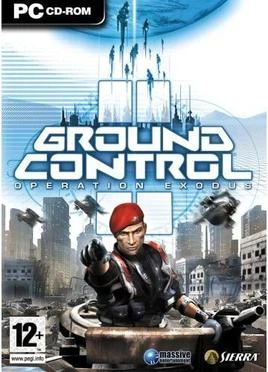
Ground Control 2: Operation Exodus
 80
★ /10
80
★ /10
 PC
PC
 Sierra,
  Softclub


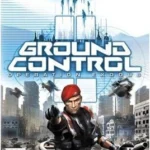
Ground Control II: Operation Exodus is a 2004 real-time tactics (RTT) game developed by the Swedish studio Massive Entertainment and published by Vivendi Universal Games (under the Sierra brand). Serving as the direct sequel to the groundbreaking 2000 original, it retained the franchise’s signature focus on pure combat over base-building, but introduced massive, fundamental shifts to the core gameplay loop that would directly lay the foundation for the studio’s future masterpiece, World in Conflict.
The narrative jumps forward roughly 300 years after the events of the first game, setting the stage in the year 2741. The galaxy has been largely conquered by the brutal, authoritarian Terran Empire. The story follows Captain Jacob Angelus, an officer in the Northern Star Alliance (NSA)—a desperate, retreating coalition of independent colonies fighting a losing war against the Empire on the planet Morningstar Prime. To turn the tide of the war, Angelus must seek an alliance with the Viron Nomads, a highly advanced, mysterious alien race with their own vendetta against the Empire.
Gameplay
While the original Ground Control forced players to rely purely on the units they brought into the mission at the very beginning, Ground Control II completely overhauled this system to allow for faster, more dynamic mid-game reinforcements.
Key gameplay mechanics include:
- Acquisition Points (AP): There is no traditional resource harvesting. Instead, players earn Acquisition Points by capturing and holding designated Command Points and Victory Zones scattered across the map. These points constantly tick into the player’s pool and are used to purchase new units.
- Landing Zones (LZs): Once purchased, reinforcements do not magically appear. Players must capture and secure Landing Zones. Dropships will fly into the atmosphere, land at these specific LZs, and deploy the fresh troops. If an enemy controls the anti-air space around an LZ, your dropship can be shot down.
- Secondary Fire Modes: Every single unit in the game features an alternate firing mode or secondary ability that drastically alters their tactical utility. For example, standard infantry can switch from assault rifles to anti-tank rockets, and APCs can deploy into stationary machine-gun bunkers.
- The Viron Nomads: The game features two fully playable factions in multiplayer and the campaign (the NSA and the Virons). The Virons possess a totally unique mechanic called “Melding.” You can take two basic Viron units and permanently fuse them together on the battlefield to create a completely different, heavier unit (e.g., merging two light infantry units into a heavy mortar beast).
- Garrisoning and Terrain: Building upon the 3D terrain mechanics of the first game, Ground Control II allowed infantry to enter buildings and bunkers for the first time. The true 3D camera remained, heavily emphasizing high-ground advantage and line-of-sight blocking.
Development and Legacy
Released in June 2004, Ground Control II utilized a brand-new, highly upgraded version of Massive Entertainment’s proprietary engine. At the time of its release, it was widely praised as one of the most visually stunning strategy games ever made, featuring incredibly detailed unit models, gorgeous water reflections, and spectacular weapon effects.
However, the game’s reception among the hardcore fanbase of the original Ground Control was somewhat divided. While critics praised the faster pace and the dynamic reinforcement system, some purists felt that allowing players to constantly call in dropships removed the brutal, unforgiving, and highly tactical puzzle-like nature of the first game’s “one life only” squad mechanics.
Despite the minor controversy among purists, Ground Control II was a critical success and a vital stepping stone in the real-time tactics genre. The mechanics pioneered here—specifically the combination of capture points, continuous AP generation, and mid-battle dropship reinforcements—were directly refined and perfected three years later when Massive Entertainment released World in Conflict.
Key Features:
- Dynamic Reinforcements — Capture Landing Zones and use Acquisition Points to call in orbital dropships, allowing you to adapt your army composition on the fly.
- Two Distinct Factions — Command the traditional, mechanized human military of the NSA, or master the biological, unit-melding mechanics of the alien Viron Nomads.
- Dual-Function Units — Utilize secondary firing modes and abilities for every unit to counter changing battlefield threats.
- Cinematic 3D Battles — Experience massive, visually spectacular skirmishes utilizing a fully unlocked, highly rotatable 3D camera.
- Urban Warfare — Order your infantry to garrison inside structures to create deadly, entrenched chokepoints.
Release Platforms:
- Microsoft Windows (PC) — June 23, 2004
- (Currently available, often bundled with the original game, via digital storefronts like GOG.com and Steam)