Earth 2140
 Amiga
Amiga PC
PC Reality Pump Studios
 Interplay Entertainment,
  TopWare Interactive


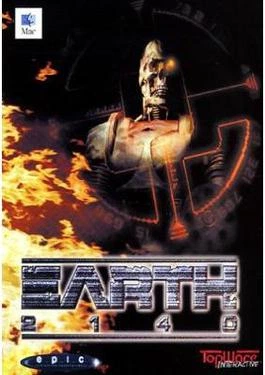
Earth 2140 is a 1997 real-time strategy (RTS) game developed by Reality Pump Studios and published by TopWare Interactive (with Interplay handling the North American release). Arriving at the height of the 2D RTS craze, it was designed as a direct competitor to the Command & Conquer series, offering a grittier, high-resolution alternative that prioritized tactical depth and a bleak, post-apocalyptic atmosphere.
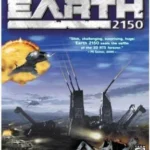
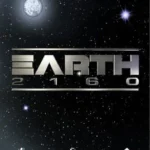
By 1997, the RTS market was becoming crowded, but Earth 2140 distinguished itself with a visual fidelity that surpassed many of its peers. It was one of the first games in the genre to support 800×600 resolution, featuring highly detailed, pre-rendered sprites and fluid animations for turrets and mechanical legs. It served as the foundation for what would become the acclaimed Earth trilogy, followed later by the fully 3D Earth 2150 and Earth 2160.
The narrative premise is set in the mid-22nd century, following a global nuclear holocaust in 2048 that forced the remnants of humanity into sprawling underground cities. As the surface becomes habitable once more, the world’s two remaining superpowers emerge to fight a final, desperate war for the planet’s dwindling natural resources.
Quick Info
- Developer: Reality Pump Studios
- Publisher: TopWare Interactive / Interplay
- Release Date: November 1997
- Engine: 2D Isometric (Proprietary)
- Genre: Real-Time Strategy
Gameplay
Earth 2140 follows the classic “base-building and unit-spam” formula but introduces several unique mechanics that added layers of tactical complexity not found in C&C or Warcraft.
Key gameplay mechanics and features include:
- The Virtual General: Perhaps the game’s most innovative feature, the “General” mode allowed players to assign groups of units to an AI assistant. Once handed over, the computer would autonomously manage their formations, scouting, and combat behavior, theoretically freeing the player to focus on high-level base management.
- Disabled Vehicle Reprogramming: Combat in Earth 2140 wasn’t always a fight to the death. Certain weapons, like the ED’s ion cannons, could disable enemy mechs without destroying them. Players could then send in a specialized Repair Vehicle to “reprogram” the unit, permanently adding it to their own army.
- Complex Economy: Resource gathering involved mining raw ore from deposits on the map. Specialized vehicles (like the UCS BANTHA) had to physically transport the ore back to a Refinery. Disrupting these vulnerable supply lines was a primary path to victory.
- Mobile Construction: Buildings weren’t constructed from a menu; they were deployed by specialized Construction Vehicles on suitable terrain. This required players to escort their “base-in-a-box” to strategic locations while protecting them from air raids.
The Factions
The game features two completely asymmetrical factions, each reflecting a different ideology and technological path:
- United Civilized States (UCS): Controls the Americas, Western Europe, and North Africa. A decadent society where nearly all work and warfare is automated. Their military is composed entirely of mechanized walkers (mechs) and robot infantry. Units like the “Tiger” and “Jaguar” mechs provide high mobility and high-tech firepower, but they are expensive to produce.
- Eurasian Dynasty (ED): Controls Eastern Europe and Asia. An autocratic monarchy that relies on industrial grit over high-tech automation. Their arsenal consists of traditional tanks, heavy artillery, and armed helicopters. While less advanced than the UCS, the ED relies on brute force, numbers, and the conversion of their own citizens into lethal cyborg soldiers.
Development and Legacy
One of the most striking aspects of Earth 2140 was its cinematic presentation. The mission briefings utilized a cold, “cyber-military” aesthetic with high-quality rendered FMV sequences. The soundtrack, composed by Joachim Schäfer, blended atmospheric industrial tones with driving techno beats that perfectly suited the metallic, grinding nature of the combat.
While it was highly successful in Europe, it struggled to find a massive audience in the U.S., largely due to the overwhelming dominance of StarCraft and Age of Empires which launched around the same time. However, it is remembered as a “cult classic” that paved the way for its 3D sequels, which would go on to introduce revolutionary concepts like modular unit design and a fully dynamic day/night cycle.
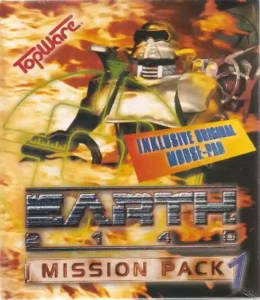
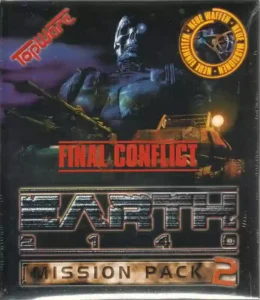
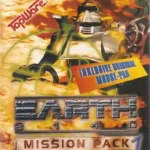
As of May 2026, the game is readily available on Steam and GOG as part of the Earth 2140 HD or Earth 2140 Trilogy packs. These modern versions include the two official expansions, Mission Pack 1 and Mission Pack 2: Final Conflict, totaling over 120 missions. The HD re-release also ensures compatibility with Windows 10 and 11, supporting higher resolutions and widescreen monitors while keeping the original 1997 gameplay intact.
Key Features:
- The Virtual General — Delegate unit management to an AI assistant, allowing for automated defense and exploration.
- High-Resolution 2D Visuals — One of the best-looking RTS games of the 90s, featuring detailed industrial landscapes and smooth mech animations.
- Reprogramming Mechanics — Disable enemy units with ion technology and capture them to swell your own ranks.
- 120+ Missions — A massive amount of content across two main campaigns and two expansion packs.
- Asymmetrical Technology — Master the high-tech robotic legions of the UCS or the heavy industrial tank columns of the ED.
Release Platforms:
- Microsoft Windows / MS-DOS (PC) — November 1997.
- Amiga / Macintosh — 2001 (Ported later by Runesoft).
- Steam / GOG — Currently available as the “HD” version with full expansion support.