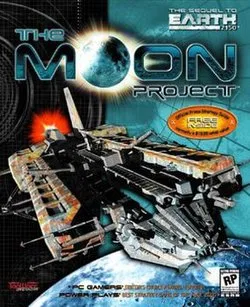
Earth 2150: The Moon Project
Expansion of Earth 2150: Escape from the Blue Planet PC
PC
 Reality Pump Studios
 1C Company,
  TopWare Interactive


Earth 2150: The Moon Project is a 2000 real-time strategy (RTS) game developed by Reality Pump Studios and published by TopWare Interactive. Released just six months after the original Escape from the Blue Planet, it serves as a massive standalone expansion that runs parallel to the events of the first game. It is widely considered by the community to be the “more refined” version of the Earth 2150 experience, featuring polished AI, a more robust research system, and a shift in focus toward a second front: the lunar surface.
By the turn of the millennium, Reality Pump had established itself as a leader in 3D strategy technology. The Moon Project utilized the same advanced engine that allowed for real-time terrain deformation, dynamic lighting, and weather effects, but it moved the conflict from the scorched, dying continents of Earth to the cold, cratered plains of the Moon.
The narrative premise occurs during the final months of Earth’s existence. While the three superpowers fight over the last remaining resources to build their evacuation fleets, the Eurasian Dynasty (ED) discovers that the Lunar Corporation (LC) is working on a top-secret weapon system on the Moon called the “Sunlight” project. Fearing this orbital weapon could be used to sabotage their own escape efforts, the ED launches a daring invasion of the lunar surface, sparking a high-stakes secret war while the world below literally burns.
Gameplay: The Lunar Front
Earth 2150: The Moon Project maintains the core “Project Exodus” logistics of the original but introduces several refinements that deepened the tactical layer.
Key gameplay mechanics and improvements include:
- Parallel Resource Management: Like the first game, you manage a “Main Base” where resources are stockpiled for the evacuation. However, The Moon Project features entirely new campaigns with a steeper difficulty curve, designed for players who had already mastered the mechanics of the original.
- The “Sunlight” Superweapon: The namesake of the LC’s project, this is a massive orbital mirror system that can focus solar radiation into a lethal beam. This introduced a new layer of “orbital” threat that players had to account for when building their base defenses.
- New Modular Components: The expansion added several new chassis and weapon types. The ED gained access to the Salamander (a heavy laser tank), the UCS received the Crusher (a massive quadrupedal mech), and the LC gained the Phobos, a sleek hover-tank designed for long-range bombardment.
- Refined Research Centers: One of the most significant quality-of-life improvements was the overhaul of the Research Center. Players could now more easily track their modular unit progress and see exactly how different propulsion and weapon combinations would affect their unit stats.
- Underground Expansion: The “Tunneler” mechanics were expanded, with lunar maps featuring extensive subterranean networks that were vital for surviving the open, coverless plains of the Moon’s surface.
The Factions
While the three factions remained the same, The Moon Project gave each of them a distinct “lunar” flavor and new strategic options:
- Lunar Corporation (LC): As the primary focus of the story, the LC received the most significant defensive upgrades. Their base structures—which are still dropped from orbit—gained new shielding capabilities, and their hover units were perfectly suited for the low-gravity aesthetic of the Moon maps.
- Eurasian Dynasty (ED): The ED’s “industrial brute force” was tested in the vacuum of space. They relied heavily on their new Fatboy units and improved rocket batteries. Their campaign is often cited as the most difficult, as they must invade the LC’s home turf with traditional ballistic technology.
- United Civilized States (UCS): The UCS robotic legions were further specialized with the addition of the Teleport technology, allowing their mechs to bypass LC walls and ED minefields instantly, reinforcing their role as the “high-tech” disruptors of the war.
Development and Legacy
Earth 2150: The Moon Project was praised upon release for its technical polish. It took a game that was already visually impressive and made it run more smoothly on a wider range of hardware. The soundtrack, once again, was a standout feature—a moody, electronic and orchestral blend that captured the isolation of space warfare.
It was followed in 2002 by the final standalone expansion, Lost Souls, which concluded the Earth 2150 narrative. Together, these games formed a trilogy that is still celebrated today for its “unit builder” system, which was far ahead of its time.
As of May 2026, The Moon Project is most commonly played through the Earth 2150 Trilogy on Steam or GOG. These versions have been updated by the community and TopWare to support modern resolutions and Windows 11. Because it is a standalone expansion, it remains a popular starting point for new players who want a more polished experience than the original 1999/2000 release of Escape from the Blue Planet.
Key Features:
- Standalone Narrative — A full, three-faction campaign that can be played without owning the original game.
- The Lunar Battlefield — Fight across entirely new environments with unique lighting, craters, and low-gravity visual effects.
- Advanced Modular Design — Even more hulls, shields, and weapons to choose from when designing your custom army.
- Persistent Logistics — Continue the mission to fund “Project Exodus” while simultaneously waging a war over the LC’s orbital superweapon.
- Enhanced AI — Experience a more aggressive and tactically competent computer opponent that utilizes the 3D terrain and tunnels more effectively.
Release Platforms:
- Microsoft Windows (PC) — October 29, 2000.
- Steam / GOG — Currently available as part of the “Trilogy” pack, featuring full modern OS support.