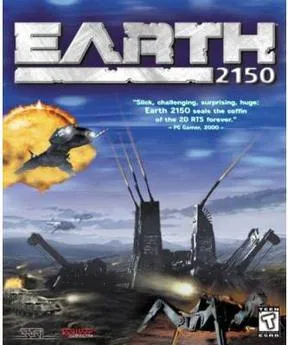
Earth 2150: Escape from the Blue Planet
 78
★ /10
78
★ /10
 PC
PC
 Reality Pump Studios
 1C Company, Mattel Interactive,
  TopWare Interactive


Earth 2150: Escape from the Blue Planet is a landmark 2000 real-time strategy (RTS) game developed by Reality Pump Studios and published by TopWare Interactive. Following the 2D industrial grit of Earth 2140, this sequel represented a massive technological leap, serving as one of the very first RTS games to fully embrace a 3D engine.
While its contemporaries were still experimenting with 2.5D sprites, Earth 2150 delivered a fully rotatable, zoomable world with dynamic lighting and terrain deformation. It wasn’t just a technical showcase, however; it introduced a high-stakes, “ticking clock” campaign structure and a unit customization system that remains influential to this day.
The narrative premise is one of the most desperate in the genre: Following the nuclear wars of the previous game, Earth’s orbit has been knocked off course. The planet is slowly drifting toward the Sun. Humanity has roughly 180 days before the surface becomes a scorched wasteland. Your mission is not just to defeat your enemies, but to gather enough resources to build a massive evacuation fleet to Mars—Project Exodus—before the clock hits zero.
Quick Info
- Developer: Reality Pump Studios
- Publisher: TopWare Interactive / SSI
- Release Date: March 31, 2000
- Engine: Earth-3 (Fully 3D)
- Genre: Real-Time Strategy
Gameplay: The Countdown to Apocalypse
Earth 2150 abandoned the linear “mission-to-mission” structure of the 90s in favor of a persistent, global war effort.
Key gameplay mechanics and improvements include:
- The Resource War (Project Exodus): Every ounce of ore mined in the field serves a dual purpose. You can spend it to build units and defenses for the current battle, or you can send it back to your “Main Base” via the Global Map. Your main base is where you construct the components of your escape shuttle. If you spend too much on your army, you won’t have enough to finish the shuttle before Earth is destroyed.
- Modular Unit Design: Instead of building static units, you research individual components. You unlock a “chassis” (scout, heavy tank, mech), a “drive” (wheels, treads, hover, legs), and a “weapon” (lasers, rockets, plasma). This allows you to custom-build your units to counter specific enemy threats.
- Lighting and Stealth: The game featured a full day/night cycle that impacted gameplay. Every unit has headlights that can be toggled. Turning them on helps you see in the dark but makes you an easy target; turning them off allows for stealthy night-time ambushes, utilizing the “fog of war” in a physical way.
- Subterranean Warfare: Almost every map allows players to use “Tunnelers” to dig beneath the surface. You can build entire underground bases, hide your units from orbital strikes, or dig a tunnel directly into the center of an enemy’s base for a surprise “Trojan Horse” attack.
The Factions
The three factions are completely asymmetrical, featuring unique aesthetics, resource management styles, and technological philosophies:
- United Civilized States (UCS): A high-tech society from the Americas where robots have replaced humans in almost every capacity. Their military consists of bipedal and quadrupedal mechs (like the Tiger and Spider). They rely on high-firepower plasma cannons and “Silver” defensive shields.
- Eurasian Dynasty (ED): Representing the remnants of the old Soviet/Mongolian power, the ED relies on industrial brute force. They favor traditional tanks, heavy helicopters, and ballistic missiles. They are the only faction that uses “Chemical” weapons and massive nuclear strikes, reflecting their “victory at any cost” doctrine.
- Lunar Corporation (LC): A highly advanced, matriarchal society that fled to the Moon decades prior. They return to Earth to secure resources for their own escape. Their units are sleek and utilize hover technology, making them incredibly fast over both land and water. Uniquely, their buildings are “dropped” from orbit and can be moved after being placed.
Development and Legacy
Earth 2150 is remembered for its incredible atmosphere. The soundtrack was a sweeping orchestral score that emphasized the tragedy of a dying world, and the weather effects (rain, snow, and lightning) weren’t just visual—they affected unit movement and weapon accuracy.
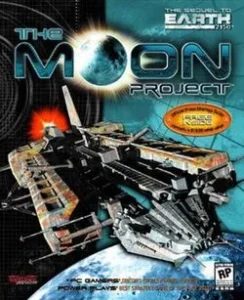
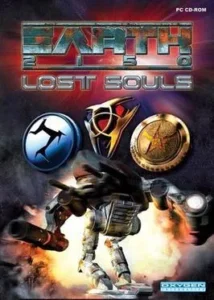
The game received two standalone expansions: The Moon Project (which focused on the LC’s lunar defenses) and Lost Souls (a high-difficulty campaign for veteran players). Reality Pump’s “Earth-3” engine was so advanced for its time that it served as the baseline for many strategy games that followed throughout the early 2000s.
As of May 2026, Earth 2150 is a staple of retro-RTS collections on Steam and GOG. In the mid-2020s, a community “Compatibility Patch” was integrated into the digital versions, allowing the game to run at 4K resolution with corrected aspect ratios for ultra-wide monitors. Despite being over 25 years old, the tactical depth of its modular unit design and the tension of its doomsday clock ensure it remains a frequent recommendation for fans of hardcore strategy.
Key Features:
- The Global Doomsday Clock — Manage your resources across a 180-day campaign where every loss brings you closer to planetary extinction.
- Fully Modular Research — Design your own tanks, mechs, and aircraft by combining different hulls, propulsion systems, and weapon types.
- Tactical 3D Terrain — Dig tunnels, build bridges, and utilize the day/night cycle to gain a physical advantage over your enemies.
- Asymmetrical Power — Command the robotic mechs of the UCS, the heavy industrial tanks of the ED, or the high-tech hover-fleets of the LC.
- Project Exodus — Build your massive escape shuttle in real-time, deciding which technologies and resources are worth bringing to the future on Mars.
Release Platforms:
- Microsoft Windows (PC) — November 14, 1999.
- Steam / GOG — Currently available as the “Earth 2150 Trilogy,” which includes the base game and both expansions, fully patched for modern systems.