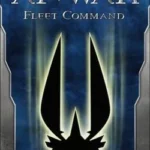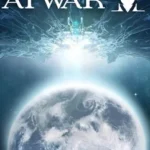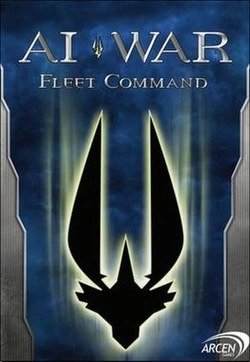
AI War: Fleet Command
 80
★ /10
80
★ /10
 PC
PC

AI War: Fleet Command is a real-time strategy space grand strategy video game developed and published by the independent studio Arcen Games. Initially launched on June 2, 2009, via the developer’s website and Impulse, it achieved a major version 2.0 release on Steam on October 16, 2009.
The game is widely recognized for its unique blend of 4X grand strategy, tower defense, and real-time tactical mechanics, presenting an original gameplay loop focused entirely on cooperative asymmetric warfare.
Unlike traditional real-time strategy titles where players contend with computer opponents that mirror human constraints, AI War positions the human player as an insignificant remnant in a universe entirely dominated by two omnipotent, hyper-advanced Artificial Intelligences. Humanity has already lost the war, and survival relies on destroying the home planets of both AI opponents without triggering a fatal, overwhelming retaliation.
Technical Specifications
| Attribute | Details |
| Developer | Arcen Games |
| Publisher | Arcen Games |
| Lead Designer | Christopher M. Park |
| Composer | Pablo Vega |
| Engine | Unity Engine |
| Platform(s) | Microsoft Windows, macOS, Linux |
| Release Date | • Initial Debut: June 2, 2009 • Steam Release: October 16, 2009 |
| Genre(s) | Real-time strategy, 4X Space Grand Strategy, Tower Defense |
| Mode(s) | Single-player, Multiplayer (up to 8 players dynamic co-op) |
The Core Threat: The AI Progress Engine
The defining mechanical innovation of AI War is AI Progress (AIP). Because the two computer-controlled AI empires are unfathomably more powerful than the human resistance from the start, a direct military assault would result in instant obliteration. The AI initially treats the players as minor, localized pests and assigns only a tiny fraction of its total processing power to containment.
The AIP value acts as a direct indicator of how aware the machines are of the player’s presence. As the human fleet captures new star systems, blows up high-value targets, or captures ancient ruins, the AIP permanently ticks upward.
A higher AIP causes the AI to divert more resources to the theater, scaling up the ferocity, frequency, and volume of its counter-attacks. Players must treat every target as an intricate risk-versus-reward calculation—carefully considering whether capturing a planet is worth drawing the collective ire of an omnipotent machine network.
Anti-Micro Design and Grand Strategy Scale
Maps in AI War are massive interconnected networks, stretching across web systems of anywhere from 10 to 120 star systems. To prevent players from drowning in intense micro-management across dozens of concurrent warfronts, Arcen Games implemented strict anti-micro disincentives:
- Macro Fleet Management: Ships natively handle their own localized targeting routines, point-defense vectors, and automated grouping arrays. Fast clicking or intense real-time unit babysitting yields negligible advantages, keeping the focus entirely on macro-scale critical thinking.
- The Chess Paradigm: Gameplay operates down a clear structure analogous to chess phases:
- The Opening: Methodical scouting, fortifying the home system, and identifying low-AIP pathways through neighboring quadrants.
- The Middlegame: Surgical strikes to establish choke points, hacking enemy databases for tech points, and isolating key AI infrastructure while keeping the AIP low.
- The Endgame: A high-stakes assault on the home command stations of both AI overlords before the machine network completely overruns humanity’s remaining strongholds.
Extensive Expansion Lifecycle
Between 2010 and 2014, Arcen Games expanded the baseline client through six major structural expansions, introducing highly distinct sub-mechanics, new AI personalities, and minor alien factions:
- The Zenith Remnant (2010): Introduced massive, ancient alien technologies left behind by a precursor race, allowing humans to harness titanic Golem constructs.
- Children of Neinzul (2010): Injected localized micro-factions consisting of short-lived insectoid swarms that act as auxiliary units, alongside new weapons and specialized AI profiles.
- Light of the Spire (2011): Added a highly complex, multi-tiered narrative campaign arc centered on rescuing and rebuilding the crystalline Spire race.
- Ancient Shadows (2012): Introduced the “Champion” ship class—modular behemoths capable of exploring secret parts of the galaxy entirely out of the standard AI’s reach to accumulate experience points and weapon upgrades.
- Vengeance of the Machine (2013): Heavily boosted late-game challenge parameters by introducing specialized AI counter-strategy matrices and advanced combat hulls.
- Destroyer of Worlds (2014): Concluded the narrative cycle by adding the massive, world-cracking Spire Dreadnought and endgame apocalypse scenarios.
Modern Preservation Status (2026 Perspective)
As of June 2026, AI War: Fleet Command stands as a highly respected, content-complete monumental achievement in independent strategy programming. While its 2018 standalone sequel, AI War 2, fully translated the concept into a modernized 3D visual engine with streamlined UI frameworks, many veteran purists consistently return to the 2009 original for its distinct retro aesthetic and sheer mechanical purity.
The game is thoroughly preserved and active on the Steam platform, bundled alongside its full suite of six expansions at heavy historical discounts.
Because Arcen Games natively transitioned the underlying software architecture over to the Unity Engine, the legacy 64-bit client executes flawlessly out-of-the-box on modern Windows 11 configurations and Linux environments.
Its light graphical footprint allows the engine to easily track thousands of concurrent starship calculations simultaneously on contemporary processors, making it an incredibly stable, rewarding cooperative sandbox for up to eight players.