8-Bit Armies
 69
★ /10
69
★ /10
 PC
PC PS4
PS4 Xbox One


8-Bit Armies (2016) stands as one of the most critical turning points in the history of the legendary real-time strategy franchise. Following the exhausting market fatigue of hyper-complex, high-APM traditional clones and the subsequent stagnation of the classic base-building formula, the future of accessible strategy was highly uncertain.
American developer Petroglyph Games—composed of legendary ex-Westwood veterans—stepped in, boldly re-engineered the sub-genre rules, and focused development duties on a fast-paced, retro-inspired tactical pacing. Faced with the intense task of salvaging a deeply fractured RTS community after the highly polarizing experiments of modern micro-intensive titles, Petroglyph delivered a stellar, redemptive chapter that bridged classic nostalgic mechanics with modern technological leaps.
The Grand Reset: A Voxelized Universe
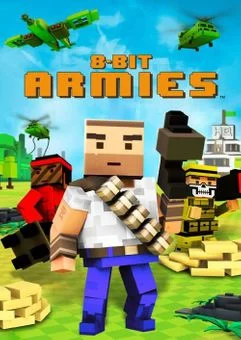
8-Bit Armies completely severed ties with the grim, hyper-realistic sci-fi or military battlefields of traditional real-time strategy. Instead, it established a completely fresh, tightly constructed blocky lore continuity: The Voxel Battlegrounds.
The game’s geopolitical landscapes, industrial manufacturing, and base layouts are strictly governed by a vibrant, retro-styled aesthetic. The massive single-player campaign and cooperative missions play out like a fast-paced arcade thriller, tracking rival military factions locked in a global struggle across blocky valleys, military bases, and coastal islands to systematically eliminate the opponent’s headquarters.
The Core Evolution: Voxel Graphics & Streamlined Roots
Petroglyph deliberately looked back at their classic Command & Conquer roots as a mechanical anchor, discarding modern convoluted tech trees and microscopic unit babysitting. However, they heavily evolved the engine:
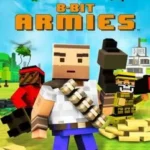
- The Leap to Fully Destructible Voxels: Running on a custom-built 3D voxel graphics engine, 8-Bit Armies was a distinct entry that ditched traditional 2D sprites and hyper-dense 3D models for blocky, colorful geometry. Players were handed a fully scalable camera to watch tanks obliterate scenery, as every single building, bridge, and tree was transformed into a jaw-dropping, fully destructible voxel masterpiece.
- The Command Bar Queue: The production grid completely abandoned complex, multi-tiered menu navigation. Petroglyph implemented a streamlined “Command Bar” on the side of the screen. Clicking structures or units instantly queued them up regardless of where the player’s camera was looking, adding a massive layer of tactical macro-speed management to combat.
- The Streamlined Harvester Loop: Resource collection returned to its safe operational roots. Unlike complex modern economic models, players relied on classic, automated Ore Trucks siphoning resources from static refineries. On their turn, players simply had to guard these harvest paths, executing high-velocity base expansion without ever overwhelming themselves with intricate resource micro-management.
The Deep Meta: Faction Unique Skills & The Command Bar
To maximize faction asymmetry within its streamlined framework, 8-Bit Armies threw out generic troop distributions. Every alignment was granted a mandatory, entirely exclusive army roster that dictated their macro-strategy:
- The Renegades: A military faction heavily inspired by classic Brotherhood of Nod mechanics, utilizing stealth tanks, nuclear strikes, and aggressive, fast-moving flame infantry to execute rapid, high-damage base rushes.
- The Guardians: A defensive, high-tech faction mirroring GDI, focusing on heavily armored main battle tanks, automated repair pads, and devastating orbital ion-cannon strikes to maintain absolute battlefield control.
The Hidden Economy Matrix
Progression was governed by a massive, intricately complex web of resource balancing. The game’s singular currency, Crates and Ore, must be actively harvested by placing Refineries directly over volatile resource nodes. To unlock game-breaking endgame death-balls, players must follow highly specific, branch-aligned pathways across their resource lines—carefully balancing the cost of base expansion with the passive power grid upkeep of their current active base, turning voxel-island cultivation into a precise science.
The Standalone Expansions and Cross-Title Ecosystem
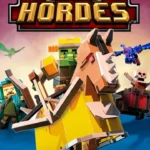
1. 8-Bit Hordes (2016)
The first standalone expansion introduced the fantasy genre into the mix, bringing Orcs, Humans, and magical creatures into the engine. Operating on a completely separate thematic economy, players utilize dragons and magic. The expansion officially integrated cross-title multiplayer functionality directly into the macro-map layer.
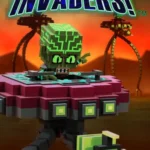
2. 8-Bit Invaders (2016)
The final standalone expansion brought the sci-fi alien genre, starring futuristic marines and biomechanical extraterrestrial swarms. These factions reject standard ballistics, instead accumulating plasma meters mid-combat.
More importantly, this cross-title ecosystem introduced unified multiplayer matchmaking across all three games, effectively expanding the total unit roster across multiple universes. For example:
| Base Unit (Tier / Role) | Faction / Universe A (8-Bit Armies) | Faction / Universe B (8-Bit Hordes) | Faction / Universe C (8-Bit Invaders) |
| Light Scout Unit | Scout Car (Renegades – High speed exploration) | Goblin Scavenger (Deathsworn – Cheap melee swarm) | Drone (Cranioids – Floating mechanical spotter) |
| Heavy Battle Armor | Heavy Tank (Guardians – Massive physical defense) | Treant (Lightbringers – High health siege unit) | Xenomite (Cranioids – Heavy biomechanical walker) |
| Superweapon Strike | Nuclear Missile (Renegades – Massive AoE erasure) | Dragon Strike (Deathsworn – Flying elemental firebomb) | Orbital Laser (Marines – Concentrated beam devastation) |
The Modern Standard: The 8-Bit Series Unified Meta
While the official standalone releases concluded, the 8-Bit franchise experiences an incredible casual renaissance today through its unified cross-play launcher. This monumental, studio-maintained framework completely reconstructs the engine stability. It integrates an optimized executable, implements a vastly superior, balanced, and fully visible interactive multiplayer arena inside the UI, adds a massive randomized skirmish map generator system, and unifies all separate military, fantasy, and sci-fi campaigns and faction balances into a singular, polished modern gameplay client operating beautifully on modern hardware.
Release History
- 8-Bit Armies (Base Game): April 22, 2016
- 8-Bit Hordes (Expansion 1): August 12, 2016
- 8-Bit Invaders (Expansion 2): December 16, 2016
Modern Packaging: Natively bundled together as the definitive digital package, 8-Bit Series Complete Collection, available on storefronts like Steam and GOG.