8-Bit Hordes
 63
★ /10
63
★ /10
 PC
PC PS4
PS4 Xbox One


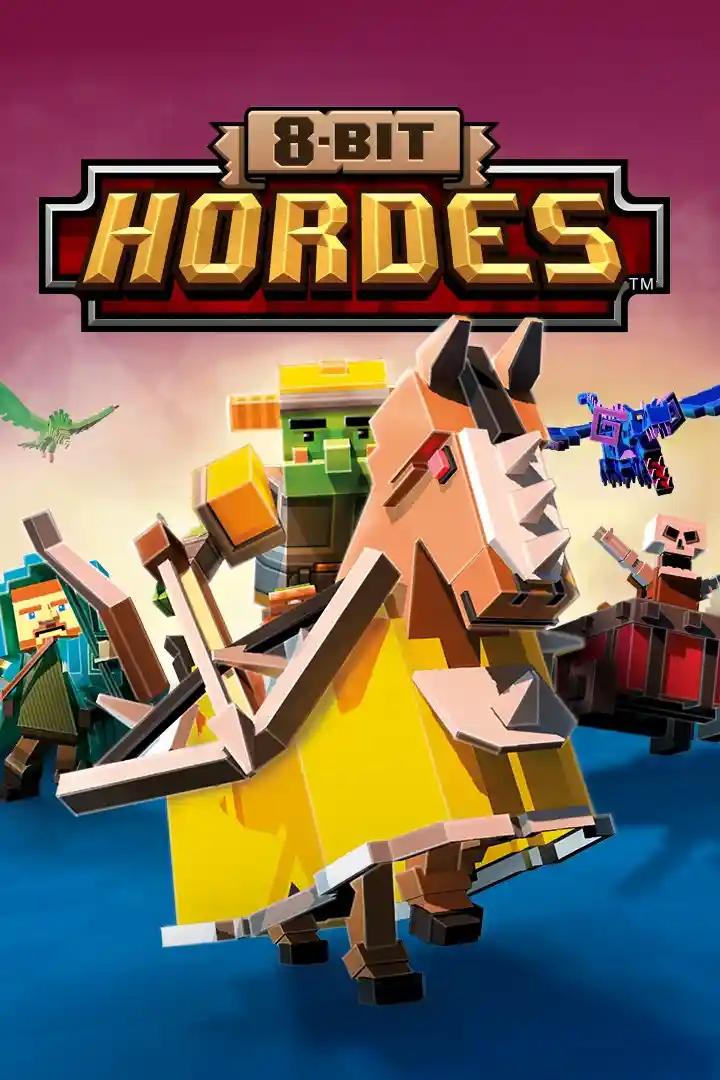
8-Bit Hordes (2016) stands as one of the most critical turning points in the history of the legendary accessible real-time strategy franchise. Following the massive, fast-paced breakout success of 8-Bit Armies earlier that year, the future scope of Petroglyph Games’ voxelized tactical universe was highly anticipated.
The veteran developers at Petroglyph—composed largely of classic Westwood Studios founders—stepped in, boldly expanded their engine’s boundaries, and focused development duties on a classic high-fantasy skin. Faced with the intense task of scaling a fast, streamlined macro-RTS framework into a nostalgic tribute to Warcraft, Petroglyph delivered a stellar, redemptive chapter that bridged retro 90s base-building logistics with cross-genre modern technological leaps.
The Grand Reset: A Brand New Universe
8-Bit Hordes completely severed ties with the modern military tanks, rocket launchers, and concrete bunkers of its predecessor. Instead, it established a completely fresh, tightly constructed blocky fantasy lore continuity: The Voxel Realms.
The world’s mystical landscapes, enchanted gold mines, and faction alignments are strictly governed by an ancient struggle between magical forces. The massive 24-mission single-player campaign and cooperative raid tracks play out like a fast-paced fantasy political thriller, tracking noble kingdoms and chaotic monster legions locked in a global war across blocky magical forests, volcanic valleys, and ruined keeps to prevent a world-shattering dominion of darkness.
The Core Evolution: Voxel Sorcery & Polished Roots
Petroglyph deliberately looked back at Warcraft II: Tides of Darkness as its mechanical anchor, discarding modern convoluted tech trees and microscopic unit-ability babysitting. However, they heavily evolved the engine:
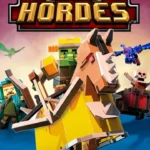
- The Leap to High-Fantasy Voxels: Running on an incredibly optimized 3D voxel graphics engine, 8-Bit Hordes was a distinct entry that traded modern military ballistics for swords, shields, sorcery, and mythical beasts. Players were handed a fully scalable camera to watch fire-breathing dragons and towering cyclopes completely level blocky villages, transforming fantasy warfare into a beautifully fully destructible voxel masterpiece.
- The Streamlined Resource Matrix: The economic grid completely abandoned complex mining pipelines. Petroglyph implemented an old-school, highly readable resource loop. Players deploy peasant or goblin workers to extract currency directly from static Gold Mines, while constructing Farms or Slaughterhouses to dynamically scale up their maximum unit population capacity.
- The Cross-Title Multiverse: The multiplayer architecture completely shattered traditional standalone limitations. The game engine was natively engineered to interface directly with 8-Bit Armies (and later 8-Bit Invaders). This created an incredible, asymmetric cross-play arena where a fantasy player commanding a legion of orcs and dragons could seamlessly clash against another player fielding modern military Apache helicopters and nuclear strikes.
The Deep Meta: Faction Unique Skills & The Command Bar
To maximize faction asymmetry within its streamlined framework, 8-Bit Hordes threw out generic secondary units. Every alignment was granted a mandatory, entirely exclusive army roster that dictated their macro-strategy:
- The Lightbringers: An alliance of Humans, Elves, and Dwarves mirroring classic high-fantasy tropes. They focus on heavily armored Paladins, long-range Elven Archers, defensive Treants, and summoning a radiant Phoenix to execute high-durability frontline pushes.
- The Deathsworn: A chaotic horde of Orcs, Goblins, Fiends, and Undead thralls. They rely on cheap, rapid-swarming infantry, toxic dark magic casters, rock-throwing Cyclopes, and devastating Red Dragons to overwhelm enemy infrastructure through pure, high-damage base rushes.
The Hidden Economy Matrix
Progression was governed by a massive, intricately complex web of macro-management. The game’s singular interface anchor, the Side Command Bar, allows players to queue structures, defenses, and army squads instantaneously without ever moving their camera away from the frontline battle coordinates. To unlock game-breaking endgame armies, players must master a precise science of rapid-click expansion—carefully balancing the placement of defensive guard towers with continuous gold refinery scaling, turning fantasy realm cultivation into a hyper-calculated race against the clock.
The Standalone Ecosystem and Alternate Upgrades
While operating as a self-contained high-fantasy strategy game, the title’s true tactical depth is revealed when examining its asymmetric unit matchups. Players must deploy specific unit variations to successfully counter their opponent’s faction rules, as demonstrated in the matrix below:
| Base Unit (Tier / Role) | The Lightbringers (Order Faction) | The Deathsworn (Horde Faction) | Alternate Tactical Utility (Cross-Play Meta) |
| Tier 1 Light Infantry | Footman: Highly durable melee unit equipped with a physical shield to absorb basic ballistic damage. | Goblin: Fragile, hyper-cheap swarm unit built to overwhelm early worker expand nodes in massive groups. | |
| Tier 3 Heavy Support | Sorceress: Ranged magical caster that fires slow-moving, high-impact elemental bolts to melt armor. | Shaman: Utility support unit capable of deploying dark buffs to multiply the movement and attack speed of friendly forces. | |
| Tier 5 Ultimate Monster | Phoenix: Flying elemental titan that rains continuous area-of-effect holy fire down upon enemy base structures. | Cyclops: Monolithic ground-pounder that hurls massive boulders to safely shell defensive guard towers from a distance. |
The Modern Standard: The 8-Bit Series Unified Meta
While the official standalone lifecycle concluded in the late 2016 window, 8-Bit Hordes experiences an incredible casual and multiplayer renaissance today through its unified cross-play launcher. This monumental, studio-maintained framework completely reconstructs the engine stability. It integrates a fast, optimized 64-bit execution shell, implements a vastly superior, balanced, and fully visible interactive multiplayer lobby inside the UI, adds a massive randomized skirmish map generator system, and unifies all separate military, fantasy, and sci-fi campaigns into a singular, flawlessly polished modern gameplay client running beautifully on modern hardware.
Release History
- 8-Bit Hordes (Base Game Launch): August 12, 2016
- 8-Bit Hordes: Guardians Arena Update: Late 2016 (Natively integrated full cross-title multiplayer functionality)
- Modern Packaging: Natively bundled together as part of the definitive digital package, 8-Bit Series Complete Collection, available on PC storefronts like Steam and GOG, alongside dedicated console editions for Xbox and PlayStation ecosystems.