Urban Chaos
 52
★ /10
52
★ /10
 Dreamcast
 PC
PC PS 1
PS 1Where to buy

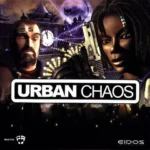
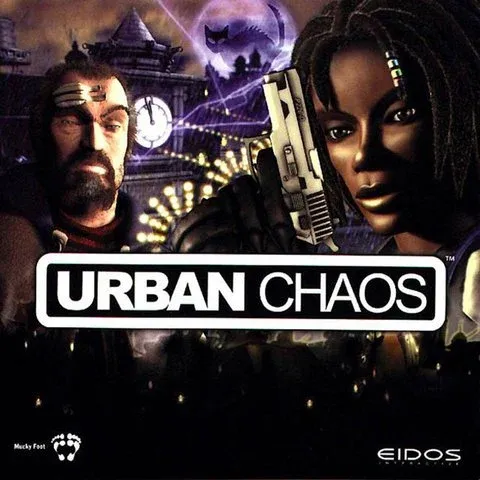
Urban Chaos is a 1999 action-adventure video game developed by English developer Mucky Foot Productions and published by Eidos Interactive. Released initially in November 1999 for Microsoft Windows, the title was subsequently ported to the PlayStation and Sega Dreamcast.
The game occupies a highly unique, historically vital position within the evolution of video games. Created by a team of ex-Bullfrog Productions veterans, Urban Chaos was a remarkably ambitious, ahead-of-its-time prototype for the 3D urban sandbox genre, arriving a full two years before Grand Theft Auto III permanently shifted the industry landscape. It is also celebrated for its progressive narrative design, introducing one of the very first solo black female protagonists to headline a major 3D action title.
Technical Specifications
| Attribute | Details |
| Developer | Mucky Foot Productions |
| Publisher | Eidos Interactive (Modern digital listings published by My Little Planet) |
| Director | Darren Hedges |
| Engine | Custom Mucky Foot 3D Sandbox Engine |
| Platform(s) | Microsoft Windows, PlayStation, Sega Dreamcast |
| Release Date | November 30, 1999 |
| Genre | Action-adventure, Third-person shooter, Urban Sandbox |
| Mode(s) | Single-player |
The Union City Prophecy: Narrative and Setting
The single-player campaign takes place at the absolute twilight of the 20th century within Union City, a grim, rain-slicked coastal American metropolis collapsing under severe economic decay, rampant corruption, and a sense of impending millennial dread. Players primarily control D’arci Stern, a tough-as-nails, highly agile rookie police officer who has just joined the Union City Police Department (UCPD).
D’arci’s initial shifts begin as standard law-enforcement operations—patrolling dark alleys, responding to civilian emergencies, and breaking up localized crimes. However, her focus quickly narrows onto the Wildcats, a hyper-aggressive, incredibly bold street gang whose criminal activity is rapidly overwhelming the local precinct.
The narrative shifts from a traditional police procedural into a dark, apocalyptic conspiracy when D’arci crosses paths with Roper McIntyre, a cynical, heavily armed older vigilante and ex-soldier. Roper reveals that the Wildcats are not just a simple street gang; they are a public front for “The Fallen,” an ancient, sophisticated apocalyptic cult.
The cult is masterminded by Mack Bane, an eccentric corporate billionaire who is actively running for mayor of Union City. As the millennium countdown nears zero, The Fallen attempt a full-scale, hostile military takeover of the city to fulfill a catastrophic ancient prophecy, forcing D’arci and Roper to wage an all-out guerilla war across the city’s infrastructure to stop them.
The Beat Cop Sandbox: Gameplay Mechanics
Long before open-world design conventions became highly streamlined, Urban Chaos offered an incredibly interactive simulation of urban traversal and law-enforcement logic:
- Advanced Hand-to-Hand Brawling: Long before shooters became standard, combat centered heavily on a complex martial arts grid. Players chained together punches, context-sensitive kicks, grapples, throws, and sliding tackles, alongside melee weapons like baseball bats and combat knives.
- The Arrest Protocol: In a massive design departure from standard action games that forced players to execute every target, D’arci could actively choose to physically disarm, tackle, and handcuff hostiles. Executing non-lethal arrests altered the public alignment, making the local populace far more friendly and willing to share hidden weapon drops or vital information.
- Organic Environmental Autonomy: Despite early 3D technological limits, the maps featured accessible indoor apartment spaces, climbable ladders, and full rooftop exploration. The city streets were populated by random event scripts, forcing players to dynamically choose whether to ignore their main radar path to stop a mugging, rescue a hostage, or talk a suicidal civilian down from a high-rise ledge.
- The Dual-Character Dynamic: Throughout the campaign, control occasionally swaps over to Roper McIntyre. Roper acts as a heavy mechanical contrast to D’arci; while he lacks her high-speed agility, wall-scaling prowess, and athletic jumps due to his older age, his physical brawling attacks deal double the kinetic damage, and he wields heavy, military-grade automatic firearms to clear out mass combat encounters.
The Spiritual Legacy: Urban Chaos: Riot Response (2006)
While not a direct narrative or mechanical sequel to the 1999 third-person platformer, Eidos Interactive reused the trademark in 2006 to publish Urban Chaos: Riot Response. This title holds an legendary legacy in modern gaming history as the debut video game developed by Rocksteady Studios before they went on to achieve global acclaim with the Batman: Arkham trilogy.
Shifting the perspective to an intense, visceral first-person shooter framework on the PlayStation 2 and Xbox, players control Nick Mason, a member of the hyper-militarized “T-Zero” riot control unit. The game was highly praised for its signature Tactical Riot Shield mechanic, which allowed players to dynamically turtle up to deflect incoming ballistic fire and protect squadmates before executing brutal shield-bash counter-attacks, setting up the high-impact environmental combat systems Rocksteady would later perfect.
Contemporary Stance
The original 1999 Urban Chaos is deeply revered by retro-gaming communities as a fascinating, raw historical artifact. While casual modern audiences might find its early polygon graphics, stiff keyboard controls, and erratic cinematic camera tracking challenging to master, game-preservation circles heavily praise Mucky Foot’s creation for its incredible ambition, its rich, moody atmosphere, and its bold presentation of a diverse lead heroine long before it became a mainstream industry norm.
The classic software remains fully preserved and highly stable across modern PC frameworks:
The title continues to be directly available for purchase via digital distribution store channels like Steam and GOG. The underlying legacy code is optimized to run flawlessly out-of-the-box under modern 64-bit Windows 11 desktop environments.
While the community routinely relies on simple, community-made widescreen wrapper patches to cleanly scale the game’s old 4:3 rendering assets onto contemporary 16:9 and ultrawide monitors without stretching the interface, the game requires zero complex emulation setup. Union City remains an incredibly rewarding, atmospheric destination for retro purists looking to witness the exact stepping stones that birthed the modern 3D action sandbox.