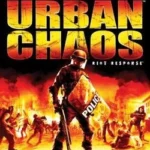
Urban Chaos: Riot Response
 73
★ /10
73
★ /10
 PS 2
PS 2 Xbox
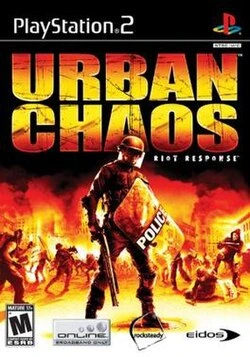
XboxUrban Chaos: Riot Response is a 2006 first-person shooter video game developed by British developer Rocksteady Studios and published by Eidos Interactive. Released in May 2006 for the PlayStation 2 and June 2006 for the Xbox, the title stands as a completely standalone tactical action game. While it shares a publisher and name with Mucky Foot’s 1999 urban sandbox Urban Chaos, it bears no narrative or mechanical relation to the original game.
The title holds an legendary legacy in gaming history as the official debut video game developed by Rocksteady Studios. Originally announced under the working title Roll Call while under development at the ill-fated Argonaut Games, the project was rescued and reshaped by Rocksteady’s founding members.
Arriving at the absolute twilight of the sixth generation of console hardware, the game was a critical and cult-classic success, recognized for its visceral weapon feedback, advanced physics processing, and intense, gritty B-movie action pacing that directly foreshadowed the combat design philosophies Rocksteady would later perfect in the Batman: Arkham trilogy.
Technical Specifications
| Attribute | Details |
| Developer | Rocksteady Studios |
| Publisher | Eidos Interactive (Spike in Japan) |
| Director | Sefton Hill |
| Producer | Jamie Walker |
| Engine | Proprietary Framework (Utilizing the Havok Physics Engine) |
| Platform(s) | PlayStation 2, Xbox |
| Release Date | May 19, 2006 (Europe) / June 13, 2006 (North America) |
| Genre | First-person shooter (FPS) |
| Mode(s) | Single-player, Online Multiplayer (8-player maximum, now defunct) |
City Under Siege: Narrative Framework
The single-player campaign takes place within an unnamed, rain-slicked modern American metropolis that has rapidly degenerated into an absolute apocalyptic warzone. The city is being systematically dismantled by The Burners, a hyper-violent, heavily armed anti-American domestic terrorist militia. Dressed in hockey masks and wielding everything from meat cleavers and Molotov cocktails to military-grade assault rifles, the Burners launch an uncompromised campaign of arson, executions, and structural bombings to completely destabilize local government authority.
To reclaim the streets, the governor coordinates the activation of T-Zero (Technical Zero Tolerance), an elite, hyper-militarized emergency riot control task force explicitly authorized to utilize extreme, lethal counter-terrorist tactics.
Players control Nick Mason, a stone-cold, mute veteran Marine who serves as T-Zero’s premier frontline operator. Backed by real-time, highly aggressive television news broadcasts detailing the rising body count, Mason is deployed directly into blazing tenement blocks, hijacked subways, and a heavily fortified City Hall to hunt down the Burners’ leadership and eliminate the militia block by block.
Mechanical Innovation: The Riot Shield and Medal Meta
Urban Chaos: Riot Response discarded the generic “run-and-gun” conventions of mid-2000s shooters to engineer a highly tactile, defensive combat loop focused on two core mechanics:
1. The Tactical Riot Shield
The defining gameplay feature is Mason’s high-grade iron riot shield. At the press of a button, players can turtle up behind the shield in a first-person perspective, rendering them completely impervious to conventional frontal bullet impacts, physical melee strikes, and explosive shrapnel.
However, the shield does not break game balance: while it is raised, Mason cannot fire his primary weapons, his movement speed is penalized, and his peripheral vision is restricted. Furthermore, continuous gunfire, blood splatters, and dynamic soot from fires will realistically smudge and dent the shield’s viewing window, forcing players to lower it or seek cover to clear their sightlines. The shield also doubles as a high-impact melee weapon, allowing Mason to execute a Shield Bash to stagger aggressive hostiles or smash open structural barriers.
2. The Non-Lethal Taser System
Reflecting his role as a law enforcement officer, Mason is equipped with a high-voltage tactical taser. Players can choose to handle combat encounters entirely non-lethally by shocking Burners into compliance to execute physical arrests.
The Risk of Overcharge: The taser requires a constant, high-stakes trigger hold. If a player holds the shock input for a split second too long, the electrical current overloads the target’s nervous system, causing the enemy’s head to violently and catastrophically explode in a fountain of gore—a signature stylistic stamp of the game’s over-the-top, grindhouse violence.
3. Weapon Upgrades via Medals
The game features a highly addictive progression matrix driven by 204 collectable Medals. Medals are earned by completing strict secondary objectives during active missions, such as securing a specific number of non-lethal arrests, racking up precision headshots, or completing levels within strict time parameters. Accumulating medals permanently upgrades Mason’s baseline loadout, transforming his basic starting pistol with laser-sights and scoping attachments, upgrading his shotguns to double-barrel configurations, and eventually unlocking the ultimate reward: a fully un-gated, portable Minigun.
The Emergency Alliance: Civil Support Dynamics
Unlike contemporary shooters where civilian AI companions act as passive escorts, Urban Chaos: Riot Response integrated city emergency personnel directly into the tactical puzzle of the level design. Mason frequently coordinates with specialized civil services who follow his real-time D-Pad squad commands:
- Firefighters: Imperative for navigating the burning, collapsing infrastructure left by the Burners. Firefighters utilize heavy axes to chop down reinforced wooden doors to open alternative flanking routes, handle high-pressure hoses to clear paths through raging firestorms, and can physically defend themselves with their axes if a terrorist gets too close.
- Paramedics: Critical survival assets on higher difficulty tiers. Paramedics will actively trudge through dynamic crossfire behind Mason’s riot shield to physically patch up his health bar, treat wounded civilian hostages, and assist downed officers.
- Regular Police Officers: Local precinct cops who supply Mason with heavy structural cover fire, pinning down entrenched Burner sniper positions while the player utilizes their shield to flank the militia’s defensive nests.
Contemporary Stance & 2026 Perspective
Looking back from mid-2026, exact twenty years after its original rollout, Urban Chaos: Riot Response is championed as a brilliant, masterfully engineered hidden gem of the late sixth-generation console era. Within retrospective game design circles, it is highly celebrated for its spectacular technical achievements—smoothly running the complex, real-time debris and ragdoll physics of the Havok Engine on the limited processing frameworks of the PlayStation 2 and original Xbox.
The game’s structural DNA is universally recognized as the direct laboratory where Rocksteady Studios learned how to coordinate fluid melee counter-brawling layouts, implement structural gadget upgrade loops, and frame intense, cinematic dark atmospheres—elements they would seamlessly translate into global superstardom with Batman: Arkham Asylum in 2009.
Because the title arrived right at the transition period to the Xbox 360 and PlayStation 3, it never received an official PC port, high-definition remaster, or digital re-release on modern storefronts, making the physical retail discs highly sought-after collector items. Today, the game’s preservation relies completely on community-driven emulation frameworks:
1. PCSX2 Emulation (PlayStation 2)
Under modern 64-bit Windows 11 desktop environments, the game runs flawlessly via contemporary iterations of the PCSX2 emulator. Modern graphics card backends easily brute-force the original software limits, upscaling the native resolution to a crisp 4K output while implementing custom widescreen patches to cleanly expand the original 4:3 viewable area into a beautiful 16:9 layout.
2. Xemu Emulation (Xbox)
On the original Xbox front, contemporary builds of the Xemu emulator handle the title with immaculate compatibility. The emulation layer effortlessly eliminates old frame-pacing hitches, allowing retro enthusiasts to experience the game’s advanced lighting profiles, volumetric smoke, and visceral headshot physics at an absolute locked, fluid performance tier, securing Nick Mason’s forgotten war against the Burners as a vital piece of action-gaming preservation.