The Orange Box
 96
★ /10
96
★ /10
 PC
PC PS 3
PS 3 Xbox 360
 Valve Corporation
 ak tronic Software & Services GmbH
 Buka
Buka Electronic Arts
Where to buy

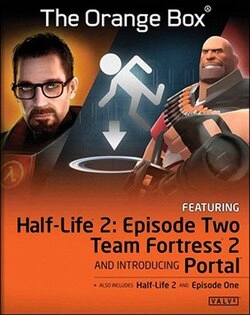
The Orange Box is a 2007 video game compilation developed and published by Valve Corporation. Widely celebrated as one of the greatest value propositions in gaming history, the bundle brought together five distinct, critically acclaimed titles powered by Valve’s proprietary Source engine. It served as a massive showcase for the company, delivering the highly anticipated continuation of the Half-Life narrative while simultaneously launching two entirely new IPs that would go on to permanently alter the video game industry landscape.
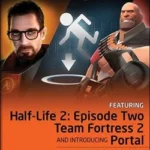
The compilation includes the original Half-Life 2 (2004), its first expansion Half-Life 2: Episode One (2006), and the premiere of three brand-new games: Half-Life 2: Episode Two, the groundbreaking puzzle-platformer Portal, and the stylized, class-based multiplayer shooter Team Fortress 2.
Gameplay
Because The Orange Box is a compilation, its gameplay is divided into three entirely distinct experiences, showcasing the extreme versatility of the Source engine:
- The Half-Life 2 Saga: A continuous, single-player first-person shooter experience across three games. Players control Gordon Freeman through a seamless narrative driven by physics-based environmental puzzles, dynamic combat, and squad-based mechanics against the alien Combine empire.
- Portal: A mind-bending, first-person puzzle game. Players control Chell, a silent test subject trapped in the sterile Aperture Science Enrichment Center. Armed only with the “Aperture Science Handheld Portal Device,” players must create interconnected portals on flat surfaces to manipulate momentum, bypass hazards, and survive the trials set by a darkly comedic, rogue AI named GLaDOS.
- Team Fortress 2: A frantic, team-based multiplayer shooter that traded the realistic military aesthetic of its predecessors for a vibrant, 1960s spy-tech cartoon art style. Players choose from nine highly specialized classes (such as the Heavy, Medic, Spy, and Engineer) to capture briefcases, push payloads, and control territories in fiercely competitive matches.
Development and Legacy
Valve originally planned to release two separate retail bundles in 2007: The Orange Box (containing all five games) and The Black Box (containing only the three new games—Episode Two, Portal, and Team Fortress 2—for players who already owned Half-Life 2). However, The Black Box was ultimately canceled for physical retail, making The Orange Box the definitive release and an unprecedented bargain.
The development and publishing of the console ports varied. While Valve handled the Xbox 360 and PC versions in-house, the PlayStation 3 version was outsourced to Electronic Arts (EA). The PS3 port suffered from notable technical issues upon release, including frame rate drops and longer loading times, which drew criticism from both the community and Valve’s co-founder, Gabe Newell.
Despite the PS3 version’s rocky launch, The Orange Box was an overwhelming critical and commercial success, winning numerous Game of the Year awards. Its legacy is monumental: Portal became a cultural phenomenon that spawned a legendary sequel, and Team Fortress 2 essentially pioneered the modern “hero shooter” genre. TF2 also became Valve’s testing ground for the “games as a service” model, eventually transitioning to a free-to-play economy driven by cosmetic microtransactions (famously, hats) that revolutionized the PC gaming market.
Key Features:
- Unprecedented Value — Five critically acclaimed games in a single package, offering dozens of hours of single-player narrative alongside endless multiplayer replayability.
- The Debut of Portal — The introduction of the award-winning puzzle mechanics, the Companion Cube, and the iconic antagonist GLaDOS.
- The Birth of TF2 — The launch of the stylized, class-based multiplayer shooter that influenced a decade of competitive gaming and game economies.
- The Complete Freeman Arc — Included the base Half-Life 2 game and both episodic continuations, bringing console players fully up to speed with the franchise’s story.
- Source Engine Showcase — A masterclass in game engine design, simultaneously rendering the gritty realism of City 17, the spatial geometry of Aperture Science, and the vibrant cel-shaded look of the Badlands.
Release Platforms:
- Microsoft Windows (PC) — October 10, 2007
- Xbox 360 — October 10, 2007
- PlayStation 3 — December 11, 2007
- Mac OS X — May 2010 (Games released individually via Steam compatibility updates)
- Linux — 2013 (Games released individually via Steam compatibility updates)