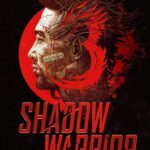
Shadow Warrior
 PC
PC


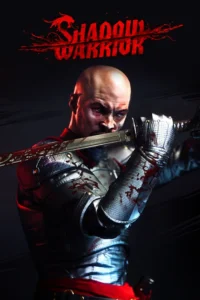
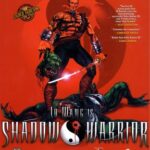
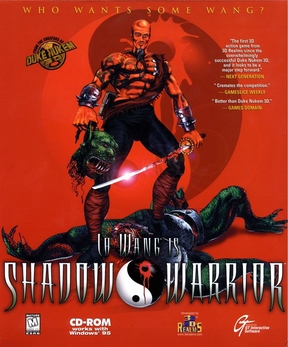
Shadow Warrior is a 1997 first-person shooter developed by 3D Realms and published by GT Interactive — the studio’s own follow-up to Duke Nukem 3D on the same Build engine, released for MS-DOS PCs as shareware on May 13, 1997 and at retail on September 16, 1997, with a Mac port following that October. It introduced Lo Wang, a corporate bodyguard turned one-man army, and pushed Build further than Duke had: voxel weapons and pickups, room-over-room layouts, climbable ladders, drivable, armed vehicles, and what is generally credited as the first sticky bomb in a shooter. Reviews were average to good — GameSpot 7.2, GamePro 4.5/5, Edge 6/10 — sales were modest at under 120,000 US retail units against 400,000 shareware downloads, and the game’s humour, built on bad-kung-fu-movie stereotypes, drew criticism that has only grown louder since. It then spent fifteen years as a cult object before Devolver Digital bought the name, gave the original away free, and commissioned the 2013 reboot that made Lo Wang a franchise.
Today the 1997 game is free on Steam and GOG as Shadow Warrior Classic and Shadow Warrior Classic Complete, and sold for $9.99 as the remastered Shadow Warrior Classic Redux. This card covers the original and both of those editions; the 2013, 2016, and 2022 games have their own pages.
Technical Specifications
| Attribute | Details |
|---|---|
| Developer | 3D Realms (Redux: General Arcade) |
| Publisher | GT Interactive (1997) · Devolver Digital (Classic, Complete, Redux) |
| Designers | Frank Maddin · Jim Norwood (concept) · George Broussard (Lo Wang) |
| Engine | Build (Ken Silverman) |
| Platform | PC (MS-DOS) · Mac OS (1997 port) · Windows, Linux, macOS (Classic / Redux re-releases) |
| Release | May 13, 1997 (shareware) · September 16, 1997 (retail) · October 1, 1997 (Mac) |
| Era Reviews | GameSpot 7.2 · GamePro 4.5/5 · Edge 6/10 · Computer Gaming World 2.5/5 |
| Sales | 118,500 US retail (NPD, to Dec 2002) · 400,000 shareware downloads |
| Expansions | Twin Dragon (free, July 4, 1998) · Wanton Destruction (Sunstorm; free, 2005) |
| Source Code | GPL release April 1, 2005 → JFShadowWarrior, VoidSW, Raze |
| Re-releases | Classic Complete (GOG, Nov 15, 2012; free since 2016) · Classic Redux (July 8, 2013) · Classic (Steam, free) |
| Genre | First-person shooter, Build-engine |
| Mode(s) | Single-player · multiplayer (original “WangBang” deathmatch and co-op) |
Lo Wang Quits Zilla Enterprises
Lo Wang is the top bodyguard of Zilla Enterprises, a conglomerate that owns most of Japan, until he learns that Master Zilla intends to conquer the country with creatures summoned from the “dark side.” Wang resigns; Zilla responds by having his mentor, Master Leep, killed, and the game is Wang’s rampage through Zilla’s holdings across a stylised, demon-infested Japan to a confrontation in which Zilla is defeated and escapes. The 1998 expansion Twin Dragon adds thirteen levels and a twist: the final boss is Wang’s twin brother, Hung Lo. Story was never the point; the point was a Build-era shooter with a protagonist who talks constantly, and Lo Wang’s one-liners — delivered in an accent that 3D Realms defended as a parody of dubbed martial-arts films — are the thing people remember and the thing the game is most often criticised for. Critics including Elliot Chin and Anthony Sze-Fai Shiu objected at the time to its treatment of East Asian culture; the 2013 reboot’s quieter, better-written Wang was in part an answer to that.
What Build Could Do by 1997
Released a year after Duke Nukem 3D and the same spring as Monolith’s Blood, Shadow Warrior was the most technically ambitious of the Build trilogy. Weapons and pickups are voxel models rather than sprites; levels stack rooms over rooms via sector tricks; Wang can climb ladders, drive a forklift, tank, and armed vehicles, and swim. The arsenal starts with fists and a katana — unlike the reboot, a last resort — and climbs through dual Uzis, a riot gun, a grenade launcher, a missile launcher with heat-seeking and nuclear warheads, a railgun, the guardian-head flamethrower, and the sticky bombs that could be planted on enemies and walls, a first for the genre. Shurikens were planned and cut. Secret areas, destructible scenery, and a steady stream of juvenile gags fill the gaps, and the “WangBang” multiplayer — deathmatch and co-op over LAN or modem — was a late-90s staple.
Two Expansions, Both Eventually Free
Twin Dragon was released free on July 4, 1998 with thirteen new levels. Wanton Destruction, built by Sunstorm Interactive (the team behind the Duke Nukem add-ons), was finished in 1997 and then never shipped by its distributor; its maps surfaced in 2004 and 3D Realms released the complete expansion free in 2005. On April 1, 2005, 3D Realms also released the game’s source code under the GPL, which produced JFShadowWarrior the next day and, over the following two decades, the ports most people use now — VoidSW and the multi-game Raze, which run the original data files at modern resolutions with mouse look and widescreen.
Classic, Complete, and Redux
Devolver Digital’s acquisition of the brand produced three editions. Shadow Warrior Classic Complete arrived on GOG on November 15, 2012 — the original plus both expansions in DOSBox — and became permanently free in 2016. Shadow Warrior Classic is the equivalent free release on Steam, where it sits at Very Positive from more than 1,600 reviews. Shadow Warrior Classic Redux, developed by General Arcade and released July 8, 2013 for $9.99, is the paid remaster: OpenGL rendering, remastered audio and a remixed theme, both expansions, achievements, and Windows, Linux, and (originally) macOS support — the Mac build is 32-bit and no longer runs on macOS 10.15 or later. An iOS version came in 2012 and Android in 2017.
Where to Play It Today
The cheapest route is the free one: Shadow Warrior Classic Complete on GOG or Shadow Warrior Classic on Steam, with Twin Dragon and Wanton Destruction included, ideally run through Raze or VoidSW rather than the bundled DOSBox. Classic Redux ($9.99 on GOG and Steam, 4/5 on GOG) is the no-setup option with achievements and modern rendering on Windows and Linux. Either way it is a long, loud, dated, and frequently brilliant Build shooter — the game that gave the series its name, its villain, and a hero that took a 2013 reboot to make likeable.