 68
68  PC
PC Atari
Atari

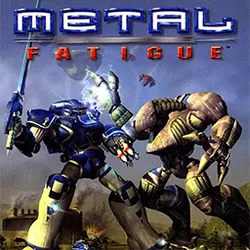
Metal Fatigue (2000) stands as one of the most critical turning points in the history of the legendary real-time strategy and mecha-simulation genre. Following the exhausting market fatigue of traditional flat, single-tier military army clones and the subsequent structural stagnation of the late-90s base-building formula, the future of sci-fi strategy was highly uncertain.
American developer Zono Inc. stepped in, boldly threw out traditional 2D map constraints, and focused development duties on a highly ambitious, vertically layered tactical environment. Faced with the intense task of distinguishing a new intellectual property during the absolute golden age of real-time strategy games, Zono delivered a stellar, redemptive chapter that bridged modular vehicle customization with unprecedented multi-front management technological leaps.
The Grand Reset: A Corporate Alien Conflict
Metal Fatigue completely severed ties with the traditional global military factions of its contemporaries. Instead, it established a fresh, tightly constructed cyberpunk and ancient-astronaut lore continuity: The War for the Hedoth Technology.
The game’s corporate landscapes, barren surfaces, and sector expansions are strictly governed by three omnipresent mega-corporations known as “CorpoNations”: Rimtech, Mil-Agro, and Neuropa Limited. The massive 30-mission single-player campaign plays out like an interconnected political thriller, tracking the tragic narrative of three estranged brothers—Diego, Jonas, and Stefan Angelus—who are separated by fate and brainwashed or recruited into rival corporate factions. This forces them to wage a brutal, planet-wide war against their own bloodlines to scavenge and claim the highly volatile technology of a vanished, ancient alien race called the Hedoth.
The Core Evolution: Modular Mechs & Three-Layer Warfare
Zono Inc. deliberately looked back at classic anime mecha frameworks and combined-arms military configurations as a mechanical anchor, discarding fixed, uniform tank spams and single-level maps. However, they heavily evolved the engine:
- The Leap to Three Battlefield Layers Simultaneously: The tactical arena completely abandoned flat map layouts. Every single match requires players to manage three distinct, interconnected vertical planes at once: the Orbital Asteroid layer (accessible via aircraft), the Planet Surface layer (the primary industrial staging ground), and the Subterranean Tunnels layer (accessed via elevators and excavated using drill trucks). Combat is continuous—a bomber shot down in orbit will physically crash directly through to the surface layer, crushing infrastructure below.
- The Modular Combot Assembly Matrix: The heavy combat units completely abandoned immutable sprite lines. The game’s titular giant robots, known as Combots, are manually assembled in dedicated bays from four independent, interchangeable parts: Torso, Legs, Left Arm, and Right Arm. Arms dictate primary weapons (such as katanas, giant hammers, shields, or long-range missile racks), while legs dictate movement speeds or jump-jet capabilities.
- The Battlefield Amputation & Salvage Loop: The combat design introduces dynamic part destruction. When Combots clash in close-quarters melee combat, bladed weapons can physically hack off an enemy robot’s arms mid-battle. Players can then deploy specialized salvage trucks to physically retrieve the severed enemy limbs from the debris, transport them back to base to reverse-engineer the tech, and manufacture rival corporate weapons for their own custom mechs.
The Deep Meta: Faction Tech & Damage Calculus
To maximize tactical depth, Metal Fatigue engineered a strict “Faction Calculus” based on opposing defensive and offensive armor layers. Every weapon and armor plate outputs or resists a precise calculation of Kinetic damage (missiles, bullets, axes) versus Energy damage (lasers, plasma, electric stuns):
- Rimtech (The Balanced Corporation): The structural middle ground. They rely on highly versatile, balanced equipment pools. Their signature components focus on tactical precision, featuring high-accuracy katanas, protective circular Power Shields, and long-range ballistic missile torsos.
- Mil-Agro (The Kinetic Powerhouse): Emphasizes brute force, thick plating, and heavy physical trauma. Their weapons deliver massive Kinetic-based damage profiles—relying on crushing battle hammers, rapid-fire hitscan Gatling arms, and “Steady Legs” that natively multiply the mathematical probability of amputating enemy mech arms in melee fights. Their armor defenses are heavily optimized to withstand Energy-based counters.
- Neuropa Limited (The Subversive Stealth): The asymmetrical wildcard faction emphasizing speed, cloaking, and electronic warfare. Neuropa mechs output devastating Energy-based damage—utilizing cloaking torsos, self-regenerating structural hulls, thermal sniper lasers, and “Electrogrip” shock weapons that lock enemy mechs into complete paralysis. Their specialized K-Shield arrays are explicitly geared to absorb Kinetic strikes.
The Combot Component Matrix
The table below demonstrates how mixing and matching salvaged parts across different corporate lines can completely alter a Combot’s frontline output:
| Combot Component Type | Rimtech Component Variant | Mil-Agro Component Variant | Neuropa Component Variant |
| Torso Module | Standard Command Core (Balanced power distribution) | Heavy Plated Frame (Maximizes base hull health) | Stealth Shroud Torso (Grants passive radar and visual cloaking) |
| Left / Right Arm Melee | Laser Blade (Consistent energy slicing damage) | Disruptor Hammer (The most devastating kinetic melee weapon) | Electrogrip (Stuns and paralyzes target mechs upon hit) |
| Left / Right Arm Ranged | Long Range Missile Rack (Heavy ballistic siege shelling) | Gatling Gun (Instant hitscan fire; ideal anti-air utility) | Sniper Laser Cannon (High-precision armor-piercing beam) |
| Legs / Movement System | Jumpjet Legs (Allows mechs to fly into the Orbital layer) | Strength Chassis (Increases melee arm swing damage output) | Overdrive Servos (Maximizes base traveling and flanking speed) |
The Modern Standard: The Nightdive Preservation Meta
While the game’s initial commercial run concluded under Psygnosis and TalonSoft, Metal Fatigue experiences an incredible casual and preservation renaissance today. Following decades of abandonware status due to severe graphical glitches, unplayable frame drops, and broken CD-ROM audio configurations on contemporary operating systems, emulation and preservation experts Nightdive Studios officially stepped in.
The modern standard completely reconstructs the engine stability. Available digitally on both Steam and GOG, Nightdive’s remastered wrapper updates the title with full compatibility for modern 64-bit multi-core processors, restores the iconic original dynamic techno-industrial soundtrack, fixes the legacy fixed-isometric rendering exceptions, and allows players to seamlessly scale up the verticality of three-layer combat fields into native 1080p, 2K, and 4K desktop environments under Windows 10 and Windows 11 out-of-the-box.
Release History
- Metal Fatigue (Original Retail Launch): May 18, 2000 (North America) / Released in Europe under the alternate title Metal Conflict.
- Nightdive Studios Digital Remaster: July 31, 2018 (Natively launched on GOG and Steam).
- Modern Packaging: Maintained as a digital absolute classic, available on storefronts with full cloud-save support and modern hardware optimization.