K240
 Amiga
Amiga
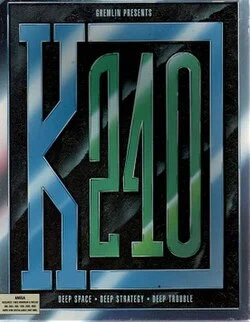
K240 is a real-time strategy and city-building video game developed and published by Gremlin Graphics. Released in May 1994 exclusively for the Commodore Amiga home computer, the game serves as the direct mechanical sequel to 1991’s planetary management simulator Utopia: The Creation of a Nation.
K240 holds a legendary, highly unique position in the history of early real-time grand strategy. Set entirely within a resource-rich asteroid cluster, the game successfully bridged the gap between modular city-builders like SimCity and emerging tactical space games.
By discarding traditional planetary grids to center its gameplay on multi-asteroid logistics, non-linear blueprint economies, and a famous mechanic allowing players to physically attach sub-light engines to entire celestial bodies to slam them into enemy territory, the title became a signature cult classic of the Amiga’s golden era.
Technical Specifications
| Attribute | Details |
| Developer | Gremlin Graphics |
| Publisher | Gremlin Graphics |
| Lead Designer | Graeme Ing |
| Engine | Proprietary 2D Isometric Colony / 2D Tactical Sector Grid Engine |
| Platform | Commodore Amiga (AmigaOS) |
| Release Date | May 1994 |
| Genre(s) | Real-time strategy (RTS), City-building, Management simulation |
| Mode | Single-player |
Core Premise & Sector Setup
The narrative of K240 launches players into the year 2380, a period where the sprawling Terran Empire spans over a thousand systems within 300 light-years of Earth. To fuel the empire’s massive industrial needs, corporate mining franchises are dispatched into the “Fragmented Sectors”—dangerous, deep-space zones filled entirely with floating debris and asteroid swarms.
The player takes absolute command of one such mining operation inside Sector K240, a massive cube of space measuring exactly 50 light-years across. You initiate the simulation with a single transport ship, a modest pool of credits, and a lone, un-colonized asteroid.
However, your industrial manifest destiny is cut short: the sector is violently contested by one of six hostile alien civilizations (such as the Swixarans or Tylarans) who possess comparable technological parameters and are actively seeking to eliminate your presence from the quadrant.
The Industrial Economy & Sci-Tek Blueprints
The primary gameplay loop combines granular municipal building placement with macroscopic resource trading. Every asteroid under your banner is managed via an independent isometric 2D viewport.
Colony Infrastructure Alignment
To sustain life on a barren rock, players must systematically zone functional infrastructure. You manage core civic pillars turn-by-turn: constructing high-yield solar or nuclear generators to power extraction lines, hydroponic domes to cultivate food, housing blocks to expand your workforce, and atmospheric scrubbers to mitigate toxic industrial pollution before citizen morale crashes. Concurrently, you erect automated mines over local deposits of valuable ores like Selenium and Crystalite.
The Corporate Supply Chain
Unlike standard 4X or RTS titles that utilize a magical global market interface, trading relies on realistic imperial logistics. Extracted raw ores must be safely stowed inside local storage silos.
Periodically, the Terran Empire’s massive flagship cargo cruiser will physically arrive in Sector K240. It is only during this specific docking window that players can sell off their accumulated ore reserves for liquid credits or collect fat performance bonuses for destroying enemy assets.
The Sci-Tek Blueprint Terminal
K240 completely omits a traditional linear technology tree or research lab building. To advance your civilization, you must spend accumulated credits to directly purchase proprietary blueprints from a Terran megacorporation known as Sci-Tek.
When the flagship docks, players check the commercial catalog to buy high-tier building blueprints, defensive missile schematics, and weapon configurations. This creates an intense economic friction: do you spend your hard-earned cash on immediate military reinforcements, or invest heavily in high-tier blueprints to secure a long-term economic monopoly?
Fleet Logistics & “God’s Own Hammer” Mechanics
Because the game was coded at the dawn of the RTS genre, it deliberately omits micro-management features that would later become industry standards.
Hands-Off Space Combat
When an adversarial fleet enters your territory through the Fog of War, players cannot manually drag boxes over individual spaceships or command them to attack a specific sub-target. Fleets can only be issued macro-level routing commands to travel toward a specific alien asteroid coordinate.
Once your fleet drops out of sub-light drive over the target destination, the ships automatically engage based on localized AI algorithms—manually targeting and firing their laser hardpoints randomly at enemy buildings, satellites, or orbiting defensive fighters.
God’s Own Hammer (Asteroid Engines)
To compensate for the lack of granular ship steering, K240 features an iconic, brutally destructive tactical mechanic. Once an asteroid has been completely stripped bare of its underlying metals and crystal resources, the hollowed-out rock does not have to sit idle.
Players can spend credits to bolt a massive cluster of Sub-Light Engines directly onto the asteroid’s surface.
Once the engines are online, you select a hostile alien asteroid coordinate on the tactical sector map and lock the engines to full throttle. The entire colonized celestial body slowly begins to march across the grid on an absolute, unstoppable collision course.
The defending alien AI will panic, frantically throwing every starship and ballistic missile in their inventory at the approaching rock to crack it open. If their firepower falls short, the results are absolute: the moving asteroid slams straight into the enemy colony center, instantly triggers a catastrophic explosion, and completely vaporizes both worlds off the star map.
Successor: Fragile Allegiance (1996)
Following the widespread critical acclaim of K240 on the Amiga (earning high-profile review scores including a 91% from CU Amiga and a 90% from The One), Gremlin Graphics sought to bring the asteroid-mining formula over to the rapidly expanding IBM PC market.
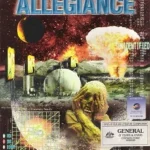
In 1996, they released Fragile Allegiance, which functions as a direct, highly sophisticated PC remake and spiritual successor to K240.
Fragile Allegiance preserved the exact building footprints, mining loops, modular missiles, and asteroid-engine ramming tactics of the 1994 original, while completely upgrading the presentation layer with a high-resolution SVGA graphical user interface, fully voiced alien diplomats, a deep corporate espionage system, and complex, limited-range fuel physics for all active starships.
Modern Preservation Status
As of May 2026, K240 is warmly remembered and immaculately preserved by retro computing historians as a true peak of the Amiga’s strategic library. Because its original Amiga machine language codebase is tied directly to Motorola 68000 assembly and historical floppy disk architectures, running the raw software natively on modern 64-bit multi-core Windows 11 operating systems is entirely impossible.
However, the complete game has been kept completely alive through dedicated open-source engineering. Strategy purists actively run the game utilizing the WinUAE or FS-UAE Amiga emulators, using digital Amiga Disk Files (ADF) widely hosted on software preservation repositories.
Alternatively, for players who prefer to skip the complexities of vintage Amiga emulation configurations, the game’s direct 1996 PC remake, Fragile Allegiance, is fully active, optimized, and commercially distributed on modern storefronts including Steam and GOG.com for a standard retail price of $5.99, allowing the brilliant, addictive asteroid-mining loops and planet-smashing tactics pioneered by Graeme Ing in 1994 to render flawlessly on contemporary high-definition widescreen displays.