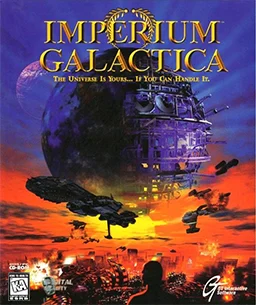
Imperium Galactica
 PC
PC
 THQ Nordic


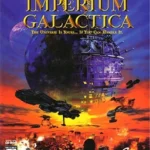
Imperium Galactica is a landmark 1997 real-time space grand strategy 4X video game developed by the Hungarian studio Digital Reality and published by GT Interactive. Released in March 1997 for MS-DOS and Microsoft Windows, the title represents a revolutionary design milestone in the strategy genre.
While contemporary 4X space titles like the Master of Orion series were rigidly anchored to abstract turn-based frameworks, Imperium Galactica seamlessly fused traditional macroscopic exploration and empire-building into a unified, fully real-time simulated universe.
By layering deep isometric colony development, real-time space and ground warfare, a highly restrictive facility-based research matrix, and a linear cinematic story driven by over an hour of Full-Motion Video (FMV) cutscenes, the title established a gold standard of narrative immersion that birthed a legendary grand strategy franchise.
Technical Specifications
| Attribute | Details |
| Developer | Digital Reality |
| Publisher | GT Interactive (Modern digital rights: THQ Nordic) |
| Composers | Tamás Kreiner |
| Engine | Proprietary 2D Isometric / Real-Time 3D Tactical Combat Engine |
| Platform(s) | MS-DOS, Microsoft Windows |
| Release Date | March 1, 1997 |
| Genre(s) | Real-time strategy (RTS), 4X Space Grand Strategy |
| Mode | Single-player |
Narrative Campaign: The Rise of Dante
The overarching campaign of Imperium Galactica unfolds during the fourth millennium, around the 3200s, as the ancient Galactic Empire begins to systematically fracture under the weight of internal rebellions, restive alien factions, and an enigmatic alien invasion force heading toward the core systems.
Instead of playing as an omnipotent, disembodied deity, you step into the boots of a young military protagonist named Dante. The game functions as a mechanical space opera, introducing structural systems step-by-step as you climb the imperial ladder:
- Lieutenant Rank: Dante begins the campaign in command of a single small capital ship—a Guardian-class Destroyer—and three basic Raptor-class Fighters, tasked purely with protecting three modest frontier colonies (Achilles, Naxos, and San Sterling) from localized pirate raids and aggressive Garthog border skirmishes.
- Admiral Promotion: As you fulfill operational objectives, the narrative transitions via FMV sequences. Your responsibilities balloon exponentially, granting you total administrative sovereignty over up to 93 unique planets, massive fleets of up to 28 capital ships and 180 fighters, and the keys to system-wide diplomacy and espionage against seven alien races and two renegade human empires.
The Galactic Countdown Warning: Regardless of whether you are actively paying attention, the galaxy outside your viewport continues to shift in real-time. If a player spends too much time lingering in the early “training” ranks to build up resources, the game’s ultimate antagonist—the Dargslan Kingdom—will organically conquer the rest of the galaxy background-factions, creating a borderline impossible, unwinnable scenario by the time you are promoted to Admiral.
The Triple-Threat RTS Systems
Imperium Galactica broke from industry trends by forcing players to master three completely distinct real-time tactical overlays across every campaign run:
1. Detailed Colony Management
When clicking on a colonized system, the engine transitions to a real-time, isometric planet surface view strongly resembling SimCity. Players balance taxes, population metrics, food cultivation, and power networks.
To sustain an empire, you manually place up to 174 unique structures—including hospitals, planetary shield hubs, deep-bore mines, solar grids, recreation centers, and orbital spaceship docks.
2. Real-Time Space Fleets
Interstellar space combat plays out as a dynamic tactical encounter. Admirals coordinate massive task forces, manually assigning target priorities for capital heavy cruisers down to independent interceptor wings.
Maneuvering is vital, as ships track independent armor arrays and localized shield facings. If your fleet is ambushed before an orbital platform can be manufactured, you can pull static Star Bases straight out of your cargo warehouse storage to immediately deploy them into orbit to hold the line.
3. Real-Time Ground Warfare
If an enemy fleet breaks your orbital blockades, they don’t instantly capture the world; they launch a full-scale ground invasion.
The game shifts to the surface map, forcing you to actively deploy mobile tank divisions, automated radar tracking trucks, and defensive laser fortresses to physically repel the alien ground forces or launch your own counter-invasions to forcefully seize a hostile species’ capital city square.
The Color-Coded Research Bottleneck
The game engine features an incredibly unique, highly controversial scientific architecture spanning 75 to 100 breakthroughs across five specialized tracks: Computer, Construction, A.I., Military, and Machinery.
Unlike games where a central global laboratory accumulates research points, Imperium Galactica applies a strict geographic constraint: Every colonized planet card is legally restricted to hosting exactly one research facility category, indicated by a fixed colored symbol on the system dashboard.
Advanced, high-tier technologies require a cumulative, system-wide total of multiple research labs operating concurrently in specific disciplines before research can even begin.
Because space is tight, the player is forced to either aggressively colonize and conquer neighboring star systems purely to diversify their planetary research footprint, or engage in a tedious loop of continuously demolishing and rebuilding expensive research centers on their home worlds to toggle between active tech projects.
Crucially, the computer AI players are completely exempt from this administrative bottleneck, possessing a fixed, non-developing technology pool tailored specifically to their faction archetypes.
Modern Digital Preservation Status
As of May 2026, the original 1997 Imperium Galactica stands beautifully preserved and fully accessible to contemporary PC strategy purists. After acquiring the classic IP assets following the historic structural fold of Digital Reality and GT Interactive, publisher THQ Nordic deployed the complete client onto modern digital storefronts including Steam and GOG.com for a standard retail price of $9.99.
The modern digital release comes natively pre-wrapped inside an optimized, pre-configured DOSBox emulation container. The release fixes legacy graphics crashes under modern DirectX frameworks, provides validated stability for Windows 11 architectures, and preserves the original uncompressed soundtrack composed by Tamás Kreiner alongside the complete hour-long cinematic FMV archives.
This allows modern players to experience the precise color-coded research constraints, gritty real-time surface invasions, and immersive sci-fi narrative arc of Dante with absolute technical stability on contemporary widescreen monitors.