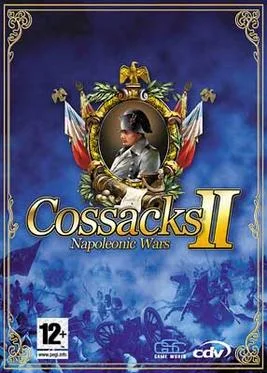
Cossacks II: Napoleonic Wars
 73
★ /10
73
★ /10
 PC
PC GSC Game World
 CDV
CDV

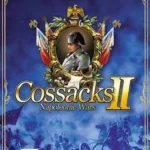
Cossacks II: Napoleonic Wars is the highly ambitious 2005 sequel to GSC Game World’s massive strategy hit. Published by CDV Software, this game represents a fundamental, almost shocking shift in design philosophy for the franchise.
While the original 2001 game was a chaotic sandbox defined by churning out thousands of units through brutal, base-building macro-economics, Cossacks II slowed the pace down entirely. It moved the timeline forward to the 19th century and transformed into a deeply tactical, highly punishing simulation of Napoleonic warfare. It stripped back the base-building focus to heavily emphasize logistics, troop morale, and the nerve-wracking discipline of musket volleys.
Gameplay and Tactical Realism
The engine was upgraded to handle an absolutely staggering theoretical cap of 64,000 units on a single map, but you rarely needed that many, because Cossacks II is won through positioning, not sheer numbers.
Key mechanical overhauls included:
- The Volley System: This is the absolute core of the game. Muskets in the 19th century were highly inaccurate. When you select a firing line, a colored cone appears in front of them indicating range and lethality (Red, Yellow, Green). Firing at maximum range (Red) will likely kill nobody. The game becomes a terrifying game of chicken: you must patiently hold your troops’ fire while the enemy marches toward you, waiting until they cross into the Green zone to unleash a devastating volley. If you fire too early, your men are left spending 15 seconds reloading, making them completely vulnerable to a bayonet charge.
- Morale and Fatigue: Unlike the robotic soldiers of the first game, troops in Cossacks II are human. The game introduces a strict Morale system. If a formation takes heavy artillery fire, is flanked by cavalry, or sees friendly units dying nearby, their morale will break, and the entire battalion will shatter and flee the battlefield in terror. Furthermore, units have a Fatigue bar; ordering infantry to sprint across the map will exhaust them, drastically lowering their combat effectiveness.
- Villages and Logistics: The grueling, peasant-heavy economy of the first game was entirely redesigned. To gather resources (Wood, Food, Stone, Gold, Iron, Coal), you must capture pre-existing Villages scattered across the map. These villages automatically generate resources and send them back to your capital via pack mules. You must actively defend the roads and your supply lines; if the enemy intercepts your mules, your army will quickly run out of gunpowder and starve.
- Strict Formations: Unformed units are essentially useless. You must lock your infantry into lines, columns, or squares (specifically to repel cavalry charges). Only formed units led by an Officer and a Drummer can execute coordinated volleys or organized melee charges.
The “Battle for Europe” Mode
Stepping away from traditional, linear storytelling, the single-player experience is anchored by the Battle for Europe mode.
Heavily inspired by board games like Risk and the Total War franchise, this mode presents a massive, turn-based grand strategy map of the European continent. You choose a nation, manage diplomacy, forge alliances, and move army tokens across territories. When two armies collide on the board, the game drops down into the real-time tactical engine to resolve the battle.
The Six Nations
At launch, the game focused on the major powers involved in the Napoleonic conflicts. While they shared the same core tactical mechanics, they featured distinct visual uniforms and slight statistical variations in their infantry and cavalry rosters:
- France: The dominant powerhouse, boasting incredibly fast unit production and highly versatile infantry.
- Britain: The masters of disciplined firepower. Their Highlander infantry and elite musketeers boast the highest firing accuracy in the game, perfect for defensive, long-range volleys.
- Russia: Relies on massive numbers, cheap infantry, and devastating, highly durable heavy cavalry.
- Austria, Prussia, and Egypt: Rounding out the roster, each offering unique regional cavalry (like Egyptian Mamelukes) and specialized artillery units.
Development and Legacy
Released in April 2005, Cossacks II: Napoleonic Wars was highly divisive upon launch. Hardcore fans of the original game heavily criticized the new Village-based economy and the slower, more deliberate pacing, feeling it strayed too far from the chaotic base-building formula they loved.
However, military history buffs and tactical strategy fans absolutely adored the game. The punishing volley mechanics, the necessity of the infantry square, and the beautiful, highly detailed 2D sprite work perfectly captured the atmosphere of a Napoleonic battlefield.
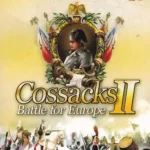
In 2006, GSC Game World released a standalone expansion titled Cossacks II: Battle for Europe, which heavily expanded the grand strategy mode, tweaked the morale system, and added three new playable nations: Spain, the Duchy of Warsaw, and the Confederation of the Rhine. Today, the game remains a brilliant, niche tactical simulator, beautifully preserved and easily accessible on modern PC storefronts.
Key Features:
- Napoleonic Tactics — Master the grueling reality of 19th-century warfare, utilizing strict formations, flanking maneuvers, and infantry squares to survive.
- The Volley System — Hold your fire until you see the whites of their eyes. Master the color-coded firing arcs to unleash devastating musket volleys at the perfect moment.
- Morale and Fatigue — Manage the psychological state of your troops. A well-placed cavalry charge into the enemy’s flank can trigger a mass panic, routing entire armies without firing a shot.
- Logistical Warfare — Abandon traditional base-building in favor of capturing neutral villages and fiercely protecting the physical supply lines that feed your army.
- Conquer the Continent — Guide France, Britain, Russia, and more to total dominance in the massive, turn-based “Battle for Europe” grand strategy mode.
Release Platforms:
- Microsoft Windows (PC) — April 4, 2005
- (Currently available digitally on Steam and GOG.com, often bundled with the 2006 Battle for Europe expansion).