Arizona Sunshine
 63
★ /10
63
★ /10
 PC
PC PS4
PS4

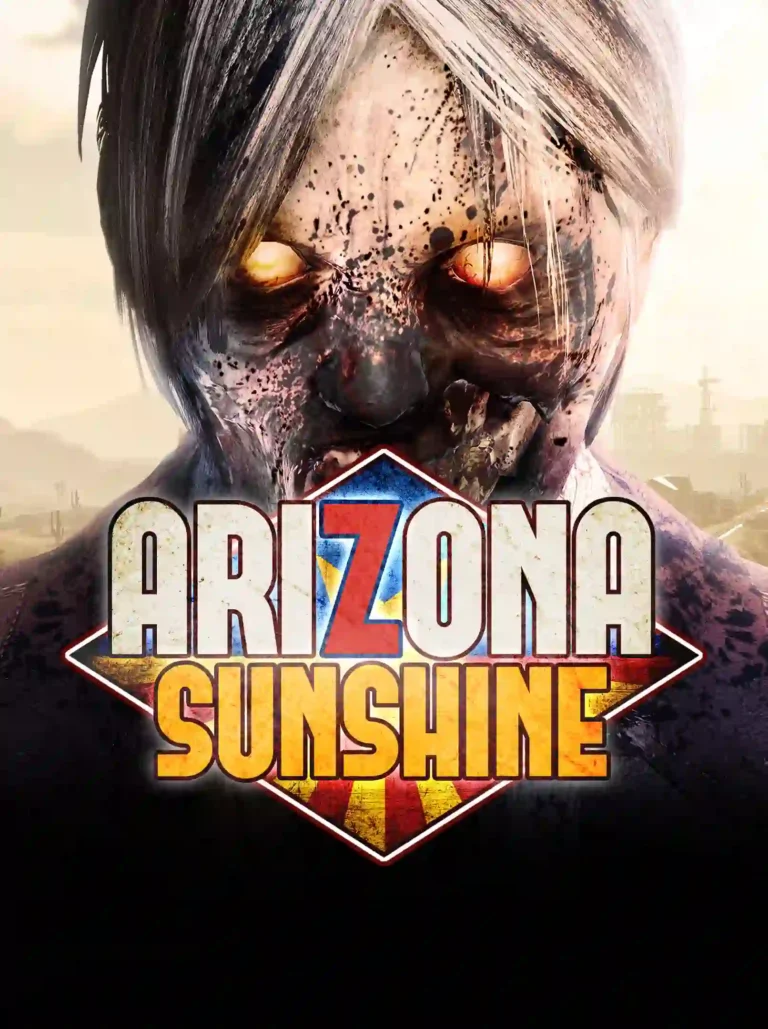
Arizona Sunshine is a 2016 virtual reality first-person shooter developed and published by Vertigo Games (alongside Jaywalkers Interactive). Released in December 2016 for the early wave of consumer VR headsets like the HTC Vive and Oculus Rift (and later ported to PlayStation VR and Meta Quest), it is widely considered one of the most important, pioneering titles of the modern virtual reality era. Before Half-Life: Alyx set the modern standard, Arizona Sunshine was the game that proved VR could handle a full-length, narrative-driven campaign rather than just serving as a glorified tech demo.
Core Concept and Story
The premise is delightfully straightforward, trading the genre’s typical dark, gloomy environments for the blinding, blistering heat of the American Southwest.
You play as an unnamed survivor who is entirely alone, fending off isolation by adopting a deeply sarcastic coping mechanism—referring to every single zombie he shoots as “Fred.” After hearing a faint snippet of human broadcasting over a radio, he sets off across the sun-scorched canyons, abandoned trailer parks, and terrifyingly dark Dutch-angle mineshafts of the Arizona river valley to find the source of the signal.
Gameplay and Early VR Mechanics
Playing the original Arizona Sunshine today serves as a fascinating time capsule of how developers were still figuring out the “rules” of virtual reality movement and interaction:
- The Locomotion Debate: When the game launched in 2016, “VR sickness” was a massive concern for developers. Arizona Sunshine originally relied heavily on “teleportation” movement to keep players from getting nauseous. While “smooth locomotion” (walking naturally with a joystick) was eventually patched in, the level design was very clearly built around teleporting from point to point.
- Pure Gunplay: Unlike modern VR games (and its own recent remake), the original game had absolutely no melee combat. If a zombie got too close, you couldn’t hit it with your gun or push it away; you simply had to backpedal frantically and shoot.
- Interactive Environments: For 2016, the world interaction was incredibly immersive. To scavenge for ammo, you had to physically reach out and pull open the doors of rusted cars, yank open desk drawers, and peek inside mini-fridges.
- Dual-Wielding and Horde Mode: The game allowed players to dual-wield pistols, Uzis, and sawed-off shotguns, making you feel like a post-apocalyptic action star. It also featured a highly popular, wave-based cooperative Horde Mode where up to four players could stand back-to-back in a canyon and hold the line against endless waves of “Freds.”
The Expansions
Vertigo Games supported the title with two major story expansions that filled in the lore of the outbreak before the main character’s journey:
- Dead Man DLC (2018): A prequel where you play as a US Army Special Forces corporal attempting to launch a nuclear missile from an infested silo to contain the outbreak.
- The Damned DLC (2019): Another prequel focusing on a US Special Forces team attempting to reactivate the generators of a massive Arizona hydroelectric dam.
The Legacy
Arizona Sunshine was a massive commercial triumph, grossing over $1.4 million in its first month—a staggering achievement for the incredibly small VR market of 2016.
It proved to the gaming industry that consumers were hungry for complete, multi-hour VR campaigns with voice acting, varied environments, and cooperative multiplayer. Without the massive success of the original Arizona Sunshine testing the waters of VR gunplay and inventory management, the larger-budget VR blockbusters of the 2020s would not exist.
Quick Note
Arizona Sunshine is the granddaddy of the modern VR zombie shooter.
In short: While its mechanics feel a bit clunky and rigid compared to modern VR standards (which is exactly why it was remade in 2024), its sun-drenched environments, snarky protagonist, and tense, ammo-scavenging gameplay made it the undisputed “killer app” of the 2016 VR revolution.