 74
74  PC
PC
 Eugen Systems
 Atari,
  Russobit-m,
  THQ Nordic

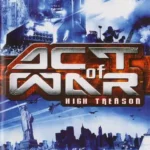
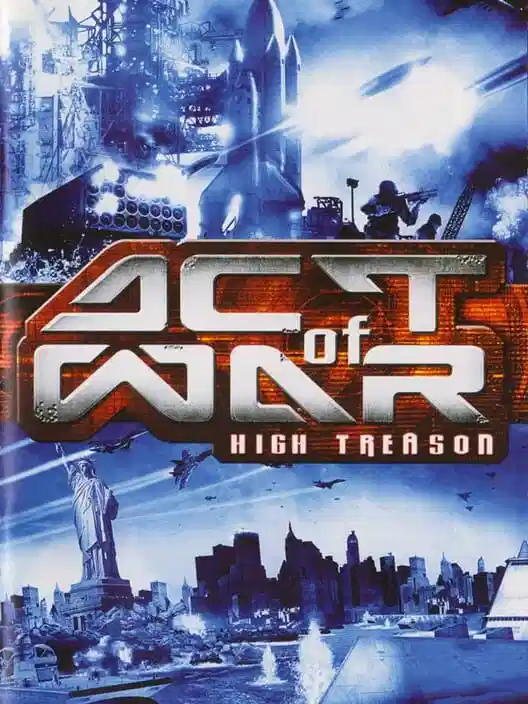
Act of War: High Treason is a 2006 real-time strategy (RTS) expansion developed by Eugen Systems and published by Atari. As the massive, standalone follow-up to 2005’s Direct Action, it sought to expand the “techno-thriller” scope of the original by introducing massive naval battles, a mercenary system, and a narrative that shifted the focus from global terror to a high-stakes political conspiracy within the United States government.
By 2006, Eugen Systems had perfected their engine, allowing for even more detailed urban environments and a significantly expanded scale of warfare. High Treason didn’t just add a few units; it fundamentally changed the tactical landscape, offering a level of complexity in modern military simulation that few games of the era—including the Command & Conquer series—could match.
The narrative premise picks up shortly after the events of the first game. During the lead-up to a U.S. Presidential election, a series of assassinations and a massive conspiracy within the halls of power suggest that the “Consortium” has infiltrated the highest levels of the American government. Task Force Talon returns to the field, now operating as outlaws to clear their names and stop a coup d’état that threatens to spark a global civil war.
Gameplay
Act of War: High Treason took the tight urban combat of the original and blew the doors off the scale of the battlefield.
Key gameplay mechanics and additions include:
- The Introduction of Naval Warfare: The most significant addition was the expansion into the seas. Players could now command full naval task forces, including Frigates, Destroyers, Submarines, and even Aircraft Carriers. These weren’t just background elements; naval units could provide devastating shore bombardment and cruise missile strikes to support land-based operations.
- The Mercenary System: Players could now hire specialized mercenary units from a dedicated “Mercenary Market.” These units—ranging from elite snipers and medics to experimental “S.H.I.E.L.D.” infantry—required a high upfront cost but didn’t take up traditional unit cap space, allowing for rapid tactical pivots during a match.
- Expanded Unit Rosters: Every faction received a suite of new hardware. The U.S. Army gained the M1A2 SEP Abrams and Stryker variants, while the Consortium and Task Force Talon received advanced drone tech and improved anti-air capabilities to counter the game’s increased focus on aerial and naval threats.
- Enhanced AI and Pathfinding: Eugen Systems refined the “Direct Action” engine to better handle the chaos of urban pathfinding, making it easier to maneuver large armored columns through narrow city streets and complex dockyards.
The Factions
While the three core factions remained, High Treason gave them new toys and specialized roles that leaned further into their asymmetrical identities:
- Task Force Talon: Now operating with limited official support, they leaned even harder into “black-ops” technology. They received improved UAVs and the F-117 Nighthawk, emphasizing their role as the masters of the surgical strike and high-tech scouting.
- The United States Army: Their role as the “Heavy Hitters” was solidified with the addition of naval supremacy. The ability to call in an Arleigh Burke-class destroyer to level an enemy base from offshore made the U.S. Army the undisputed kings of overwhelming firepower.
- The Consortium: The shadowy mercenaries became even more insidious. They received new stealth technology and specialized sabotage units designed to disrupt enemy naval supply lines and capture coastal refineries, leaning into their “asymmetrical insurgent” playstyle.
Development and Legacy
Act of War: High Treason is often cited by fans as the “peak” of the series. While it moved away from the live-action FMV cutscenes of the first game in favor of in-engine cinematics (a move that polarized some fans but allowed for more seamless storytelling), the tactical depth was unparalleled. The game is viewed as a bridge between the traditional “base-building” RTS era and the “Tactical Wargame” era that Eugen Systems would eventually pioneer with the Wargame and Steel Division franchises.
In the years following its release, High Treason became a “hidden gem” of the mid-2000s. Its realistic take on naval-to-land integration remains a rarity in the RTS genre, where naval combat is often treated as a secondary, simplified afterthought.
As of May 2026, High Treason is most commonly played as part of the Act of War: Gold Edition on Steam and GOG. While the 2006 engine originally struggled with the transition to 64-bit operating systems, modern digital versions have been significantly stabilized. The game’s highly detailed unit models and “zoom-to-the-ground” camera still hold up remarkably well, offering a level of visual fidelity that remains impressive on modern 4K displays.
Key Features:
- Total War on Land and Sea — Command a full spectrum of modern military assets, from infantry squads in the streets to nuclear submarines in the Atlantic.
- The Mercenary Market — Supplement your forces with specialized soldiers-of-fortune to fill tactical gaps in your army on the fly.
- Political Thriller Campaign — Navigate a complex 20-mission story of betrayal, domestic terrorism, and high-level government conspiracy.
- True Combined-Arms Tactics — Coordinate air strikes, naval barrages, and armored assaults in a seamless, real-time environment.
- Modern OS Compatibility — Fully playable in 2026 through the Gold Edition, featuring widescreen support and improved stability for Windows 11.
Release Platforms:
- Microsoft Windows (PC) — March 24, 2006.
- Act of War: Gold Edition — The definitive version available today, bundling the expansion with the original Direct Action.