Act of War: Direct Action
 82
★ /10
82
★ /10
 PC
PC
 Eugen Systems
 Atari,
  Russobit-m,
  THQ Nordic


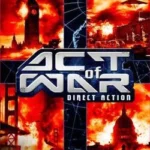
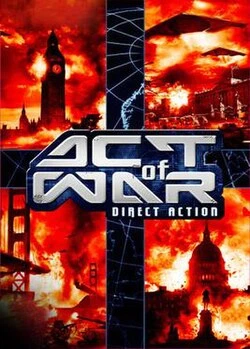
Act of War: Direct Action is a 2005 real-time strategy (RTS) game developed by the French studio Eugen Systems and published by Atari. Arriving during a period when the genre was dominated by sci-fi and fantasy, Act of War stood out as a gritty, “techno-thriller” RTS, designed to be the spiritual and mechanical successor to the realistic modern warfare style of Command & Conquer: Generals.
To ensure the highest level of authenticity, Eugen Systems collaborated with best-selling techno-thriller author Dale Brown. The result was a game that felt like a playable Tom Clancy novel, featuring a plausible near-future plot involving global oil crises, domestic terrorism, and shadowy corporate conspiracies. It was a visual and mechanical powerhouse that pushed the boundaries of urban combat and tactical realism in the mid-2000s.
The narrative premise centers on a massive spike in global oil prices caused by a series of terrorist attacks on U.S. soil. As the country teeters on the brink of economic collapse, the government activates Task Force Talon, a top-secret, elite counter-terrorism unit. Players must lead this unit to uncover the “Consortium”—a shadowy group of energy tycoons and mercenaries orchestrating the chaos to profit from a new world order.
Gameplay
Act of War: Direct Action was widely praised for moving the RTS genre out of the open plains and into highly detailed, claustrophobic urban environments.
Key gameplay mechanics and improvements include:
- Urban Combat Focus: Unlike its contemporaries, Act of War prioritized infantry and building-to-building fighting. Soldiers can occupy almost any skyscraper or house, utilizing them as fortified sniper nests or ambush points. Clearing a city block required careful combined-arms tactics rather than simple tank rushes.
- The Prisoner of War (POW) System: One of the game’s most innovative mechanics was how it handled casualties. Wounded soldiers and pilots don’t just disappear; they remain on the ground. Players can send units to capture enemy wounded or surrendering troops as POWs. Capturing prisoners provides a steady stream of “bounty” income and valuable intelligence, making the preservation of life (or the capture of the enemy) a vital economic strategy.
- Realistic Damage and Destruction: The game featured a sophisticated destruction engine for 2005. Tank shells would visibly blast chunks out of buildings, trees would splinter, and infantry could be sent flying by explosions. This wasn’t just aesthetic; destroying a building would remove the cover it provided, fundamentally altering the tactical map.
- High-Tech Logistics: The game utilized a multi-resource system including Money (generated by banks and POWs) and Oil. Players had to secure oil derricks and transport the resource via tankers back to their base, creating vulnerable supply lines that could be raided by enemy forces.
The Factions
The game features three distinct factions, each with a completely different approach to modern warfare:
- Task Force Talon: The protagonists of the campaign. They are a “quality over quantity” faction, utilizing cutting-edge, experimental technology. Their units include the F-35 JSF, S.H.I.E.L.D. infantry with exoskeleton suits, and the Global Hawk drone. They rely on versatility and high-tech gadgets to perform surgical strikes.
- The United States Army: Representing the massive, conventional military might of the U.S. They rely on overwhelming firepower and established doctrines. With units like the M1A2 Abrams, Apache Longbows, and Paladin Howitzers, they are slow to mobilize but nearly unstoppable once their “rolling thunder” begins.
- The Consortium: The shadowy antagonist faction. They operate as a high-tech mercenary force. They utilize stealth, deception, and “borrowed” Soviet-era hardware combined with black-market tech. Their signature units include the Akula stealth tank and YAK-141 Freestyle VTOLs. They excel at hit-and-run tactics and disrupting enemy logistics.
Development and Legacy
Act of War: Direct Action is fondly remembered for its high production values, specifically its integration of Live-Action Full-Motion Video (FMV). Much like the Command & Conquer series, the story was told through filmed segments featuring actors and news-style broadcasts that made the global conflict feel immediate and “real.” This was bolstered by a heavy, cinematic score and high-quality voice acting that treated the plot with a level of seriousness rarely seen in the genre.
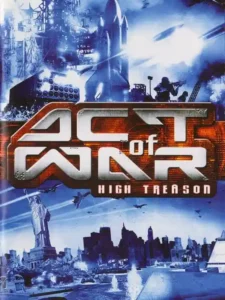
The game received an expansion in 2006 titled Act of War: High Treason, which added naval combat and a massive mercenary system, further cementing Eugen Systems’ reputation as masters of the tactical RTS. This expertise would eventually lead the studio to develop the highly successful Wargame series and Steel Division.
As of May 2026, Act of War remains highly accessible. It is available on Steam and GOG as the Act of War: Gold Edition (which includes the High Treason expansion). While the original game had some issues with modern multi-core processors, the digital versions have been patched for compatibility with Windows 10 and Windows 11. The game still holds up remarkably well visually, with its detailed cityscapes and explosive effects remaining impressive even two decades later.
Key Features:
- Techno-Thriller Realism — Immerse yourself in a narrative written by Dale Brown, featuring realistic near-future military tech and geopolitical intrigue.
- City Under Siege — Fight across meticulously recreated locations, including Washington D.C., San Francisco, London, and Moscow.
- Capture and Interrogate — Utilize the unique POW system to turn the enemy’s casualties into your economic advantage.
- Cinematic Storytelling — Experience the campaign through high-quality live-action FMV sequences and integrated news reports.
- Experimental vs. Conventional — Master the tactical differences between the U.S. Army’s brute force and Task Force Talon’s bleeding-edge stealth.
Release Platforms:
- Microsoft Windows (PC) — March 15, 2005.
- Act of War: Gold Edition (Digital) — Currently available on Steam and GOG with modern OS compatibility.