1666: Amsterdam
 PC
PCWhere to buy

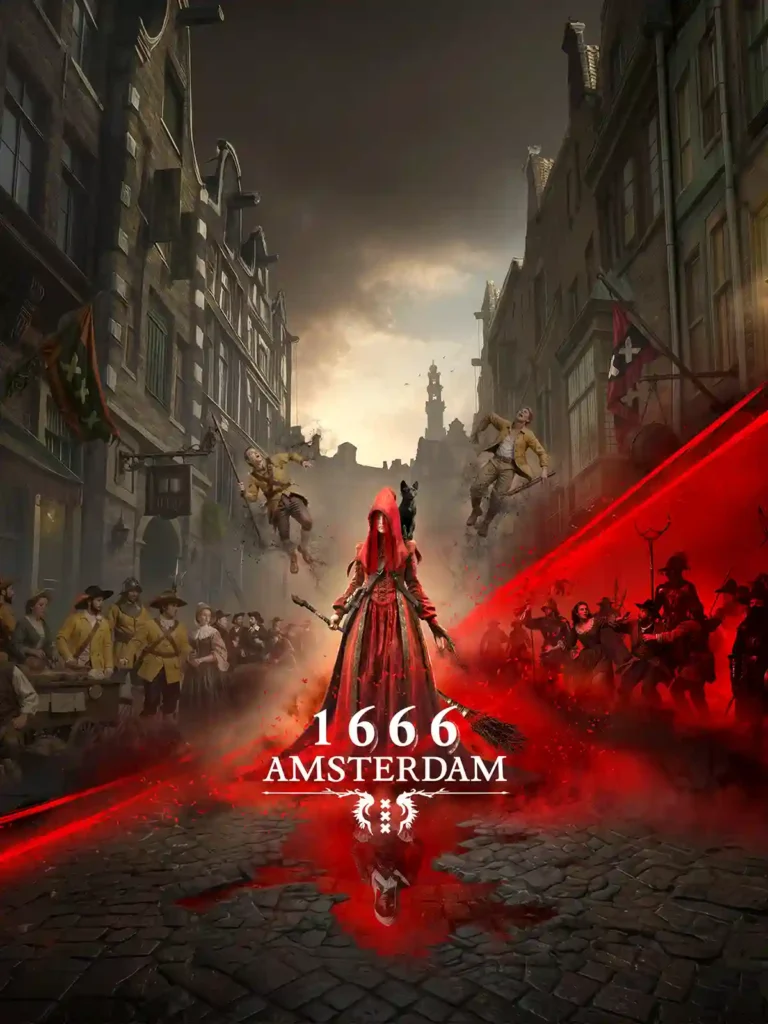
1666: Amsterdam is an upcoming dark, story-rich action-adventure video game developed and published by the independent studio Panache Digital Games. Directed by Patrice Désilets—the creative mind behind Prince of Persia: The Sands of Time and the original Assassin’s Creed—the project is historically famous for its highly turbulent, decade-long development hell and legal battle.
After disappearing from the public eye for years, the game made its official global re-debut at Summer Game Fest on June 5, 2026, accompanied by an immediate playable PC prologue ahead of its planned Early Access launch later in the year.
Set in a detailed historical and supernatural recreation of the Dutch golden age, the game blends third-person stealth, detective investigation, and witchcraft. Players must navigate a dark-fantasy conspiracy where demonic entities hide behind ordinary human facades.
Technical Specifications
| Attribute | Details |
| Developer | Panache Digital Games |
| Publisher | Panache Digital Games |
| Director | Patrice Désilets |
| Engine | Proprietary Panache Engine |
| Platform(s) | Microsoft Windows (Steam / Epic Games Store); Consoles confirmed for later |
| Prologue Release | June 5, 2026 |
| Early Access Launch | Planned for late 2026 |
| Genre(s) | Action-adventure, Stealth, Dark Fantasy |
| Mode | Single-player |
The Turbulent History: A Decade in Limbo
The survival story of 1666: Amsterdam is one of the most notorious legal battles in modern video game history. The project was initially conceived by Patrice Désilets in 2011 after he joined THQ Montreal. However, the game’s timeline was violently disrupted by a series of corporate shifts:
- The THQ Bankruptcy (2013): THQ collapsed financially, and its Montreal studio—along with the 1666 intellectual property—was bought up by Ubisoft during a publisher asset auction.
- The Firing and Legal Freeze (2013–2016): Ubisoft promptly fired Désilets due to creative differences and suspended development of the game. Because Désilets’ contract stated the IP would revert to him if the game was canceled, Ubisoft kept the project frozen indefinitely to retain the rights.
- The Rights Reclaimed (2016): After a fierce, multi-year legal battle, Désilets successfully settled with Ubisoft, reclaiming absolute creative rights to the 1666: Amsterdam IP and bringing it to his newly founded independent studio, Panache Digital Games.
Following the 2019 release of the studio’s debut title, Ancestors: The Humankind Odyssey, the development team spent over six continuous years quietly re-engineering 1666 from scratch as a highly polished, independent production.
Setting and Narrative Structure
The overarching storyline of 1666: Amsterdam spans a multi-era historical mystery. The lore dictates that in the year 1333, a dark covenant was sealed with ancient, supernatural beings known as the Originals. Exactly 333 years later, in 1666, these occult entities still walk among the population, hiding behind the faces of ordinary citizens to pull the strings of society.
The game transitions its narrative across three distinct time periods to solve a single grand puzzle:
- The primary historical era of 1666 during the height of the Dutch Golden Age and the height of the European witch hunts.
- The modern retro era of 1999.
- The present day.
Players step into the shoes of Noa Brooklyn, a protagonist raised by a secretive faction to fulfill a heavy destiny. Inheriting the mystical mantle of “The Seer” (also referred to as the Collector), Noa uses forbidden witchcraft to expose and eliminate the occult forces occupying the city.
Core Gameplay Pillars
The gameplay structure is built around a distinct day-and-night dynamic that dictates how Noa interacts with the open city of Amsterdam:
1. Daytime Investigation
By day, the gameplay functions like a historical detective simulator. Noa explores the crowded streets, bridges, and backalleys of 1666 Amsterdam, conversing with local residents and piecing together clues. Using her sorcery, she can cast subtle spells to peer past human facades, identifying the subtle, telltale signs of demonic corruption or occult influence without drawing the suspicion of the local authorities.
2. Nighttime Confrontation
When night falls, the game shifts heavily into an action-heavy, supernatural infiltration sandbox. Noa must actively hunt down the demonic targets she unmasked during the day. The game introduces a crucial strategic layer by forcing players to choose a specialized companion to walk alongside Noa.
The Cat Companion Mechanic: One of the most unique gameplay loops revealed involves a black cat named Aaron. Players can dynamically swap control over to Aaron to execute nimble vertical platforming, squeeze through tight geometric vents, scout heavily guarded fortresses, and create vital distractions so Noa can bypass guards undetected.
Current Status and 2026 Rollout
Following its grand reveal at the Summer Game Fest on June 5, 2026, Panache Digital Games bypassed standard marketing cycles by immediately deploying a free 30-minute playable Prologue on PC via Steam and the Epic Games Store. This standalone demo serves as a direct technical introduction to the narrative framework, the core witchcraft mechanics, and the basic movement feel of the engine.
The studio’s current rollout plan involves launching the game into a community-driven PC Early Access window later in 2026. Patrice Désilets stated that the team intends to use the Early Access phase to actively gather responsive player feedback, fine-tune the investigation AI, and balance the magic mechanics before finalizing the game for its eventual full release and subsequent console ports.
Trailer
View on Videos