Thea 2: The Shattering
 Nintendo Switch,
  PC,
PC,  PS4,
PS4,  Xbox One
Where to buy




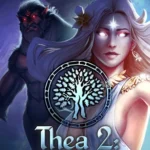
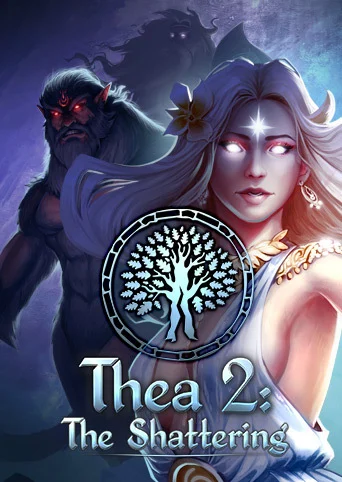
Thea 2: The Shattering is a turn-based survival strategy 4X video game developed by MuHa Games and Eerie Forest Studio, and published by MuHa Games. Released on May 13, 2019, for Microsoft Windows, with subsequent console ports extending to the Nintendo Switch, Xbox One, and PlayStation 4, the game serves as the direct sequel to 2015’s Thea: The Awakening.
The game operates as an idiosyncratic genre hybrid, intentionally stepping away from conventional 4X design. By fusing dark Slavic folklore, rogue-like survival logistics, deep role-playing character progression, and a unified tabletop card-battling engine, the title delivers an unforgiving macro-strategy sandbox where the player’s civilization is represented not by abstract map borders, but by a fragile, mortal warband wandering a hostile world.
Technical Specifications
| Attribute | Details |
| Developer | MuHa Games, Eerie Forest Studio |
| Publisher | MuHa Games (PC), RockGame (Consoles) |
| Engine | Unity |
| Platform(s) | Microsoft Windows, Nintendo Switch, Xbox One, PlayStation 4 |
| Release Date | • Early Access: November 30, 2018 • Full PC Launch: May 13, 2019 |
| Genre(s) | Turn-based strategy, 4X, Tactical RPG, Card Battler |
| Mode(s) | Single-player, Multiplayer Co-op |
Gameplay and Core Innovations
The Chosen and the Slavic Pantheon
At the launch of a campaign, players do not choose a political faction or established nation. Instead, they select a patron deity from a mythical Slavic pantheon—such as Perun, Horos, or Dzievanna—and appoint a single mortal “Chosen One” to act as the physical leader and anchor of their starting troupe. The selected deity provides unique passive attributes, starting card perks, and resource multipliers.
Performing well across game runs accumulates permanent “God Points”. These are spent in a meta-progression cosmic tree to unlock advanced deity archetypes, rarer starting equipment modifiers, and superior baseline character classes for future survival attempts.
Nomadic Hordes vs. Village Settlement
While the original game took place across a single pangea landmass, Thea 2 expands the world grid into a procedurally generated archipelago. Each isolated island contains specific ecosystem biomes, dangerous native monster species, and strictly gated resource tiers.
Players start on a baseline human island containing Tier I and II resources, forced to eventually construct seafaring vessels to navigate hazardous oceans and harvest legendary materials from outer realms. The macro-strategy splits into two distinct operational ideologies:
- The Sedentary Village: Players can anchor a permanent settlement on a hex grid. This unlocks a village building layout to multiply passive resource inputs, cook complex rations, and safely shelter children until they mature into new worker, gatherer, or warrior classes.
- The Nomadic Horde: Alternatively, players can reject permanent urbanization completely, playing the entire game as a mobile, wandering warband. Nomadic play removes the vulnerability of defending a static location, allowing players to pool their personnel, travel freely, and instantly adjust to unexpected world events.
The Three-Color Card Challenge Matrix
All forms of conflict resolution—ranging from direct physical ambushes and high-stakes diplomatic bartering to warding off psychological curses and researching mystical anomalies—are handled through a shared tabletop card-battling screen. Your warband members physically function as your card deck, where their combat efficiency is determined entirely by their attributes, equipped gear, and personal traits.
Challenges are strictly color-coded into three distinct avenues of interaction:
- Red (Physical): Standard martial combat relying on raw Strength, heavy armor plating, and shields to directly shatter enemy health bars.
- Yellow (Mental): Intellectual and social standoffs governed by Perception, Wits, and conversational traits to pacify, track, or outsmart opponents.
- Purple (Spiritual/Mystical): Mystical confrontations pulling from a character’s Sanity, Mysticism, and Faith to repel inner demons, invoke high-tier rituals, or endure otherworldly curses.
Tactical success demands establishing a highly varied roster. A warband composed purely of elite plate-armored knights will easily decimate an orc warband in a Red challenge, but can be instantly wiped out or driven insane without throwing a single punch if an event forces them into a Purple spiritual puzzle.
Crafting and Resource Refinement
The domestic loop completely rejects generic gold currency in favor of an intricate, itemized crafting engine. Raw materials are distributed across five distinct power tiers. While primitive Tier I elements like coal or basic wood are easily gathered on the starting island, Tier IV and V materials—such as void sparklers, grand gems, or alchemy skin—are extraordinarily rare.
Players must rely on high-stakes adventuring in dangerous biomes or utilize their party’s internal cooking and crafting attributes to combine and refine vast piles of lower-tier goods into high-grade composites. Items built from advanced resources inherit specialized elemental status tags—such as granting Life Leech from ancient bone essences or massive Shielding attributes from treated stone—enabling deep combat customization for your warband.
Legacy and Modern Status (2026 Perspective)
As of mid-2026, Thea 2: The Shattering is preserved as a finalized indie strategy classic. It is stably distributed across PC storefronts like Steam and GOG. The Unity engine client runs natively on 64-bit Windows 11 desktop architectures, maintaining full support for multiplayer co-op sessions.
The title’s long-term success and distinct community following ultimately paved the way for MuHa Games’ next major development cycle. The studio expanded the universe further with their next major project, Project Thea, which made its official debut in Steam Early Access on November 20, 2025, keeping the studio’s signature blend of Slavic folklore and deep strategy mechanics alive for contemporary audiences.