Shattered Horizon
 PC
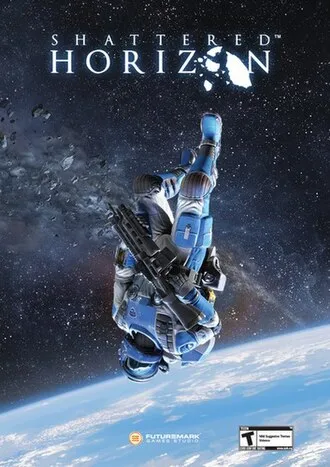
PCShattered Horizon is a 2009 multiplayer zero-gravity first-person shooter video game developed and published by Futuremark Games Studio. Released exclusively for Microsoft Windows on November 4, 2009, the title stands as the debut software release from the gaming branch of Futuremark, the globally renowned tech company behind the industry-standard 3DMark PC hardware benchmarking utilities.
Instead of competing within the heavily saturated military shooter market of the late 2000s, Shattered Horizon chose an uncompromisingly unique design angle. It blended realistic, 360-degree Newtonian physics with an advanced graphical showcase engine that pushed contemporary gaming rigs to their absolute limits. The title is widely remembered as a dazzling, ahead-of-its-time technical achievement that boldly risked mainstream adoption to deliver a pure, un-compromised PC enthusiast experience.
Technical Specifications
| Attribute | Details |
| Developer | Futuremark Games Studio |
| Publisher | Futuremark Games Studio (IP later transitioned to Rovio Entertainment in 2012) |
| Composer | Markus “Captain” Kaarlonen (Poets of the Fall) |
| Engine | Proprietary Futuremark Engine (Heavily re-engineered branch of the 3DMark Vantage rendering pipeline) |
| Platform(s) | Microsoft Windows exclusive |
| Release Date | November 4, 2009 |
| Genre | Multiplayer first-person shooter, Tactical shooter |
| Mode(s) | Multiplayer, Single-player (with bots introduced in the Last Stand update) |
The Moonring Cataclysm: Narrative Premise
The narrative takes place forty years into the future, an era where mankind has heavily commercialized space travel to aggressively mine the natural resources of the Moon. Driven by corporate greed and systemic oversight, a catastrophic mining disaster at a major lunar excavation facility triggers the largest industrial explosion in human history. The blast violently tears the Moon apart, sending billions of tons of rocky crust, metals, and fine dust hurtling into near-Earth space.
The catastrophic ring of floating planetary debris settles into a permanent orbit around Earth, visible from the surface as a dramatic, shimmering night sky formation known colloquially as “The Arc” or “The Moonring.”
With Earth heavily battered by initial impacts and completely cut off from launching rescue supply pipelines, thousands of astronauts, scientists, and blue-collar laborers are left permanently stranded in the vacuum of space. The remnants of humanity quickly fracture into two desperate, warring factions fighting a zero-sum war for the remaining oxygen, water, and shelter modules scattered across the debris field:
- The International Space Agency (ISA): Composed of elite scientists and military astronauts based on the battered remnants of the International Space Station. Tasked by the remnants of Earth’s governments with seizing control of space infrastructure and apprehending those responsible for the cataclysm, they find themselves weaponized using tactical armaments sent up right before supply channels collapsed.
- The Moon Mining Cooperative (MMC): A hardened faction of blue-collar space miners, heavy machinery operators, and corporate security forces who miraculously survived the physical destruction of the lunar base camps. Cut off from Earth and facing severe international criminal charges for causing the disaster, they view the ISA’s presence as an existential threat to their survival, fighting brutally to protect their localized life-support modules.
360-Degree Newtonian Vectors: Gameplay Mechanics
Shattered Horizon discarded traditional earthbound verticality to introduce a combat landscape where direction is completely subjective. Players pilot customizable, thruster-equipped spacesuits that grant absolute mechanical freedom of movement:
- True Zero-Gravity Traversal: Utilizing integrated suit jetpacks, players glide, roll, and vault through open space along infinite vertical and horizontal vectors. The engine models momentum accurately; flying in one direction requires active counter-thrusting to brake, creating a high-skill ceiling for evasion and tactical positioning.
- The Surface Grapple Matrix: Operating purely in open space leaves players highly vulnerable and weapon recoil will realistically push an un-anchored player backward. To counter this, players utilize a magnetic grapple system to instantly snap their boots onto any floating asteroid surface, space-station girder, or hull plate, instantly redefining their personal “down” vector and stabilizing their weapon aim.
- The Kinetic Arsenal: To keep the competitive playing field strictly balanced, the game launched with a highly unified weapon: the SCAR (Space Combat Assault Rifle). This multi-functional firearm paired standard kinetic ballistics with an underslung multi-grenade launcher capable of firing three distinct tactical utilities: EMP rounds to temporarily stall enemy suit thrusters, explosive charges for high-impact point damage, and specialized ICE (Inertial Containment Expansion) steam clouds that block line-of-sight and distort targeting visors.
Silent Running: The Acoustic Paradox
Because sound cannot travel through a literal vacuum, Shattered Horizon implemented a brilliant sound-simulation mechanic. The player’s high-tech spacesuit artificially synthesizes tactical audio waveforms (such as gunshots, thruster hums, and footsteps on hull plates) onto the player’s audio visor to maintain situational awareness.
This layout birthed the Silent Running Mode. Players can manually choose to cut their suit’s main generator power, leaving them completely invisible on enemy radar systems and eliminating all glowing thruster light tracks. However, this stealth maneuver incurs a massive structural risk: powering down the suit completely eliminates the player’s HUD crosshairs, disables their thruster mobility, and strips away all simulated audio, plunging the gameplay into an eerie, bone-chilling absolute silence where the only audible sound is the frantic, muffled breathing of the astronaut inside the helmet.
The Ultimate Tech Flex: The DirectX 10 Gamble
Because Futuremark Games Studio operated as an extension of a hardware-testing firm, Shattered Horizon was engineered from its very inception to function as a premium benchmark for contemporary PC power. The studio utilized a heavily customized iteration of the engine framework that drove 3DMark Vantage, allowing them to render stellar ambient lighting fields, complex asteroid physics layers powered by NVIDIA PhysX, and sharp HDR contrasts between cosmic darkness and the blinding glow of the sun reflecting off Earth’s oceans.
However, this commitment to technological vanguardism resulted in a historic, highly controversial retail gamble: The game strictly required DirectX 10 and a multi-core processor to run.
By making DX10 mandatory, Futuremark completely locked out Windows XP users—who still made up a massive, dominant percentage of the global PC gaming landscape in late 2009. While the move drew fierce community backlash from users unwilling to upgrade to Windows Vista or the newly launched Windows 7, the developers stood firm, arguing that tethering the engine’s advanced global lighting pipelines and volumetric space fog to legacy DirectX 9 code would fundamentally compromise their uncompromising visual vision.
Contemporary Stance & 2026 Perspective
Shattered Horizon is fondly remembered as a pristine, tragic ghost ship of PC gaming history. The game’s commercial lifecycle was brief; despite receiving major post-launch content expansions like the Moonrise map pack and the Firepower weapons update, the high hardware barrier to entry severely bottlenecked its early community growth. In 2012, Rovio Entertainment acquired Futuremark Games Studio, shifting the internal development focus completely away from high-end PC shooters, which eventually led to the game being officially delisted from the Steam marketplace.
Today, the title is structurally preserved as a fascinating piece of digital abandonware:
The official multiplayer matchmaking servers were permanently deactivated years ago, and because the game engine relies heavily on legacy server architectures, the software is entirely unplayable on modern out-of-the-box system setups. Furthermore, current diagnostic metrics confirm that the title remains completely unsupported on SteamOS and modern Linux handheld layers like the Steam Deck, owing to old DirectX 10 hooks and archaic PhysX driver checks that fail to compute through basic compatibility layers.
Despite its commercial absence, the game remains highly respected in software preservation rings under modern 64-bit Windows 11 desktop environments. Retro PC communities maintain archived clients bundled with the final Last Stand software patch, which safely integrated fully functional, high-skill offline single-player bot AI support for all core game modes. By deploying specialized community wrappers to emulate legacy PhysX runtimes and upscaling the engine to run at modern high-refresh rates, tech enthusiasts continue to boot up the software to witness a time when a benchmarking studio dared to turn space into the ultimate, zero-gravity tactical playground.