Saints Row
 81
★ /10
81
★ /10
 Xbox 360
 THQ
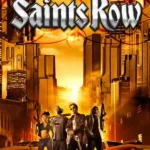
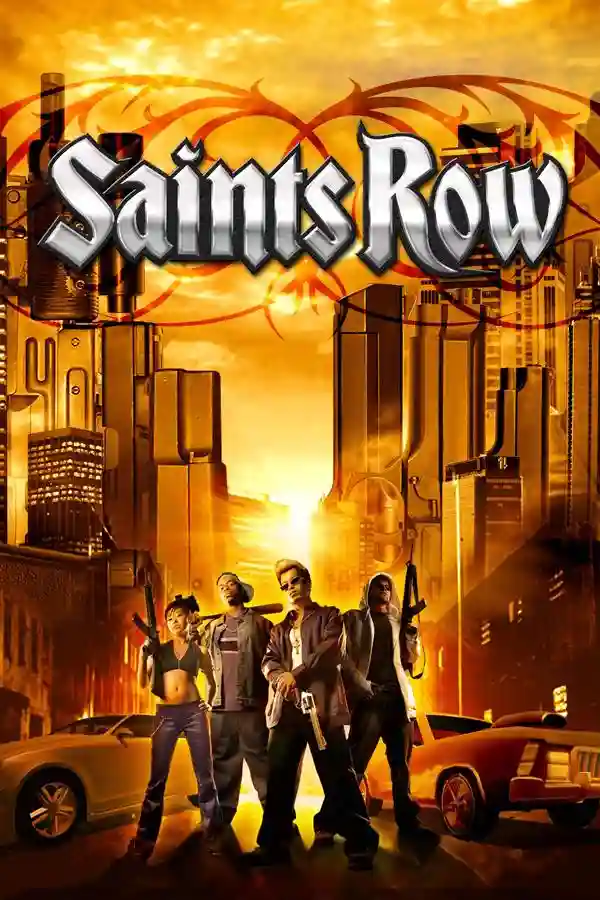
THQSaints Row is a 2006 open-world action-adventure video game developed by Volition and published by THQ. Released in August 2006 exclusively for the Xbox 360, the title stands as the foundational debut installment of the Saints Row franchise.
As the very first seventh-generation “sandbox” crime game, Saints Row arrived on the market a full year and a half before Grand Theft Auto IV. While initially dismissed by critics as a reactionary clone of Grand Theft Auto: San Andreas, it achieved massive commercial success, selling over 2 million copies. It pushed the genre forward by introducing high-definition open-world graphics, seamless Xbox Live multiplayer matchmaking, ragdoll physics, and extensive character customization pipelines that defined the series’ identity.
Technical Specifications
| Attribute | Details |
| Developer | Volition |
| Publisher | THQ |
| Director | Douglas Travis |
| Producer | Greg Donovan |
| Lead Designer | Christopher Stockman |
| Engine | Proprietary Volition Sandbox Engine (First iteration) |
| Platform(s) | Xbox 360 exclusive (Never ported to PC or PlayStation) |
| Release Date | August 29, 2006 (North America) / September 1, 2006 (Europe) |
| Genre | Action-adventure, Third-person shooter, Urban Sandbox |
| Mode(s) | Single-player, Online Multiplayer, Co-Op (via Xbox Live) |
The Battle for Stilwater: Campaign and Narrative
The story takes place in the fictional Midwestern metropolis of Stilwater, a city deeply fractured by systemic poverty, corporate neglect, and a violent, unchecked turf war between three powerful street gangs. The player controls a completely customizable, nameless protagonist known simply as “The Playa.” The game opens in the slums of the Red Light District, where the Playa is randomly caught in a three-way gang crossfire and faces certain execution. At the last second, they are rescued by Julius Little (voiced by Keith David), the calm, charismatic leader of the 3rd Street Saints. Julius recruits the Playa into the gang, presenting the purple-clad Saints not as a criminal enterprise, but as a community defense force aiming to systematically eradicate the rival gangs and reclaim the streets for the citizens.
To secure absolute control, the Playa operates alongside a core group of Lieutenants to dismantle the three factions ruling the city:
1. The Vice Kings (Yellow)
An incredibly wealthy, corporate-backed African-American syndicate ruling the retail and entertainment districts. Led by the brilliant, old-school gangster Benjamin King (Michael Clarke Duncan), the Kings control the city’s music labels, prostitution rings, and high-tier legal operations. The Playa partners with the smooth-talking Pierce Washington and a double-agent named Lin to exploit internal betrayals within King’s inner circle.
2. Los Carnales (Red)
A ruthless, multi-generational Latin-American cartel commanding the docks and industrial sectors. Spearheaded by the hot-headed Angelo Lopez and his calculating brother Hector, the Carnales dominate the city’s international drug trafficking and heavy black-market weapon smuggling corridors. The Playa operates alongside the unhinged, iconic marksman Johnny Gat to intercept their shipments and break their international cartel backing.
3. The Westside Rollerz (Blue)
A hyper-aggressive, high-tech street racing gang ruling the suburban and upscale neighborhoods. Managed by the arrogant street racer Joseph Price and his brilliant, white-collar criminal uncle William Sharp, the Rollerz run massive grand-theft-auto networks and high-stakes illegal gambling rings. The Playa works with the undercover Saint Troy Bradshaw to sabotage their racing operations and crush their mechanical logistics.
The Silent Protagonist Twist: Throughout the entire 30-plus hour campaign, the Playa remains completely mute, communicating entirely through nods, shrugs, and expressions while the voice cast carries the drama. This layout builds toward an iconic cinematic payoff: in the final scene of the game, after Julius’s car explodes and the Mayor betrays the crew on a private yacht, the Playa finally speaks their very first and only line of dialogue in the entire game (“Bullshit,”) right before the yacht detonates in a massive cliffhanger.
Sandbox Bedrock
Volition utilized Saints Row to introduce mechanical systems that injected massive player agency into a genre that had historically relied on fixed, pre-baked protagonists:
- True Character Creation: Breaking away from fixed characters like GTA’s CJ or Tommy Vercetti, Saints Row let players fully sculpt their avatar. The engine packed advanced sliders for body mass, facial features, and ethnic backgrounds, alongside an expansive clothing layering system where players could individually choose shirts, open jackets, tilt baseball caps, and purchase luxury jewelry at urban retail chains.
- The Respect Gating System: Players could not simply sprint from one story mission to the next. To unlock primary gang narrative chapters, players had to actively fill an on-screen Respect Meter. Respect was earned by generating urban chaos and completing a suite of highly experimental, satirical Activities scattered across the city.
- The Birth of Signature Activities: This entry served as the absolute birthplace of the series’ most famous side modes, including the original debut of Insurance Fraud (intentionally throwing your character into oncoming traffic to manipulate a settlement meter), Escort (driving high-profile VIP clients around while aggressively evasive paparazzi and media vans), and Snatch (raiding rival gang brothels to recruit street workers to the Saints’ network).
Retro Standing
The original 2006 Saints Row occupies a fascinating, highly nostalgic position as a sacred “lost relic” of the open-world golden era. Following the severe financial failure of the 2022 Saints Row reboot and the subsequent closure of developer Volition by Embracer Group in August 2023, the community’s appreciation for this original, grounded street-gang simulator has hit an all-time high. Celebrating its 20th anniversary this year (2006–2026), the game is heavily praised for its gritty, uncompromised urban tone, standing as a sharp contrast to the increasingly cartoonish, sci-fi superhero directions the sequels eventually took.
The game is structurally unique today because it remains a permanent console exclusive that was never ported to PC or PlayStation hardware. Fortunately, the software is brilliantly preserved and highly active across modern networks:
On Xbox Series X and Xbox Series S hardware via native backward compatibility, the 2006 retail client runs in an absolute dream state. While the original Xbox 360 hardware was notoriously plagued by screen-tearing, severe frame drops during heavy explosions, and an unstable 30Hz target, contemporary Xbox systems leverage emulative brute-force to deliver a rock-solid, locked 60 frames per second resolution. Coupled with system-level Auto HDR tone mapping, the neon lights of the Red Light District and the deep purple flags of the 3rd Street Saints look incredibly crisp on modern 4K displays.