Pax Nova
 PC
PCWhere to buy

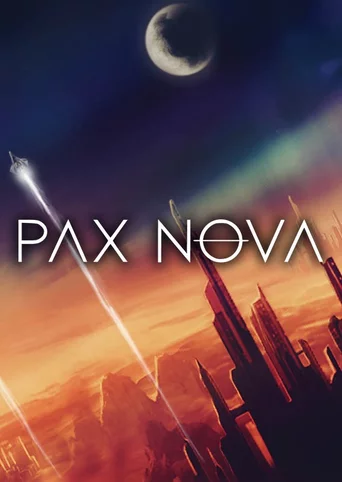
Pax Nova is a turn-based science-fiction space grand strategy 4X video game developed by the Portuguese independent studio GreyWolf Entertainment and published by Iceberg Interactive. Initially launching into Steam’s Early Access program in May 2019, the title achieved its full commercial 1.0 release on April 28, 2020, for Microsoft Windows.
The game’s narrative premise follows a classic space opera setup: having utterly devastated Earth through systemic warfare and pollution, humanity intercepts a cryptic invitation from deep space. This signal guides the remnants of civilization to migrate to the distant Eos galaxy to start anew, marking the dawn of the “Pax Nova” era.
Mechanically, Pax Nova established itself as a unique, macro-scale hybrid. It deliberately attempted to bridge the gap between planetary, hexagon-grid colony builders like Sid Meier’s Alpha Centauri and sweeping, interstellar grand strategies like Stellaris by nesting its entire strategy layer into a cohesive, multi-tiered universe.
Technical Specifications
| Attribute | Details |
| Developer | GreyWolf Entertainment |
| Publisher | Iceberg Interactive |
| Lead Designer | Mike Domingues |
| Engine | Unity Engine |
| Platform | Microsoft Windows (64-bit native configuration) |
| Release Date | • Early Access: May 9, 2019 • Full 1.0 Launch: April 28, 2020 |
| Genre(s) | Turn-based strategy, 4X Space Grand Strategy |
| Mode(s) | Single-player, Multiplayer |
The Dual-Layer Horizon: Planets and Space Lanes
The defining mechanical gimmick of Pax Nova is its Seamless Multi-Layer Topography Engine. Rather than locking the gameplay loop purely to the surface of a single world or abstracting planetary management down to basic text menus, the game plays out concurrently across two distinct spatial dimensions:
1. The Planetary Surface Layer
On the ground, the game acts like a traditional, hex-based historical 4X. Players settle procedurally generated worlds, exploiting localized biomes and extracting strategic resource reserves.
City-building relies on a thoughtful District Placement System. Players arrange dedicated residential, industrial, and scientific sectors across the grid, maximizing adjacency bonuses without inducing unmanageable local infrastructure micro-management.
2. The Interstellar Space Layer
Once an empire researches basic atmospheric escape vectors, the scope expands directly into the Void of Space. Players can seamlessly zoom off the planet’s surface to command fleets navigating the broader star systems of Eos.
The space layer features its own independent points of interest, tasking players with constructing orbital space bases, mining asteroids, fending off space pirates, and hunting down territorial cosmic entities. Military divisions can be physically transitioned from space blockades straight down into land-based ground invasions.
Asymmetric Races and Factions
The geopolitical landscape of Eos is populated by three distinct alien archetypes split across a grand total of 15 playable factions, each bringing unique racial traits and specific challenges to the sandbox:
- The Humans: Adapting to their status as fragile, displaced refugees, human factions focus heavily on political diplomacy, expansion, and industrial flexibility to carve out a fresh home.
- The Khross: A proud, highly sophisticated elder species natively attuned to the ancient mysteries of the Eos galaxy.
- The Vermil: A highly aggressive, dangerous biological faction frequently geared toward intense, militaristic land grabs and subversion.
Diplomacy operates through a dynamic landscape where new geopolitical options, trade pacts, or declaration parameters automatically unlock depending on your faction’s behavioral history, chosen technology nodes, and emergent story events.
Modular Design & Add-On Content
To prevent military combat from devolving into boring stat checks, Pax Nova integrates a highly flexible Unit and Ship Customization Terminal. Rather than being stuck with rigid factory presets, players manually choose custom hulls, armor platings, defensive shield generators, and specific elemental weapon attachments. This allowed players to actively counter the exact damage outputs of localized space monsters or hostile neighboring factions.
The complete strategic landscape was supplemented by three official targeted content drops:
- Frostborn DLC: A free content addition introducing specialized cryogenic mechanics and cold-weather adaptations.
- Beyond the Rift DLC: An expansion adding extra-dimensional anomalies, fresh high-tier research branches, and anomalous exploration sectors.
- Tech Supremacy DLC: A progression pack completely inflating the late-game tech matrix with advanced cybernetic components and weaponry.
Modern Preservation Status
As of June 2026, Pax Nova stands preserved as a finalized, content-complete “comfort food” strategy title. While its launch reception was somewhat mixed due to rough early audio designs and a relatively simple diplomatic AI compared to heavy hitters like Stellaris, the game found a loyal niche as a breezy, low-stress 4X title—often affectionately referred to by strategy purists as the casual “sudoku of strategy games.”
Distributed actively on the Steam platform for a standard retail baseline price of $24.99 (and regularly dropping to steep 80%+ historical discounts during seasonal indie publisher events), the title is highly accessible.
Because GreyWolf Entertainment natively built the software on the flexible, multi-threaded Unity Engine architecture, the digital client installs and executes flawlessly out-of-the-box under modern 64-bit Windows 11 configurations.
The game demands incredibly modest system requirements by modern hardware standards (natively requiring only a baseline GTX 460 or equivalent GPU to run), making it an exceptionally smooth, well-optimized strategy sandbox for contemporary widescreen desktops and portable PC gaming setups alike.