Nexus: The Jupiter Incident
 77
★ /10
77
★ /10
 PC
PC
 THQ Nordic


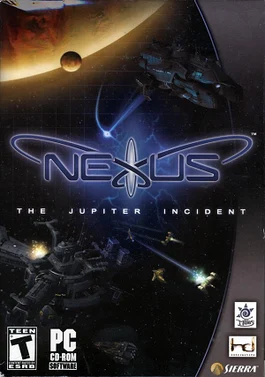
Nexus: The Jupiter Incident is a 2004 real-time tactics (RTT) space combat simulator developed by the Hungarian studio Mithis Entertainment. Releasing during an era when the strategy genre was dominated by massive base-building games, Nexus took a completely different, highly meticulous approach.
Often compared to the combat sequences of Star Trek rather than the massive fleet swarms of Star Wars, Nexus completely abandons resource gathering and factory construction. Instead, it places you in command of a very small, highly detailed flotilla of massive capital ships. The game is entirely about intense micromanagement, positioning, and deeply tactical subsystem targeting in the cold void of deep space.
Gameplay and Tactical Micromanagement
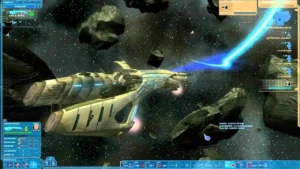
Operating on the custom-built Black Sun Engine, Nexus was widely lauded upon release for its breathtaking visuals, featuring highly detailed ship models, dynamic lighting, and gorgeous particle effects that pushed 2004 hardware to its absolute limits.
Key gameplay mechanics and innovations include:
- The “Anti-RTS” Approach: You do not build ships during a mission. Before dropping into a combat scenario, you spend resource points to customize the hardpoints of your surviving capital ships. Once the mission begins, you must rely entirely on the fleet you brought with you.
- Subsystem Targeting: Ships in Nexus are not just massive health bars. You can—and must—target specific devices on enemy cruisers. You can use precision lasers to melt an enemy’s engine block to leave them stranded in space, snipe their flak cannons to clear a path for your bombers, or knock out their shield generators so your railguns can shred their hull.
- Energy Management: Just like a starship captain, you have a finite amount of power. During combat, you must dynamically shunt power between your ship’s engines, shields, and weapon batteries. Boosting your shields to survive a barrage means your guns will fire significantly slower.
- Weapon Types: The arsenal is highly specialized. Energy shells only strip shields but do zero hull damage; Railguns shred armor but bounce harmlessly off shields; and Lasers bypass armor to snipe specific internal systems. Mastering the weapon rotation is mandatory for survival.
The Narrative and The Angelwing
The story begins at the dawn of the 22nd century. Following a devastating, catastrophic “AI War” that left artificial intelligence strictly outlawed, humanity is locked in a bitter corporate struggle for control of the Solar System.
You play as Marcus Cromwell, an unwillingly famous captain and the son of the first spaceborn human. After drifting in cryo-sleep for decades following a disastrous battle, Cromwell is revived and given command of the corporate heavy corvette, the Stiletto. A routine mission near Jupiter quickly spirals out of control, revealing a terrifying conspiracy involving a wormhole network, hostile alien races, and the Mechanoids—a terrifying, rogue alien AI bent on reshaping reality itself.
Eventually, Cromwell takes command of the Angelwing, a highly advanced, utterly unique cruiser. Just like the Mothership in Homeworld, the Angelwing acts as the heart of your campaign. If it is destroyed, the game is over.
Development Hell and Legacy
The development of Nexus was famously chaotic. It originally began life under developer Digital Reality as Imperium Galactica III: Genesis. However, after publisher bankruptcies and shifting studio rights, the game was renamed to Galaxy Andromeda, before finally being salvaged and completed by Mithis Entertainment under the title we know today.
Despite glowing reviews for its graphics and deep tactical combat, the steep learning curve and lack of traditional base-building resulted in relatively niche sales. Over the years, multiple attempts were made to revive the franchise. In 2011 and 2012, crowdfunding campaigns were launched for a sequel (Nexus 2: The Gods Awaken), but both ultimately failed to reach their funding goals.
Today, Nexus: The Jupiter Incident is remembered as a brilliant, incredibly unique cult classic. In 2015, the intellectual property was acquired by Nordic Games (now THQ Nordic), who subsequently updated the game in 2016 to natively support modern widescreen resolutions, ensuring this tactical gem remains fully playable for modern space-sim fans.
Key Features:
- Pure Fleet Tactics — Abandon base-building entirely to focus on the intense micromanagement of a small, highly customizable flotilla of massive capital ships.
- Subsystem Combat — Use specialized weaponry to surgically dismantle enemy cruisers, knocking out their engines, weapons, and sensors piece by piece.
- Dynamic Power Management — Reroute power on the fly between your ship’s shields, thrusters, and weapon batteries to adapt to the changing battlefield.
- The Black Sun Engine — Experience a 2004 graphical powerhouse that still holds up today, rendering breathtaking deep-space environments and cinematic laser barrages.
- Cult Classic Preservation — Easily accessible today with official widescreen support patches via Steam and GOG.com.
Release Platforms:
- Microsoft Windows (PC) — November 5, 2004 (Europe) / February 24, 2005 (North America)
- (Currently available on Steam and GOG.com, published by HandyGames/THQ Nordic).