Master of Magic
 PC
PC

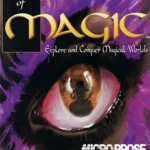
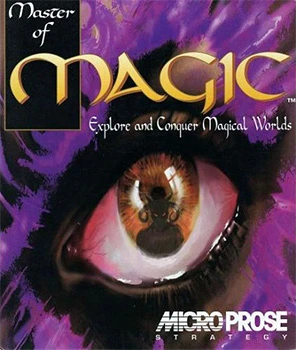
Master of Magic is a single-player fantasy turn-based 4X strategy game developed by Simtex and published by MicroProse. Released in September 1994 for MS-DOS, the title was designed by Steve Barcia and stands as a monumental milestone in the strategy genre.
Often described as a high-fantasy spin-off of Sid Meier’s Civilization fused with the structural freedom of Master of Orion, the game tasks players with acting as a custom-designed, immensely powerful wizard competing to achieve absolute global dominance over two parallel, interconnected worlds. It is widely celebrated for its unparalleled level of strategic choice, deep magic systems, asymmetric fantasy races, and immersive tactical combat.
Technical Specifications
| Attribute | Details |
| Developer | Simtex |
| Publisher | MicroProse |
| Designer | Steve Barcia |
| Composer(s) | George Sanger, David Govett |
| Engine | Custom 2D Turn-Based Engine |
| Platform(s) | MS-DOS, PC-98 |
| Release Date | September 1994 |
| Genre(s) | 4X, Turn-based strategy |
| Mode | Single-player |
Gameplay Architecture: The Two Realms
The core gameplay loop follows the traditional 4X strategy paradigm—eXplore, eXpand, eXploit, and eXterminate—but heavily emphasizes magical customization over baseline industrial development. A defining environmental feature is that matches take place across two parallel planar worlds running simultaneously:
- Arcanus: A terrestrial land heavily resembling Earth, featuring standard climatic zones, grasslands, deserts, and oceans. It is populated by traditional fantasy archetypes like High Men, Elves, and Halflings.
- Myrror: A parallel dimension imbued with raw, heavy magical energies. It features exotic minerals (such as Adamantium and Crysteel), fantastic flora, and highly hostile environments. Myrror is populated by formidable, specialized races including Dark Elves, Trolls, and Draconians.
The two worlds are physically linked across specific geographical coordinates by ancient planar passages known as Towers of Wizardry. Controlling these towers allows a wizard to march massive military forces between worlds to execute multi-dimensional flanking strategies.
Wizard Customization & Magic Schools
Before a match initializes, players build their commanding wizard avatar. Rather than selecting rigid presets, players allocate a finite pool of starting creation points across a combination of specialized Spellbooks and permanent passive Retorts (such as Alchemist, Warlord, or Conjurer).
The Six Schools of Magic
The magical economy manages over 200 distinct spells divided across six highly asymmetric schools of magic, heavily echoing early card-battler paradigms:
- Life Magic: Focuses heavily on structural protection, empire prosperity modifiers, immediate tactical healing, and calling down legendary celestial champions like Torin.
- Death Magic: The dark antithesis to Life. It prioritizes draining target health vitals, casting city curses, and forcefully resurrecting slain enemy forces as persistent undead minions.
- Chaos Magic: Delivers raw, unstable offensive energy. It is optimized for map-altering lightning bolts, explosive battlefield eruptions, and warping target creature hitboxes.
- Nature Magic: Controls the weather, raw terrain geometry, and wild beasts. It permits wizards to physically change terrain coordinates, summon giant spiders, and bless cities with agricultural growth loops.
- Sorcery: Governs air, illusions, and the manipulation of magic itself. It features spatial crowd control, counter-magic disjunctions, phantom warriors, and tactical flight spells.
- Arcane Magic: A universal, baseline school accessible to all wizards. It handles fundamental utility tasks, including summoning basic Magic Spirits, recalling fallen heroes, and casting the ultimate win-condition spell: the Spell of Mastery.
Dual-Layer Combat & Hero Mechanics
The game separates strategic management from tactical combat loops. When two opposing military stacks occupy identical coordinates on the global map, the engine seamlessly expands the engagement into an isometric Tactical Battle Screen.
Tactical Melee Matrix
Combat takes place over details of the terrain square, mapping out local fortifications and movement bottlenecks. Armies have 50 turns to wipe out the opposition or force them to flee.
Wizards do not physically stand on the battlefield; instead, they sit securely back in their capital strongholds, projecting their personal spell power across the planar divide to manually cast active spells directly into the tactical map mid-turn, turning the tide of close engagements.
The Hero Roster
Complementing city-recruited troops, wandering Heroes and Champions can seek direct employment with famous wizards or be liberated from monster-infested ruins. Heroes gather equipment items, accumulate levels through experience, and gain unique combat traits.
Wizards can utilize an internal alchemy matrix to manually forge Custom Artifacts—enchanting swords, shields, and rings with targeted stat-boosting modifiers to build an unstoppable combat champion.
Reception and Modern Preservation (2026)
Upon its initial September 1994 rollout, Master of Magic experienced a highly volatile reception. Early retail versions were notoriously plagued by severe system bugs, frequent desktop crashes, and a highly erratic, ignorant artificial intelligence (AI) framework.
Despite these technical hurdles, critics were intensely captivated by its brilliant game design, and it was nominated for Computer Gaming World’s 1994 “Strategy Game of the Year”. MicroProse stabilized the code via the definitive v1.31 patch in March 1995, which successfully resolved the major bugs, optimized the AI, and permanently secured the title’s status as a beloved, timeless cult classic.
Digital Preservation & Remake
As of 2026, the original 1994 classic remains fully preserved and commercially distributed across digital platforms such as Steam and GOG.com under the official title Master of Magic Classic. The digital client integrates modern configuration wrappers, allowing the MS-DOS application to run cleanly out-of-the-box via pre-configured DOSBox setups under Windows 10 and Windows 11 with flawless frame-pacing.
Parallel to the classic preservation, publisher Slitherine Ltd. and developer MuHa Games formally revived the brand by launching a full-scale, faithful 3D Master of Magic remake in December 2022.
Continuously patched and supported through recent updates up through 2026, the remake translates the entire dual-world matrix, asymmetric races, and spellbook systems into modern high-definition 64-bit architectures, ensuring Steve Barcia’s legendary 4X formula remains accessible to modern strategy purists.