 PC
PC The 3DO Company
 Ziggurat

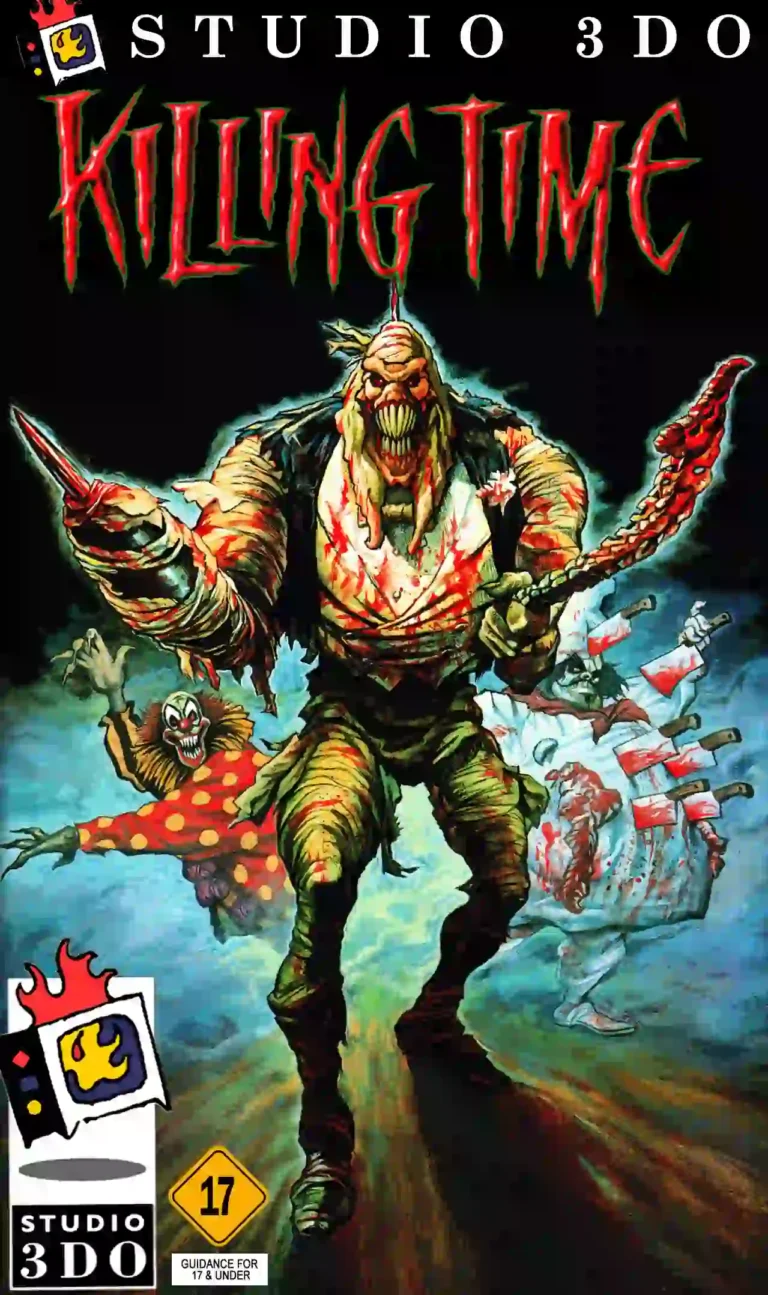
Killing Time is a 1995 first-person shooter developed and published by Studio 3DO. Originally released as a highly touted exclusive for the ill-fated 3DO Interactive Multiplayer console (and later ported to the PC and Mac in 1996), it is a fascinating, wildly ambitious anomaly in the early history of first-person shooters. It attempted to blend the fast-paced gunplay of Doom with the puzzle-heavy exploration of Myst and the bizarre, live-action FMV (Full Motion Video) aesthetics of the mid-90s.
Core Concept and Story
Set in the year 1932, the game places you in the shoes of a former Egyptology student turned detective. You travel to the remote Matinicus Isle off the coast of Maine to investigate the sprawling, highly opulent Conway Estate.
Decades earlier, wealthy heiress Tess Conway acquired a mystical, ancient Egyptian water clock. During a lavish high-society party in the 1930s, she attempted to use the clock to grant her inner circle immortality. The ritual went horribly wrong, cursing the estate, trapping the souls of the partygoers, and transforming the island’s staff and wildlife into supernatural monstrosities. As you explore the island, you encounter the ghosts of the high-society guests—played entirely by live-action actors recorded on green screens and awkwardly superimposed into the 3D environment—who gossip, argue, and slowly reveal the truth of what happened that night.
Gameplay and Features
While it looked like a standard Doom clone on the surface, Killing Time was remarkably ahead of its time mechanically:
- A Seamless Open World: This was its most revolutionary feature. In 1995, almost all FPS games were divided into clear, separate levels. Killing Time featured a massive, interconnected island and mansion with absolutely no loading screens between areas. You could seamlessly walk from the courtyard, through the kitchen, and up to the attic.
- The FMV Ghosts: Instead of reading text logs or listening to audio tapes, the game’s story was delivered through FMV ghosts that would suddenly materialize in the middle of the room. It gave the game a highly unique, theatrical, and slightly campy “haunted house” vibe.
- The Bizarre Bestiary: The enemy design is famously absurd. You aren’t just fighting demons; you are shooting at zombie chefs throwing meat cleavers, demonic two-headed attack dogs, heavily armed 1930s mobsters, and most notoriously, legions of terrifying, cackling clowns.
- The Roaring 20s Arsenal: Your weaponry perfectly matches the era. You start with a simple crowbar and a pistol, eventually upgrading to a pump-action shotgun, a classic Thompson submachine gun (Tommy Gun), and a magical Egyptian Ankh that clears rooms of enemies.
The Legacy and Resurrected Because it was initially trapped on the commercial failure that was the 3DO console, Killing Time largely faded into obscurity, remembered only by hardcore retro-shooter fans as an ambitious but deeply weird cult classic.
However, the game recently received a massive second life. On October 18, 2024, the retro-restoration masters at Nightdive Studios released Killing Time: Resurrected for PC and modern consoles. This definitive remaster completely overhauled the game, offering 4K resolution, modernized dual-stick controls, and upscaled, high-definition versions of the original FMV actors. Crucially, Nightdive merged the best elements of both the 3DO and PC versions (which historically had different level designs and enemy placements) into one ultimate package.
Quick Note
Killing Time is a wildly inventive, campy pioneer of the open-world FPS genre.
In short: If The Great Gatsby collided with Doom inside a haunted house, this would be the result. With the release of Nightdive’s excellent Resurrected remaster, there has never been a better time to experience one of the most uniquely bizarre and technologically ambitious shooters of the 1990s.