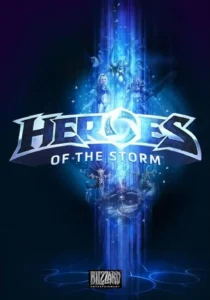
Heroes of the Storm
 86
★ /10
86
★ /10
 PC
PC Blizzard Entertainment
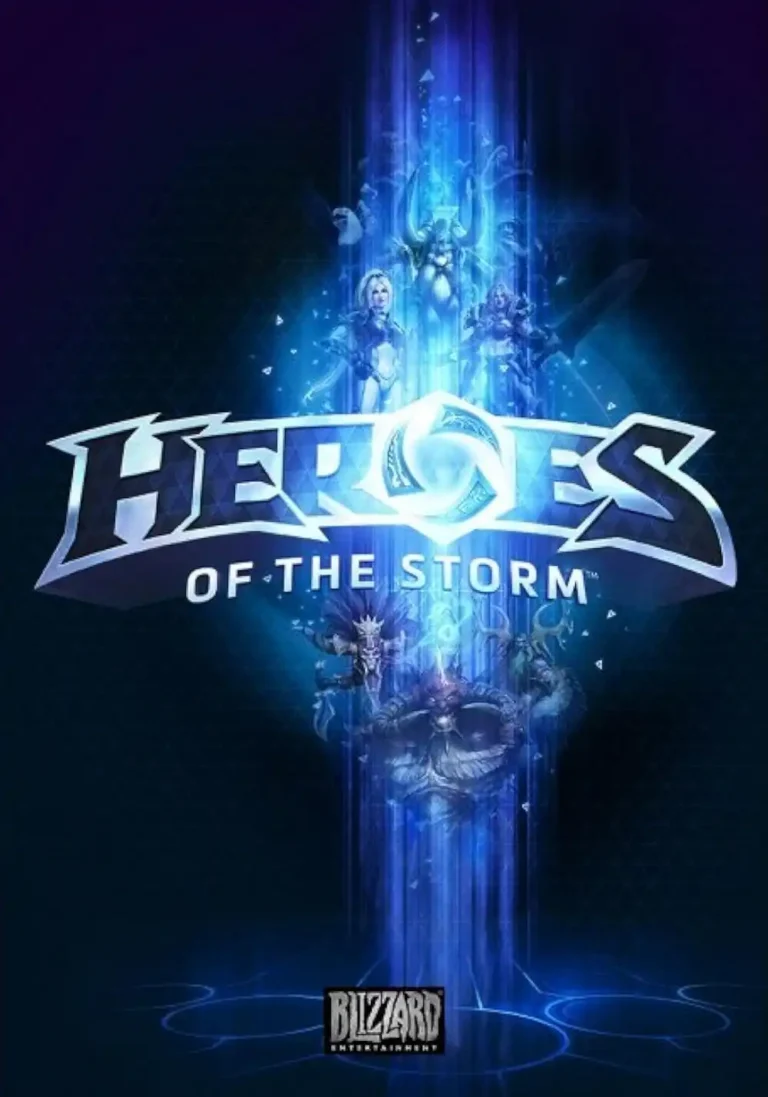
Heroes of the Storm (commonly abbreviated as HotS) is a free-to-play, multiplayer online battle arena (MOBA) video game developed and published by Blizzard Entertainment. Released on June 2, 2015, for Microsoft Windows and macOS, the game acts as a grand crossover title, bringing together an ensemble roster of iconic characters, settings, and lore from across Blizzard’s flagship franchises, including Warcraft, StarCraft, Diablo, and Overwatch.
Unlike traditional MOBAs such as League of Legends and Dota 2, which emphasize individual performance, lane micro-management, and item itemization, Heroes of the Storm focuses heavily on team coordination, shared map-wide progression, and highly dynamic, objective-driven battlegrounds.
Technical Specifications
| Attribute | Details |
| Developer | Blizzard Entertainment |
| Publisher | Blizzard Entertainment |
| Director(s) | Dustin Browder (2015–2016), Alan Dabiri (2016–2018) |
| Engine | Upgraded StarCraft II Engine |
| Platform(s) | Microsoft Windows, macOS |
| Release Date | June 2, 2015 |
| Genre(s) | Multiplayer online battle arena (MOBA), Hero brawler |
| Mode | Multiplayer |
Gameplay Architecture: The “Hero Brawler” Blueprint
Blizzard explicitly branded Heroes of the Storm as a “Hero Brawler” to distance the title from the rigid mechanical design constraints of older MOBAs. The strategic layout streamlines individual logistics to maximize team action.
The Shared Experience Engine
The game completely eliminates individual item shops, gold currency collection, and the mechanic of “last-hitting” enemy minions to secure wealth. Instead, all experience points harvested from lanes or enemy takedowns are funneled into a Centralized Team Experience Pool.
The entire 5-player team levels up simultaneously, ensuring that auxiliary support classes or map-roaming tacticians scale their combat power at an identical pace to primary damage dealers.
The Talent Matrix
In place of item inventories, customization is handled via the Talent Tree System. At specific level milestones—Levels 1, 4, 7, 10, 13, 16, and 20—players select from a tailored menu of active and passive Talents that alter their character’s skills.
The Level 10 tier introduces a major strategic choice, allowing every hero to select between two distinct Heroic Abilities (Ultimates). This enables characters to completely pivot their operational roles mid-game—for example, a Support character like Malfurion can choose Tranquility to provide massive area healing or Twilight Dream to silence and disrupt a hostile frontline push.
Objective-Driven Battlegrounds
Rather than locking play to a single static map grid, HotS features a rotation of over a dozen distinct Battlegrounds, each possessing individual geometric layouts and mandatory, game-altering Map Objectives that force constant team fights:
- Cursed Hollow: Tributes spawn randomly across the map. Capturing three Tributes causes the Raven Lord to curse the opposing team, instantly dropping enemy minion health pools to 1 and disabling automated base towers from firing.
- Tomb of the Spider Queen: Slain enemy minions drop physical Singularity Gems. Players must collect and turn in these gems at central altars to summon massive, lane-pushing Webweavers.
- Dragon Shire: Teams fight to control two distant shrines simultaneously. Activating both unlocks a central obelisk, allowing a single player to physically morph into the colossal, tower-smashing Dragon Knight.
- Towers of Doom: The core bases are protected by an absolute invulnerability barrier. Teams cannot physically walk in to attack the core; instead, they must capture spawning altars to command the map’s fortified towns to fire orbital payload shots directly at the enemy base.
Hero Class Classifications
The character roster spans several distinct functional classes tailored to varying strategic tasks:
- Tank: Powerhouses engineered to absorb heavy damage lines, anchor positions, and initiate combat lines (e.g., Arthas, Muradin, Diablo).
- Bruiser: Semi-tanky off-laners who combine physical sustainability with respectable solo damage output, optimized for holding mercenary camps (e.g., Sonya, Thrall, Artanis).
- Ranged Assassin: Fragile glass cannons that project lethal sustained or burst damage from safe distances (e.g., Valla, Jaina, Falstad).
- Melee Assassin: High-mobility, high-risk duelists specialized in flanking strategies and bursting down priority backline targets (e.g., Illidan, Zeratul, Kerrigan).
- Healer: Dedicated support specialists who manipulate defensive shield matrices, cleanse crowd control effects, and replenish friendly health bars (e.g., Uther, Anduin, Rehgar).
- Support: Specialized utility macro-operators that bend standard gameplay rules, managing structural shields or granting global map tracking (e.g., Abathur, Medivh, The Lost Vikings).
Current Status: The Maintenance Era (2026)
On July 8, 2022, Blizzard formally announced that Heroes of the Storm would transition into long-term Permanent Maintenance Mode, matching the preservation frameworks assigned to StarCraft and StarCraft II. The studio permanently ceased development on brand-new heroes, maps, or premium for-purchase store cosmetics, shifting its primary focus to client stability, automated season rolls, and sustainability.
The 2026 Meta and “The Janitor” Patches
Despite being sunset from major content expansions, Heroes of the Storm maintains a deeply loyal community and highly active servers as of May 2026. Queue times across Quick Match, Ranked (Storm League), and All Random All Mid (ARAM) remain exceptionally fast, often loading lobbies in under 30 seconds due to the polished, low-friction accessibility of the client.
The modern lifecycle of the game is affectionately dubbed the “Janitor Era” by the community—a reference to an anonymous, dedicated developer or small legacy skeleton crew who continues to actively deploy balance passes and system updates to keep the game fresh.
Recent 2026 System Revisions
The strategic ecosystem has been regularly sustained by a string of quality-of-life and balance updates spanning early 2026:
- The Removal of Unranked Mode (April 2026): To maximize matchmaking efficiency across the remaining player base, Unranked Draft was officially removed, consolidating players cleanly into Storm League and Quick Match queues.
- The Return of Haunted Mines: Long excluded from rotation due to balance issues, the Haunted Mines battleground officially returned to Quick Match in April 2026 with completely overhauled skull scaling, altered golem metrics, and reduced visibility parameters inside the underground mine grid.
- The Mythic Reward Overhaul: High-tier progression milestones and specific stacking quest completions (such as Chen’s Accumulating Flames or Mal’Ganis’s Will of Tichondrius) were officially rebranded with a classic Blizzard flair as Mythic Rewards, complete with custom, localized visual audio triggers to improve gameplay feedback loops.
- Continuous Balance Passes: Regular balance patches—including a major tuning pass on May 11, 2026—continue to tweak underutilized talents, adjust base stats for classic characters like Arthas, and clear lingering map animation bugs, keeping the game highly competitive for MOBA purists.