Empire of the Ants
 59
★ /10
59
★ /10
 PC
PC
 Microïds,
  Sierra, Strategy First
Where to buy

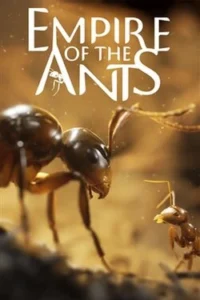
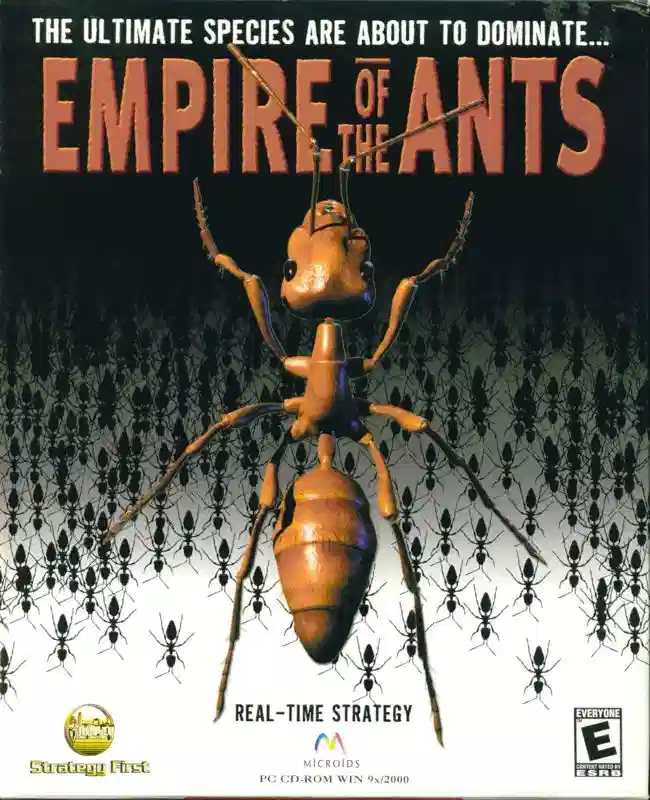
Empire of the Ants (released in 2000 as Les Fourmis) is a unique and ambitious real-time strategy game developed by the French studio Microïds. It is based on the famous sci-fi trilogy by Bernard Werber, specifically the first book, Empire of the Ants. While most strategy games of the era were focused on medieval knights or space marines, Microïds took a gamble on the microscopic, hyper-organized world of the Formica rufa (red wood ants).
In the context of 2026, the original game is often looked back on as the “grandfather” of the nature-sim RTS. While a photorealistic reimagining was released in late 2024/2025 to great acclaim, the 2000 original remains a fascinating relic of experimental turn-of-the-millennium design, known for its brutal difficulty and surprisingly deep ecological simulation.
The Premise: The Glory of Bel-o-kan
The game places you in the role of the collective consciousness of Bel-o-kan, a sprawling ant metropolis nestled in the undergrowth of a French forest. Unlike human-centric stories, there is no “main character” in the traditional sense; you are the colony itself.
The narrative follows the colony’s struggle to expand its territory, fend off rival ant species (like the aggressive weaver ants), and survive the relentless cycles of nature. You start with a single Queen and a handful of workers, and through your guidance, you must transform this small nest into a regional superpower capable of dominating the forest floor.
Gameplay: Pheromones and Progeniture
Empire of the Ants was notable for how it translated biological concepts into RTS mechanics. It felt less like Command & Conquer and more like a high-stakes management sim where the units have a mind of their own.
- Colony Management: A large portion of the game takes place in a cross-section view of the nest. You must manage the physical layout of the colony, digging out specialized chambers for nurseries (where larvae are raised), granaries (to store food), and fungus gardens.
- The Caste System: Success depends on balancing your population. You need Workers to gather food and maintain the nest, Soldiers to defend against predators, and Scouts to map the surrounding terrain. As you progress, you unlock specialized units like “super-majors” or even artillery-style ants that can spray formic acid.
- The Seasonal Cycle: This was arguably the game’s most punishing feature. You have to gather enough food and biomass during the spring and summer to survive the winter. If you fail to stockpile, your colony will simply starve to death during the hibernation phase, forcing a game over.
- Predators and Prey: The forest is a terrifying place. You aren’t just fighting other ants; you are contending with spiders, wasps, praying mantises, and beetles. A single spider can decimate an unorganized scouting party, requiring you to use overwhelming numbers and flanking maneuvers to take down larger threats.
- Pheromone Control: Rather than clicking individual ants, you often set “priority zones” and pheromone trails. You are nudging the colony’s behavior, directing the flow of thousands of individuals toward a specific food source or a breach in the defenses.
Visual Style and Technical Ambition
For the year 2000, the game was a visual standout. It utilized a hybrid of 2D backgrounds and 3D-rendered insect models. The “insect’s eye view” was captured through high-resolution textures of grass, twigs, and soil, making the player feel genuinely small. The sound design was equally immersive, filled with the skittering of thousands of legs and the ambient chirping of the forest, which created a constant sense of low-level tension.
Key Features:
- Deep Biological Simulation — Manage a complex colony ecosystem including humidity levels, food rot, and larvae development cycles.
- Two Tactical Perspectives — Switch between the 2D “Nest View” for management and the 3D “External View” for forest exploration and combat.
- Epic Scale — Control thousands of individual ants simultaneously, utilizing “swarm intelligence” to overcome massive predators.
- Seasonal Survival — Adapt your strategy to the changing seasons, preparing for a brutal winter hibernation that tests your logistical planning.
- Branching Campaign — Engage in a lengthy single-player campaign with missions ranging from simple resource gathering to all-out inter-species warfare.
- Historical Accuracy (mostly) — While it features some sci-fi elements from Werber’s books, much of the ant behavior is grounded in actual entomology.
Release Dates:
- PC (France/Europe) — April 20, 2000.
- PC (North America) — July 10, 2000.
- Modern Availability — Available on GOG.com.