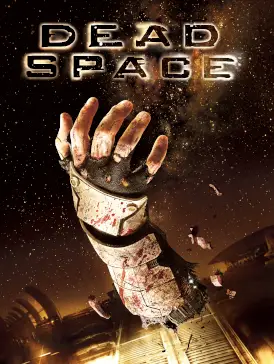
Dead Space
 89
★ /10
89
★ /10
 PC
PC PS 3
PS 3 Xbox 360
 1C-SoftClub
 ak tronic Software & Services GmbH
 Electronic Arts


Dead Space is a 2008 sci-fi survival horror video game developed by EA Redwood Shores (which would later be rebranded as Visceral Games) and published by Electronic Arts. Arriving at a time when traditional survival horror franchises were shifting heavily toward action, Dead Space was a terrifying, claustrophobic return to the genre’s roots, blending the atmospheric dread of Alien with the body-horror of The Thing.
The story is set in the 26th century and follows Isaac Clarke, a taciturn systems engineer. Isaac is part of a small emergency response team sent to investigate a distress signal from the USG Ishimura, a massive “planet-cracker” mining vessel operating in deep space. Isaac has a personal stake in the mission, as his girlfriend, Dr. Nicole Brennan, is stationed aboard the ship. Upon arrival, the team’s shuttle crashes, and they quickly discover the Ishimura is a floating slaughterhouse. The crew has been slaughtered and mutated into grotesque, reanimated monsters known as “Necromorphs.” Separated from his surviving team members, Isaac must navigate the dark, blood-soaked corridors of the ship to repair its failing systems, uncover the dark secret of an alien artifact known as the “Marker,” and find a way to escape alive.
Gameplay
Dead Space revolutionized several aspects of third-person shooter and survival horror mechanics, prioritizing immersion and tension above all else.
Key gameplay mechanics include:
- Strategic Dismemberment: The game’s most defining feature. Traditional shooter logic does not apply to Necromorphs; shooting them in the head or center of mass will rarely stop them. Instead, players must surgically sever their limbs to slow them down and eventually kill them.
- Improvised Arsenal: Because Isaac is an engineer rather than a soldier, he doesn’t start with military firearms. His weapons are repurposed, highly lethal mining tools. The iconic Plasma Cutter fires vertical or horizontal beams of energy specifically designed to slice through rock (and flesh), while other tools like the Ripper shoot out hovering, spinning saw blades.
- Diegetic Interface: To maximize immersion, the game features absolutely no traditional Heads-Up Display (HUD). Every piece of information exists physically within the game world. Isaac’s health is displayed via a glowing neon tube on the spine of his “RIG” suit, his Stasis energy is a half-circle on his back, and ammo counts project as small holograms directly from the weapons themselves. Even video calls and inventory menus are projected as holograms from Isaac’s suit in real-time, meaning the game does not pause when you check your inventory.
- Stasis and Kinesis: Isaac’s suit is equipped with two essential engineering modules. “Stasis” fires a projectile that temporarily slows targets down to a crawl—vital for managing fast-moving Necromorphs or bypassing malfunctioning, rapidly snapping blast doors. “Kinesis” allows Isaac to grab, pull, and throw heavy objects from a distance.
- Zero-Gravity and Vacuum Environments: Isaac frequently has to venture into areas where the ship’s artificial gravity or life support has failed. In vacuum areas, the audio drops out to a terrifying, muffled heartbeat, and Isaac relies on a limited oxygen tank. In Zero-G, players use magnetic boots to leap in straight lines from surface to surface to solve spatial puzzles.
Development and Legacy
Developed by a passionate team at EA Redwood Shores led by Glen Schofield and Michael Condrey, Dead Space originally began as a pitch for System Shock 3 before evolving into an original intellectual property. The development team placed a massive emphasis on audio design, studying the psychological effects of sound to create an incredibly oppressive, terrifying soundscape filled with distant screams, clanking metal, and scurrying noises inside the ship’s vents.
Upon its release in October 2008, Dead Space was met with widespread critical acclaim. It won numerous awards for its sound design, atmosphere, and innovative diegetic UI. It successfully proved that there was still a massive market for pure, unadulterated survival horror.
The game launched a massive multimedia franchise that included animated films, comic books, spin-off games (like Dead Space: Extraction on the Wii), and two direct sequels. While the original franchise eventually fizzled out after the release of Dead Space 3 in 2013, the legacy of the 2008 original remained so strong that EA Motive Studio released a highly acclaimed, ground-up remake of the first Dead Space in early 2023, introducing a new generation to the nightmare of the USG Ishimura.
Key Features:
- Strategic Dismemberment — Forget headshots; survive the Necromorph horde by carefully slicing off their bladed limbs using repurposed mining tools.
- Diegetic Immersion — Experience a screen free of clutter, where all health, ammo, and inventory information is built seamlessly into Isaac’s suit and holographic projectors.
- The USG Ishimura — Explore one of the most iconic and terrifying settings in gaming history, navigating the blood-stained, malfunctioning decks of a doomed mining ship.
- Masterful Audio Design — Navigate an environment where every creak, whisper, and vent-rattle is designed to keep you in a constant state of psychological dread.
- Engineering Tools — Utilize Stasis to slow enemies and environments, and Kinesis to manipulate objects, solving puzzles and surviving ambushes.
Release Platforms:
- PlayStation 3 — October 14, 2008
- Xbox 360 — October 14, 2008
- Microsoft Windows (PC) — October 20, 2008