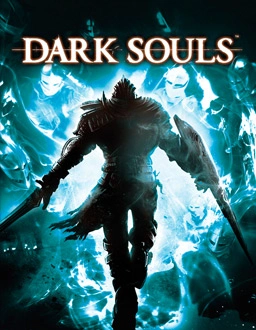
Dark Souls
 89
★ /10
89
★ /10
 PC
PC PS 3
PS 3 Xbox 360
 FromSoftware, Inc.
 Bandai Namco Entertainment
Where to buy


Dark Souls is a 2011 action role-playing game developed by FromSoftware and published by Namco Bandai Games. Originally released for PlayStation 3 and Xbox 360 on September 22, 2011 (North America), with a Windows port following in August 2012, it is a spiritual successor to FromSoftware’s Demon’s Souls (2009) and the game that defined an entire genre — the Soulslike — and demonstrated that extreme difficulty paired with intricate world design and environmental storytelling could generate a mainstream global audience.
It holds a Metacritic score of 89 on PS3. A remastered version, Dark Souls Remastered, was released in May 2018 for PS4, Xbox One, PC, and Nintendo Switch, and is the version currently available on most storefronts. A note on search: the Steam link Google most often surfaces alongside “dark souls” queries is Dark Souls III, which is the most actively played entry on PC. This page covers the first game.
Technical Specifications
| Attribute | Details |
|---|---|
| Developer | FromSoftware |
| Publisher | Namco Bandai Games |
| Director | Hidetaka Miyazaki |
| Composer | Motoi Sakuraba |
| Original Platforms | PlayStation 3 · Xbox 360 |
| Current Platforms | PS4 · Xbox One · PC · Nintendo Switch (via Dark Souls Remastered) |
| Original Release | PS3/Xbox 360: Sep 22, 2011 (NA) · PC: Aug 24, 2012 |
| Remastered Release | May 25, 2018 (PS4, Xbox One, PC, Switch) |
| Genre | Action RPG |
| Mode(s) | Single-player · Online (co-op, PvP) |
The Soulslike: What Dark Souls Is
“Can someone explain the mechanics of the game?” is one of the most-repeated threads in the Dark Souls community’s search footprint, appearing multiple times in the Things to Know block Google assembles for this query. The question is legitimate: Dark Souls operates on design assumptions different enough from most action games that players accustomed to other genres sometimes feel they are missing something.
The core assumptions: the game does not explain itself. Stat descriptions are cryptic. NPC dialogue is often ambiguous. The map has no waypoints. What seems like a dead end is often a locked shortcut that opens from the other side. The game expects the player to develop understanding through repetition, observation, and failure — and it supplies all three in abundance.
Death is the primary learning mechanism. Dying sends the player back to the last rested bonfire (a checkpoint-and-respawn point scattered through the world), drops all accumulated Souls (the game’s combined experience and currency) at the location of death, and respawns all standard enemies. A second death before recovering the dropped Souls causes them to be lost permanently. This system creates high-stakes moment-to-moment decisions — push forward with accumulated Souls at risk, or return to a bonfire and bank the progress — and is the mechanical foundation from which the rest of the game’s design proceeds.
Stamina governs nearly every action: attacking, blocking, dodging, and running all consume from the same bar. Managing stamina in combat — not over-committing to attack chains, not rolling into a follow-up hit when stamina is empty — is the skill the game is fundamentally teaching across its hundred-plus hours. A correctly timed dodge with stamina remaining passes through an attack in an invincibility window. A dodge with no stamina remaining does not.
Lordran: Setting and Story
The world is called Lordran, a crumbling kingdom once ruled by Lord Gwyn, who sacrificed himself to link the dying First Flame and prolong the Age of Fire. The fire has been fading for aeons. The undead — humans who do not die but lose their minds and become hollow — are imprisoned and forgotten. The player character is one such undead, granted a prophesied purpose: ring the Bells of Awakening, travel to Anor Londo, and face a choice at the Kiln of the First Flame.
The story is not told through cutscenes or dialogue dumps. It is present in item descriptions, in the geography of the world, in what is absent rather than what is shown. The lore of why Sif the Great Grey Wolf guards a particular grave only makes sense once you know what happened to the knight buried there, and the game tells you through a DLC area you encounter later and through item descriptions spread across multiple runs. The communities that formed around Dark Souls lore analysis — video essayists, Reddit threads, wikis — are partly a consequence of this deliberate opacity and the genuine richness underneath it.
The game’s ending offers two choices. Both are presented without editorial judgment. Neither feels triumphant.
The Interconnected World
The most consistently praised design achievement of Dark Souls is its world structure. Lordran is not divided into separate levels or zones accessed from a menu — it is one continuous connected environment where nearly every area loops back to every other through unlockable shortcuts. The opening area, the Undead Burg, and the later-game Darkroot Garden are connected by an elevator and a door that can be opened from either side. Anor Londo, reached after considerable difficulty, has a path back to Firelink Shrine accessible via a single elevator. The Firelink Shrine itself is the centre of a web whose spokes the player discovers one by one.
This design produces a particular kind of satisfaction unavailable in games organised differently. The moment a player realises that the locked door they passed an hour ago opens onto territory they’ve since explored from the other side — that the world has been continuous and interconnected all along — is cited repeatedly across player retrospectives as one of the moments they remember most clearly about the game. World design in this style is difficult to achieve, and Dark Souls achieved it at a scale that has not been fully replicated even in its own sequels.
Notable Bosses
Dark Souls produced several boss encounters that entered the broader cultural conversation about what a boss fight can be:
Ornstein and Smough — two bosses fought simultaneously in Anor Londo: the lightning-quick spear-wielder Ornstein and the enormous mace-wielding executioner Smough. They attack in concert, cover each other’s weaknesses, and when one is killed the other absorbs its power and becomes significantly harder. The fight is a wall for many players on first encounter and a demonstration of how co-ordination under pressure is taught through iteration.
Sif the Great Grey Wolf — a colossal wolf guardian who becomes visibly limping when reduced to low health, the game’s first use of the mechanical device of a boss whose behaviour changes as it approaches death to communicate injury rather than phase transition. The lore context for why Sif fights the player, visible only through other areas of the game and DLC, recontextualises the encounter entirely.
Lord Gwyn — the final boss is the fastest enemy in the game, an aggressive close-quarters fighter who can be interrupted by parrying with correct timing. The revelation that the god who lit the First Flame can be defeated using the game’s most basic defensive technique — a technique taught in the tutorial area — is either the most satisfying or most anticlimactic conclusion the game could have, depending on the player, and discussion of this continues.
Bed of Chaos — honourably mentioned as the game’s most criticised boss, included here because the community consensus is unusually uniform: it is a platforming encounter in a game without platforming controls, produced under time pressure, and widely described as the worst designed encounter in the trilogy. It was clearly rushed; the surrounding area (Izalith) shows signs of incomplete development that the art direction attempts to conceal.
The Second Half
Dark Souls is generally considered to be two games of unequal quality in succession. The first half — Undead Burg through Anor Londo, incorporating Sen’s Fortress and the Depths and Blighttown — is the portion that built the game’s reputation and that players most frequently describe as their foundational Soulslike experience. The second half — Tomb of the Giants, Izalith, the Duke’s Archives, New Londo Ruins, the Kiln — is widely considered weaker in level design, enemy variety, and boss quality, with the Izalith area in particular showing signs that FromSoftware ran out of time.
This is not a minority view; it is the dominant community assessment, shared by many enthusiasts and critics. The game’s overall quality is not in doubt; the second half is simply where the resource constraints of a 2011 FromSoftware production become most visible.
Online: Summoning, Messages, and Invasions
Dark Souls integrates its online systems into the singleplayer experience rather than separating them. Messages — short text fragments other players have left on the ground — appear throughout the world, offering warnings, encouragement, misdirection, and occasional genuinely useful information. Blood stains show other players’ death locations in brief phantom replay. Phantoms of other players appear as translucent figures moving through the world in real time.
Active online participation allows players to summon allies for boss fights or be summoned into others’ games. It also allows invasion — hostile players entering another’s game and attempting to kill them. The invasion system is designed to make the world feel genuinely dangerous at the moments when the player is most invested in survival; it is also the source of the game’s most contentious balance discussions and a feature that divides opinion among long-term players.
Artorias of the Abyss
The expansion, released for PC in 2012 and later for PS3 and Xbox 360, and included in Dark Souls Remastered, adds a set of areas accessible from a specific late-game location. It introduces four bosses — Sanctuary Guardian, Artorias the Abysswalker, Manus Father of the Abyss, and a second encounter with Sif — all of which are considered among the best in the game, and several of which are considered among the best FromSoftware has produced. The narrative context for Artorias — whose grave Sif protects in the main game — is the expansion’s emotional core, though it unfolds through item descriptions rather than direct exposition.
Artorias the Abysswalker in particular holds a reputation disproportionate to his difficulty: an encounter that communicates through boss AI — a corrupted knight who can no longer use his sword arm — the tragedy of his character without a word of dialogue.
Dark Souls Remastered
Dark Souls Remastered (2018), developed by QLOC and published by Bandai Namco, is the practical version for most new players: improved framerate, higher resolution, six-player online (up from four), and Artorias of the Abyss included. The visual improvements are not substantial enough to feel like a different-era game, and the content is identical to the original. Some longtime players prefer the original’s feel, particularly on PC with community mods; for players without prior investment, Remastered is the recommended starting point.
Where to Start: DS1 or DS3?
The Things to Know block for “dark souls” includes a guide titled “How to play every Dark Souls game in order,” reflecting a common evaluative moment: which entry to begin with. The practical considerations:
Dark Souls first makes the most narrative sense (it is thematically the foundation of the trilogy), gives the best sense of the interconnected world design at its most elegant, and provides the mechanical basis that both sequels modify. It is also the most dated of the three in interface and controls.
Dark Souls III first is the recommendation for players who want the most mechanically refined version of the soulslike formula as a test before committing to the full trilogy. DS3 is also the most actively played entry on Steam and has the most populated online community. Its price-to-content ratio for a current purchase is the strongest in the trilogy.
There is no wrong answer. The community is genuinely divided on this, and the choice depends on tolerance for dated design versus preference for narrative chronology.
Reception and the Genre It Named
Dark Souls holds an 89 on Metacritic for PS3, awarded at a time when the genre it was building did not yet have a name or an established audience. The word “Soulslike” — coined from this game’s title — now describes an entire category of games from dozens of studios on every platform. Games described as Soulslikes include the studio’s own subsequent titles, major productions from other developers (Lies of P, The Surge, Salt and Sanctuary, Nioh), and dozens of smaller independent titles produced in explicit reference to what Dark Souls established.
The word entered mainstream gaming vocabulary not because Demon’s Souls (which established most of the same mechanical premises two years earlier) failed, but because Dark Souls — with its console dual release, its PC port, and the cultural moment it created in 2011–2012 — was the game the wider industry encountered first. The genre is named after it.