Blasphemous
 77
★ /10
77
★ /10
 Android,
  iOS (iPhone/iPad),
  Nintendo Switch,
  PC,
PC,  PS4,
PS4,  Xbox One
Where to buy





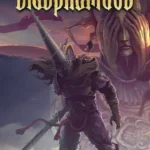
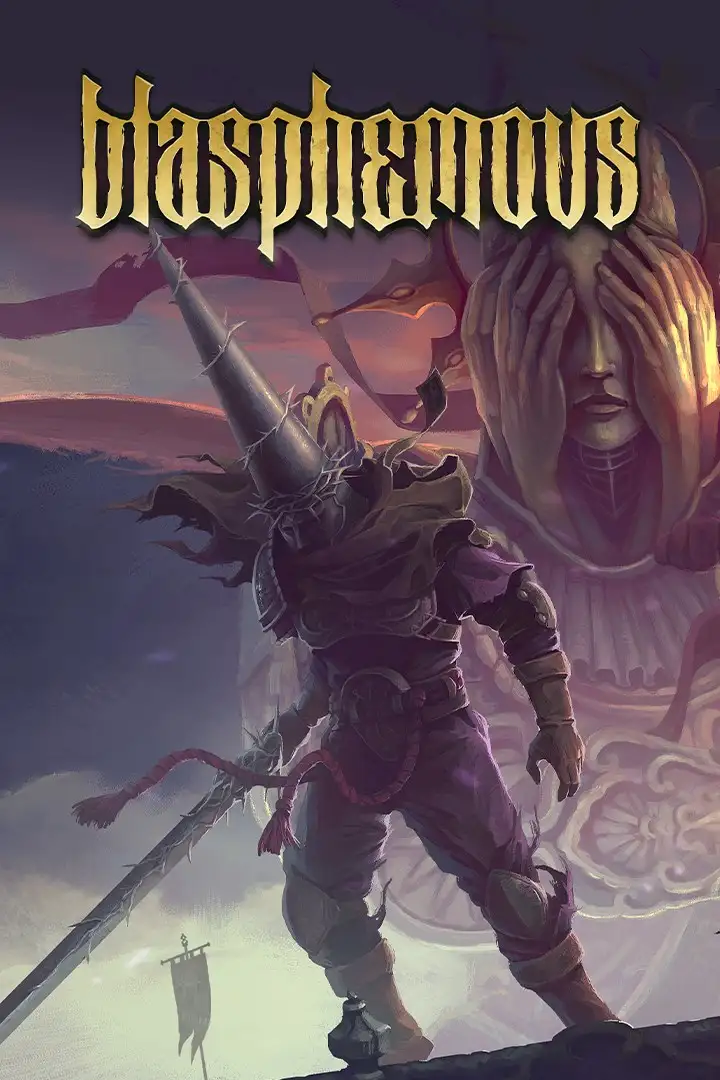
Blasphemous is a 2019 action-platformer developed by The Game Kitchen, a Seville studio, and published by Team17, released September 10, 2019 for PC, PlayStation 4, Xbox One, and Switch, with later mobile ports. It holds Metacritic scores in the high 70s, sold more than 2 million copies, and owns an aesthetic no other game has ever approached: a Metroidvania-Soulslike hybrid built entirely from Andalusian Catholic folklore — penitential processions, gilded reliquaries, weeping Madonnas — twisted into one of pixel art’s great grotesque nightmares.
Born from a Kickstarter that quadrupled its goal, it then did something rarer than a good launch: two years of substantial free DLC that added New Game Plus, a crossover, and finally an entire alternate true ending — the one that set up Blasphemous 2 directly.
Technical Specifications
| Attribute | Details |
|---|---|
| Developer | The Game Kitchen (Seville, Spain) |
| Publisher | Team17 |
| Funding | Kickstarter (goal massively exceeded, 2017) |
| Release | September 10, 2019 (PC, PS4, Xbox One, Switch); mobile later |
| Metacritic | High 70s (by platform) |
| Sales | 2+ million copies |
| Free DLC | The Stir of Dawn (2020) · Strife and Ruin (2021) · Wounds of Eventide (2021) |
| Sequel | Blasphemous 2 (2023) |
| Genre | Metroidvania, Soulslike, action-platformer |
| Mode(s) | Single-player |
Cvstodia and the Miracle
The land of Cvstodia lives under the Grievous Miracle — a divine force that answers prayer and guilt with literal, monstrous transformation, sainting some and deforming others. The player is the Penitent One, last survivor of a slaughtered brotherhood, silent beneath a pointed capirote helmet, cutting through Cvstodia’s cathedrals and olive-grove wastes with the sword Mea Culpa toward the source of the Miracle itself. The imagery is the game’s whole thesis: The Game Kitchen built its bestiary and iconography from Seville’s Holy Week processions and Spanish religious art, and no review failed to lead with it.
Combat of Executions and Rosaries
Mechanically it’s a punishing 2D hybrid: deliberate sword combat with cinematic pixel-art executions, Souls-style guilt fragments dropped on death, rosary-bead buff builds, prayers as spells, and a sprawling interconnected map — closer to a linear-leaning Metroidvania than a pure one at launch, a distinction the sequel would address. Launch criticisms were consistent: instant-death traps, cryptic quest design, and stiff platforming; the free-update arc sanded most of it down, adding NG+ modes (The Stir of Dawn), a Bloodstained crossover (Strife and Ruin), and — in Wounds of Eventide — new bosses and the true ending that reframed the entire story.
Reception and Legacy
Reviews landed in the high 70s with the art direction universally celebrated and the difficulty spikiness debated — but the game’s reputation grew steadily through the DLC years, and its commercial arc (2M+ sold, a mobile port, merchandise, a sequel green-lit off the back of it) made it one of Kickstarter gaming’s clearest success stories. In the gothic-Metroidvania canon it now sits alongside Hollow Knight and Ender Lilies — the one you pick when you want your melancholy weaponized into religious horror.
Where to Play It Today
Blasphemous is on Steam, Switch, PlayStation, Xbox, and mobile, with every DLC included free and discounts routinely under $10. The story runs directly into Blasphemous 2 — and Wounds of Eventide’s true ending is the canonical bridge, worth seeing before you cross.