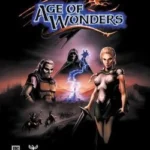
Age of Wonders
 PC
PC Gathering of Developers

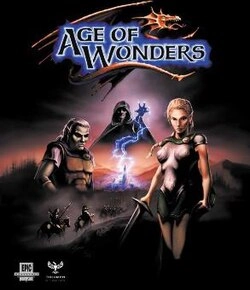
Age of Wonders is a critically acclaimed turn-based high-fantasy grand strategy 4X video game co-developed by the Dutch studio Triumph Studios and Epic Games (then Epic MegaGames), and published by Gathering of Developers. Released in November 1999 for Microsoft Windows, the title is a foundational milestone in fantasy strategy, launching an enduring franchise that includes five sequels and massive expansions.
Fusing the macroscopic empire-building of Master of Magic with the tactical, hero-centric army building of the Heroes of Might and Magic series, Age of Wonders stood out at the turn of the millennium. It bypassed generic fantasy clichés to deliver a dark, morally grey narrative campaign, multi-tiered tactical battlefield grids, a deep magic system, and an uncompromising asymmetric race alignment feature that turned domestic diplomacy into a high-stakes balancing act.
Technical Specifications
| Attribute | Details |
| Developer | Triumph Studios, Epic Games |
| Publisher | Gathering of Developers |
| Director / Designer | Lennart Sas |
| Composer | Michiel van den Bos |
| Engine | Proprietary 2D Isometric Hexagonal Grid Engine |
| Platform | Microsoft Windows |
| Release Date | November 11, 1999 |
| Genre(s) | Turn-based strategy, 4X Fantasy Grand Strategy |
| Mode(s) | Single-player, Multiplayer (LAN, Internet, Hotseat, Play-by-Email) |
The Elven Schism: The Dual-Campaign Narrative
The plot of Age of Wonders takes place in the Valley of Wonders, a mystical realm where the native Elves originally welcomed humanity after their banishment from Eden. However, humans quickly multiplied, grew uncontrollable, and violently overran the valley—slaying the Elven king, Lord Inioch, and driving the elder races into exile.
The fallout of this human invasion splits the remaining Elven survivors into two bitterly opposed, warring ideological campaigns that the player can pilot:
- The Keepers: Led by Princess Julia, this faction represents the traditional, pure-blooded Elves and their noble allies. The Keepers adopt a philosophy of preservation and peace, seeking to gracefully integrate humanity into the cosmic balance and restore harmony to the valley.
- The Cult of Storms: Led by Inioch’s vengeful son, Meandor, this faction rallies the Dark Elves and various underworld monsters. Driven by absolute hatred, the Cult’s lone objective is the systematic eradication of the entire human race through a scorched-earth global war.
The Twelve Asymmetric Races & Alignment Friction
The game map is driven by an interlocking grid of 12 playable fantasy races, rigidly grouped into a three-pronged moral alignment scale. A faction’s base alignment dictates how independent units, capturing armies, and occupied cities interact on the map:
- The Good Factions: Elves, Dwarves, Halflings, and Highmen. They focus on high magical defense, architectural fortification, and rapid prosperity.
- The Neutral Factions: Humans, Frostlings, Lizardmen, and Azracs (a desert-dwelling, tiger-like species). They act as highly versatile generalists capable of exploiting varying planetary terrains.
- The Evil Factions: Dark Elves, Orcs, Goblins, and the Undead. They rely on brute physical aggression, poison mechanics, and cheap unit swarms.
The Morale Friction Matrix
Empires do not have a uniform, universally content populace. If a Good-aligned player commanding an army of Halflings forcefully invades and conquers a city populated by Evil Goblins, the local alignment clash triggers severe Planetary Morale Penalties.
The restive Goblin citizens will actively stage continuous labor strikes, tank industrial gold yields, and eventually spawn an armed local rebellion from within your own borders.
To prevent this internal collapse, players must execute high-stakes choices: spend dozens of turns slowly migrating their own native citizens to displace the local populace, use specialized casting spells to forcefully alter the city’s magical alignment, or deploy massive garrison forces to brutally suppress domestic dissent.
Surface Overworld vs. Deep Subterranean Caverns
The spatial navigation of Age of Wonders famously introduced a multi-layered geographic layout long before it became a genre standard. Maps are split into two parallel, fully interactive topographies: The Surface Overworld and The Subterranean Underground.
The surface grid handles traditional 4X expansion across fertile plains, icy mountains, and aquatic shipping lanes. Conversely, the underground grid maps out a dark, sprawling maze of cavernous rock tunnels, underground rivers, and lava lakes.
Factions like the Dwarves and Goblins gain specialized passive tunneling abilities, allowing them to traverse underground starpoints undetected by surface spotters. This multi-tier setup creates intense strategic surprises: an enemy army can completely bypass your heavily fortified surface border castles by marching through deep-earth tunnels, suddenly emerging via a cavern opening directly behind your unprotected capital city.
Tactical Hex-Grid Invasions & Spells of Mass Destruction
Instead of resolving military clashes via automated spreadsheets or rigid calculations, Age of Wonders drops players straight into a dedicated Tactical Combat Layer. Armies travel in groups of up to eight independent units per map hex. When multiple adjacent groups clash, the game generates a large, localized tactical map mimicking the local terrain features.
Combat requires meticulous spacing. Archer units must account for physical cover and Line-of-Sight blocks, while melee forces manage retaliatory strikes and wall-climbing siege operations.
Physical strikes target a unit’s raw Defense value, whereas magical attacks (like venomous spit or mental charms) target a unit’s underlying Resistance stat, allowing physically weak casters to melt heavily armored iron golems if their targets lack mental wards.
The 500-Mana Altars
The global economy balances liquid Gold (used for unit salaries and city buildings) against raw Mana (spent to research and project magic). Spells span global enchantments, tactical fireballs, and massive global summons.
For players seeking immediate tactical hegemony, the map houses static, highly contested ancient nodes called Altars of Magic. Securing an Altar allows a player to channel an absolute global spell payload.
Firing an Altar requires an astronomical investment of exactly 500 Mana points. Once activated, it projects a cataclysmic, unblockable spell across any target hex on the entire map—wiping out massive standing armies or instantly shattering city defenses from afar. The Altar then undergoes a strict, 10-turn cooldown cycle, recharging 50 Mana units per turn before it can be executed again.
Modern Preservation Status (2026 Perspective)
As of June 2026, the original 1999 Age of Wonders is widely celebrated and preserved as an immortal masterpiece of the golden age of PC gaming. The title is actively distributed on major digital storefronts, including Steam and GOG.com, frequently listed as Age of Wonders Classic for a baseline price of $5.99.
Crucial Modern Architecture Compatibility Notes
Because the legacy client was compiled during the Windows 98 era around early 16-bit and 32-bit graphical hooks, executing the stock retail game on a modern, multi-core 64-bit Windows 11 desktop out-of-the-box will consistently result in an immediate, unhandled crash-to-desktop upon clicking the “New Game” menu. This issue stems from the notorious legacy “Showscene” dialogue video-player wrapper failure.
To run the game flawlessly today, the retro community has engineered dedicated open-source fixes:
- The GitHub Community Patch: Modern players must download the highly essential, community-vetted patch framework hosted openly on GitHub (
github.com/int19h/aow-patch). This small utility replaces the broken, archaic video call commands with a clean, modern memory hook. - Windowed Mode Enforcement: The game configuration tool must be executed with administrative privileges, and players should manually check the box to run the game in Windowed Mode. Attempting to force native full-screen resolution switching on a 4K monitor will trigger severe DirectDraw registry crashes or completely freeze your display if you attempt to Alt+Tab out of the client.
By pairing the digital GOG/Steam files with the open-source community wrapper, modern strategy purists can enjoy the gorgeous pixel artwork, Michiel van den Bos’s iconic tracker soundtrack, and the brilliant tactical fantasy campaigns with absolute, rock-solid technical stability.