Age of Wonders III
 80
★ /10
80
★ /10
 PC
PC
 Buka, Paradox Interactive, Triumph Studios


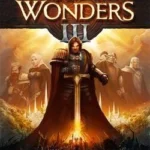
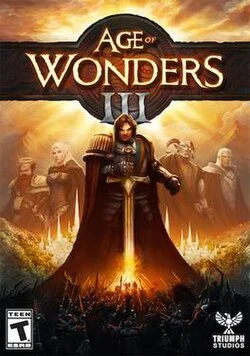
Age of Wonders III is a critically acclaimed turn-based high-fantasy grand strategy 4X video game developed and published by the Dutch studio Triumph Studios. Released on March 31, 2014, for Microsoft Windows, with subsequent ports deploying for OS X and Linux, the title represents a massive evolutionary milestone for the franchise. It successfully dragged the series into the modern era by replacing classic 2D isometric sprites with a fully realized, cinematic 3D graphics engine.
Funded in part by Minecraft creator Markus “Notch” Persson, who stepped in as a passionate fan to guarantee the studio’s creative independence, Age of Wonders III fundamentally re-engineered the fantasy grand strategy formula. By marrying traditional 4X empire-building with a deep, role-playing game character customization matrix based on leader classes, the title delivered an incredibly deep tactical sandbox that successfully modernized the legacy originally established by Master of Magic.
Technical Specifications
| Attribute | Details |
| Developer | Triumph Studios |
| Publisher | Triumph Studios (Current Rights: Paradox Interactive) |
| Director / Designer | Lennart Sas |
| Composers | Michiel van den Bos |
| Engine | Creator Engine (Proprietary Fully 3D Graphic Environment) |
| Platform(s) | Microsoft Windows, OS X, Linux |
| Release Date | March 31, 2014 |
| Genre(s) | Turn-based strategy, 4X Fantasy Grand Strategy |
| Mode(s) | Single-player, Multiplayer (LAN, Internet, Hotseat, simultaneous turns) |
The RPG Class Revolution: Combining Race and Profession
The absolute defining design overhaul introduced in Age of Wonders III was the total abandonment of the rigid, magic-sphere-only faction templates seen in previous games. Instead, the game treated your primary imperial leader as a customizable role-playing game character. When initializing a campaign or custom sandbox match, players choose a foundational fantasy Race and pair it with a specialized Leader Class, completely decoupling physical biology from a civilization’s strategic identity.
This system unlocked staggering asymmetric combinations. A player could choose to lead an empire of industrious Dwarves, but instead of forcing them to use typical earth magic, they could make their leader a specialized Rogue, transforming the stout miners into masters of shadow movement, poison arrow ambushes, and diplomatic espionage. Your leader’s class alters your entire civilization: it changes your structural research tree, unlocks unique planetary facility blueprints, dictates what high-tier units your starports can manufacture, and grants your armies game-altering passive traits.
The Six Core Leader Disciplines
The base game shipped with six distinct operational leader classes, each heavily optimized to pursue unique pathways to global domination:
- Dreadnought: The masters of steam-punk technology, heavy engineering, and military industrialization. They bypass traditional magic to build massive, smoke-belching factories that construct armored steam tanks, automatic musketeer infantry, and devastating ironclad siege cannons.
- Theocrat: Religious zealots who rule through absolute faith, divine mandates, and psychological pacification. Theocrats manage high civilian morale scales and field armies of fanatical martyrs and crusader knights, utilizing powerful holy light spells to resurrect fallen soldiers or forcefully convert enemy units mid-combat.
- Rogue: Subversive shadow operators built entirely to win proxy wars. Rogues utilize cloaked scoundrel infantry and poison-wielding assassins to bypass fortified border walls. They focus heavily on diplomatic corruption, inciting armed rebellions inside rival cities and stealing gold reserves directly from foreign treasuries.
- Archdruid: Guardians of the natural world who reject industrialization to harness raw primal energy. Archdruids gain massive movement bonuses when navigating through deep forests and wild terrains, capable of summoning gargantuan mythical beasts, dire wolves, and stone giants to trample city walls.
- Sorcerer: Pure magical channelers obsessed with high-energy casting and mana gathering. Sorcerers convert their cities into academic nooks that generate massive research points, allowing them to rapidly summon ethereal wisps, project unblockable lightning storms, and lock enemy spellcasters out of the tactical arena.
- Warlord: Traditional martial purists who rely entirely on physical athleticism and military prowess. Warlords ignore complex spell mechanics to focus heavily on training elite, high-damage physical shock troops, granting their standing armies passive health multipliers and massive combat velocity buffs.
Dynamic 3D Tactical Combat and Multi-Tier Maps
When task forces intercept each other on the overworld grid, Age of Wonders III transitions to a beautifully rendered, fully 3D tactical hex arena. Stacks are limited to six independent units per hex, but because the combat engine automatically pulls in any friendly or adversarial armies occupying the six surrounding hexagonal spaces, encounters can comfortably balloon into chaotic, 36-unit tactical wars of attrition.
The tactical combat engine introduced heavy directional awareness mechanics that fundamentally rewarded smart positioning:
- The Flanking Bonus: If a unit manages to maneuver directly behind an enemy’s active defensive orientation, launching a strike from the rear completely bypasses their shield values and deals massive, devastating critical damage.
- Retaliation Management: Most units can strike back when hit in melee combat, but they track a finite number of active actions per turn. Skillful tacticians will deliberately sacrifice a cheap, fragile unit to absorb an enemy’s retaliation strike, leaving the target entirely defenseless against a subsequent heavy attack from a capital giant or hero.
Concurrently, global strategic maneuvering preserved the franchise’s signature multi-layered geography. Maps run two parallel, interactive planes simultaneously: The Surface Overworld and The Subterranean Underground. Players navigate mountain passes, cross oceans via transport ships, or dig deep tunnels through the earth to slip past heavily fortified surface chokepoints and launch surprise ambushes against an opponent’s unprotected home cities.
Expansions and Necromancy Overhauls
Following widespread critical acclaim, Triumph Studios expanded the strategic landscape through two massive, feature-rich expansion packs that injected entire new races, structural layers, and win conditions:
Golden Realms (2014)
This expansion reintroduced the fan-favorite Halflings as a playable race, wrapping their units in a unique “Luck” mechanic that allowed them to completely dodge incoming physical attacks when their morale was high. It also introduced Empire Quests—global, high-stakes achievements that rewarded the first civilization to hit a specific milestone (such as accumulating 1,000 gold or researching a high-tier spell) with massive, permanent empire-wide bonuses.
Eternal Lords (2015)
The definitive, massive expansion that introduced two highly requested races—the cat-like Tigrans and the icy Frostlings—alongside a brand-new, game-altering leader class: The Necromancer. Necromancers completely twist the core economy of the game. They reject traditional population growth and agricultural infrastructure to turn their cities into lifeless, bone-white Necropolises. They harvest the literal corpses of units slain across the world to automatically assemble massive armies of mindless ghouls, skeletal archers, and terrifying death knights, entirely bypassing standard unit recruitment costs.
Modern Digital Preservation Status (2026 Perspective)
As of June 2026, Age of Wonders III stands beautifully preserved and highly celebrated as a triumphant modern classic of the 4X genre. Following Paradox Interactive’s acquisition of Triumph Studios, the game is actively distributed and frequently discounted on major digital platforms, including Steam and GOG.com. The definitive marketplace package—which bundles the core game alongside the Golden Realms and Eternal Lords expansions—is typically listed under the Collection framework for a standard baseline price of $29.99.
Because Triumph Studios natively engineered the game’s core architecture around robust 64-bit multi-threaded programming frameworks and modern DirectX 9/11 API configurations, the software installs and executes flawlessly out-of-the-box under modern 64-bit Windows 11 environments.
No external emulators, legacy translation layers, or graphical wrappers are required. The current digital build features complete native support for contemporary high-definition widescreen display resolutions, clean UI text scaling, and absolute multi-core CPU stability, allowing contemporary strategy purists to experience the flawless leader class system, deep tactical flanking arrays, and immersive high-fantasy campaigns with absolute technical perfection.