A Plague Tale: Innocence
 81
★ /10
81
★ /10
 Nintendo Switch,
  PC,
PC,  PS4,
PS4,  Xbox One
Where to buy





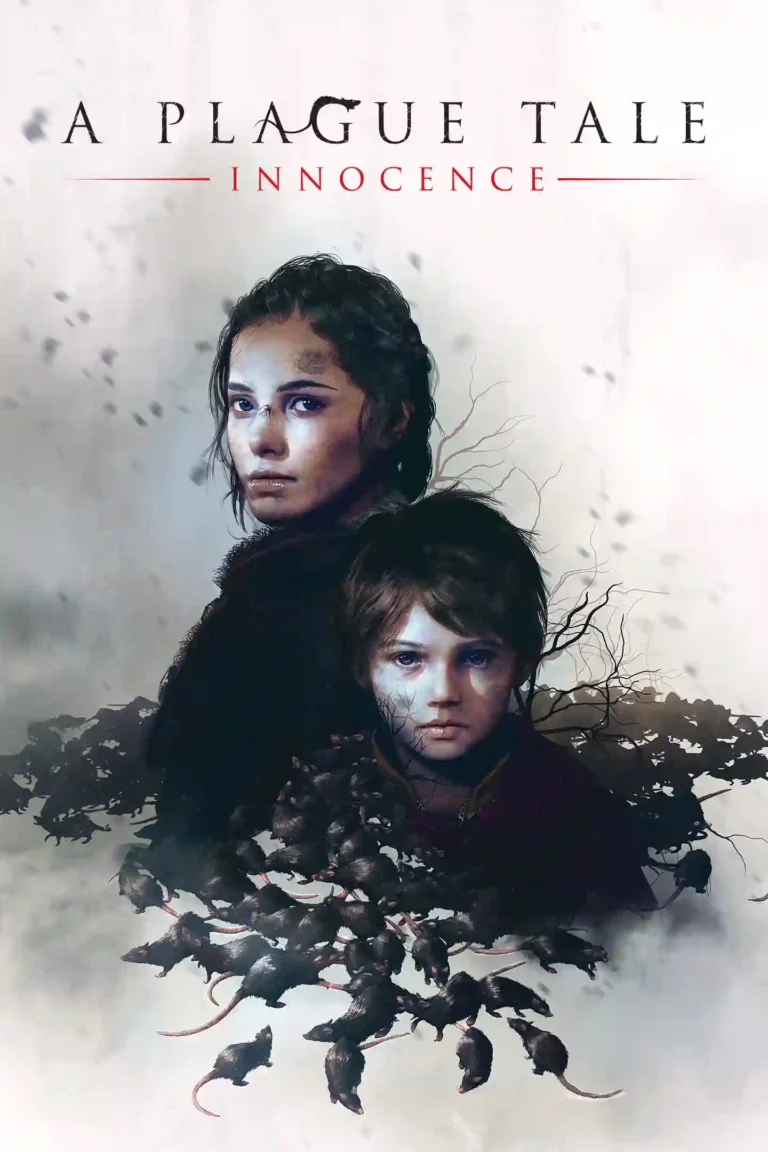
A Plague Tale: Innocence is a 2019 action-adventure game developed by Asobo Studio and published by Focus Entertainment. Originally released for PlayStation 4, Xbox One, and PC on May 14, 2019 — with a PS5 native version released July 6, 2021 — it is the first entry in the A Plague Tale series and the game that introduced Amicia and Hugo de Rune.
It received Metacritic scores of 81–83 across platforms. It was made by a studio of roughly 100–150 people with a budget well below contemporary AAA productions, and it was received as one of the most accomplished narrative action games of its year — a characterisation that surprised the games press and its own publisher. The r/patientgamers thread “A Plague Tale: Innocence — one of the game series I would never have discovered without patientgamers” sits in its Knowledge Panel with over 2,000 monthly visitors.
Technical Specifications
| Attribute | Details |
|---|---|
| Developer | Asobo Studio |
| Publisher | Focus Entertainment |
| Creative Director | David Dedeine |
| Composer | Olivier Derivière |
| Original Platforms | PS4 · Xbox One · PC |
| PS5 Version | July 6, 2021 (native upgrade) |
| Nintendo Switch | June 28, 2022 (cloud only) |
| Release Date | May 14, 2019 (NA) |
| Genre | Action-adventure, Stealth |
France, 1349: The Black Death
A Plague Tale: Innocence is set in the Guyenne region of southwestern France in 1349 — the height of the Black Death in France, when the bubonic plague was killing between one-third and one-half of Europe’s population. The disease has destroyed the social fabric: villages are silent, roads are dangerous, and the dead outnumber those left to bury them. Moving through the countryside means moving through the evidence of a civilisation coming apart.
The game uses this historical setting as more than backdrop. The plague’s effects — the social collapse, the desperation, the atmosphere of a world that has decided there is nothing left to lose — shape every environment the player moves through. Asobo Studio researched the period in collaboration with historical consultants, and the accuracy of the architecture, costume, and social organisation is visible in every area.
Into this setting, Asobo introduces rats. Hundreds of thousands of them. They emerge from the ground at night, they flood through buildings, and they devour anything that is not protected by light. They are, simultaneously, an environmental hazard, a puzzle element, a horror mechanic, and a visual spectacle that the game uses to communicate the scale of what the plague has done to the world. They are the signature of the franchise.
Amicia and Hugo de Rune
Amicia is a teenager from a minor noble family in Guyenne — the daughter of a knight named Robert and an alchemist named Beatrice. She is practical, athletic, and accustomed to the relative security of her family’s estate. At the game’s opening, she and her father are hunting in the woods when something attacks their dogs — the first rats. Shortly after, the Inquisition arrives at the estate.
Hugo is her five-year-old brother, who has been confined to the estate for most of his life because of a condition — the Macula — that makes him ill and that the family has concealed. Amicia barely knows him. They have lived in the same house for years without developing the closeness that would normally exist between siblings, because Beatrice’s obsessive focus on treating Hugo’s illness has kept him apart from the rest of the family.
The game’s central tension is the process of these two strangers — related, but essentially unknown to each other — learning to be a family while surviving the worst sequence of events anyone could design. Amicia is not built to be a protector. She becomes one because there is no one else. Hugo is not built to survive. He survives because she refuses to let him fail.
The relationship is written with specific, unglamorous honesty: Hugo complains, misunderstands, moves at the wrong times, needs things Amicia cannot always provide. Amicia loses patience, makes mistakes, does things she cannot take back. The warmth that develops between them is earned rather than assumed, and the game is careful to show the cost on both sides.
The Macula
Hugo carries the Macula — a parasitic biological and supernatural force present in his blood since birth. The Macula connects him to the rat collective: the rats respond to his fear and suffering, surge when he is distressed, and can be directed when he learns to control the connection. The condition is what the Inquisition is hunting him for. It is what Beatrice’s alchemical research has been devoted to curing for five years.
The game reveals the Macula’s properties gradually, building from Hugo’s simple complaint that his blood hurts to the eventual revelation of what he can actually do. Each step changes the dynamic between the siblings, because each step makes Hugo less simply a child to be protected and more something more complicated.
Gameplay: Survival Over Combat
Amicia is not a fighter. She has a sling — a cloth sling of the type used by medieval shepherds, capable of launching small stones and, eventually, crafted alchemical ammunition — and the game’s design reflects her limitations. Confronting soldiers or Inquisition knights directly results in death. The goal is to avoid, deceive, or misdirect.
The rats provide most of the puzzle material. They avoid light: torches, braziers, fires, and alchemical light-sources hold them back. Amicia can throw pots of Odoris (rat-attracting material) to direct swarms toward enemies, throw burning Ignifer to clear paths, or use Luminosa to create sustained light in otherwise dark areas. The crafting system uses materials found in the environment to produce these tools in limited quantities.
Stealth is the complementary system: moving crouched past soldiers and guards, using distractions to create openings, identifying patrol patterns, and identifying which interactions can be resolved by avoidance versus which require improvised violence. The sling can kill human enemies, but this carries risk — noise alerts others, and the moral weight of Amicia’s escalating capacity for violence is one of the game’s persistent secondary themes.
The Inquisition and Vitalis
Grand Inquisitor Vitalis Benevent is the game’s primary human antagonist — the man who ordered the attack on the de Rune estate and who pursues the siblings across France. He is a genuine believer in his own righteousness, which makes him more frightening than a simple opportunist would be: he is doing what he genuinely thinks is necessary. The Macula, to him, is a supernatural abomination that must be contained, and Hugo is its carrier.
The Inquisition’s soldiers are a persistent threat in outdoor environments, creating pressure that works in counterpoint to the rats: daylight is safer from rats but dangerous from soldiers; darkness is safer from soldiers but potentially lethal from the swarms. The design of many areas requires players to use both threats against each other — drawing rats toward soldier positions, or using Inquisition torches to hold back swarms that would otherwise be impassable.
The Companion Children
Several other characters join Amicia and Hugo as the journey progresses:
Lucas, a young apprentice of the alchemist Laurentius, is the group’s intellectual resource — knowledgeable about the Macula, able to assist with crafting, and the closest thing to a peer Hugo has. His relationship with Hugo develops in parallel to Amicia’s, offering an alternative sibling dynamic.
Melie and her brother Arthur are older children who have been surviving on the road alone. Melie is pragmatic to the point of coldness; Arthur is more open. Their different approaches to survival create friction and contrast with the de Rune siblings’ dynamic.
Rodric, a blacksmith’s son, joins later and provides physical capability that the others lack.
These secondary characters give the game’s ensemble structure and make the group dynamic, rather than just Amicia and Hugo’s relationship, the emotional engine of the second half.
The AA Gem and the patientgamers Effect
A Plague Tale: Innocence was produced on a budget significantly below typical AAA productions — Asobo Studio was a team of under 150 people working in Bordeaux without the resources of major publishers. The critical reception exceeded what the industry expected from a game at this scale: the narrative quality, the atmospheric design, and the emotional effectiveness of the sibling relationship were assessed as competitive with the highest-budget productions of 2019.
This gap between scale and quality is the specific type of game r/patientgamers exists to champion. The subreddit’s function is to identify games that were undersold, underlaunched, or underattended in their commercial windows and to direct later-arriving players toward them. Innocence became one of the subreddit’s most consistently recommended titles — the source of both the Knowledge Panel thread (“one of the game series I would never have discovered without patientgamers”) and a second r/patientgamers thread visible in the SERP (“A Plague Tale: Innocence was amazing”) that represents a separate moment of community discovery.
The game has been on Xbox Game Pass and PlayStation Plus at various points since its initial release, and these inclusions have each produced discovery surges. The Resonance announcement in June 2025 drove another wave.
Availability and PS5 Version
The PS5 native version, released July 6, 2021, runs at 60fps with faster load times and visual improvements over the PS4 original — and is free for PS4 owners. Physical PS5 copies are available on Amazon. The game is currently available on Steam, Epic Games Store, PS4/PS5 (digital and physical), Xbox (backward compatible with Series enhancements), and Nintendo Switch via cloud streaming.
Reception
A Plague Tale: Innocence holds Metacritic scores of 81 on PS4 and PC and 83 on Xbox One — “generally favorable” across all platforms. Critics consistently cited the sibling relationship, the atmospheric use of the Black Death setting, the rat mechanics, and Olivier Derivière’s score. Consistent criticisms: stealth sections that sometimes felt unforgiving, enemy AI that could be inconsistent, and a pace that slowed in the middle sections before the final act.
For a game at its scale, the scores represent significant overperformance. Focus Entertainment’s subsequent investment in Requiem — a substantially larger game with a higher budget and wider marketing — was the direct commercial consequence of Innocence‘s critical and eventual commercial success. Resonance: A Plague Tale Legacy, releasing August 27, 2026, is the third consequence.