A Plague Tale: Requiem
 82
★ /10
82
★ /10
 Nintendo Switch,
  PC,
PC,  PS5,
PS5,  Xbox Series X/S
Where to buy





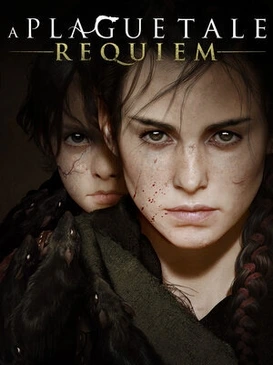
A Plague Tale: Requiem is a 2022 action-adventure game developed by Asobo Studio and published by Focus Entertainment. Released for PlayStation 5, Xbox Series X/S, and PC on October 18, 2022 — with a cloud-only Nintendo Switch version on the same date — it is the sequel to A Plague Tale: Innocence (2019) and the conclusion of Amicia and Hugo’s story.
It received Metacritic scores of 82 on PS5, 85 on Xbox Series X, and 82 on PC, with an OpenCritic rating of 81 (“Strong”, 91st percentile among all games). The r/patientgamers thread “A Plague Tale: Requiem is one of the most boring games I’ve played” is the third organic result for the game and sits in its Knowledge Panel. The IGN review calls it “a depressing yet awesome story” it won’t let you forget.
Both of those things are accurate about the same game.
Technical Specifications
| Attribute | Details |
|---|---|
| Developer | Asobo Studio |
| Publisher | Focus Entertainment |
| Creative Director | Kevin Choteau |
| Composer | Olivier Derivière |
| Platform(s) | PlayStation 5 · Xbox Series X/S · PC · Nintendo Switch (cloud only) |
| Release Date | October 18, 2022 |
| Genre | Action-adventure, Stealth, Narrative |
| Mode | Single-player |
Asobo Studio: Microsoft Flight Simulator and Plague-Ridden France
Asobo Studio is a French developer based in Bordeaux whose catalogue encompasses two of the most technically remarkable games of their respective generations: Microsoft Flight Simulator (2020), which received a Metacritic score of 91 and rebuilt the entire Earth’s surface at 1:1 scale using Bing satellite data and AI terrain processing, and the A Plague Tale series, which renders 14th-century France with photorealistic lighting and environments built in collaboration with Roxane Chila, a specialist in medieval history, to ensure period accuracy.
These are not games from the same commercial category — Flight Simulator is a Microsoft first-party simulator, A Plague Tale is a narrative action game from a European publisher — but they share an artistic identity: Asobo is a studio obsessed with rendering the physical world at the highest fidelity achievable with current technology, whether that world is the actual Earth or a fictional France of 1349.
The new generation of hardware was the enabling condition for Requiem‘s most distinctive technical achievement. The game renders more than 300,000 rats simultaneously — a number impossible on previous-generation consoles and achieved only through the PS5 and Xbox Series X’s processing architecture. This matters because the rats are not background decoration. They are a gameplay system, an environmental hazard, and a storytelling device. They needed to feel like an ocean, not a crowd.
Setting: South Toward the Sun
Innocence was set in a claustrophobic northern France of grey stone and overcast light. Requiem moves south — to Provence, to the Camargue, to the Mediterranean coast, and eventually to a fictional island in the Mediterranean — and the colour shift is immediate. The game has more sun, more colour, more visual breathing room than its predecessor. The environments range from salt marshes and lavender fields to dense market streets and Roman ruins.
The change of palette was a deliberate creative decision. The team wanted the sequel to feel like it was chasing hope — travelling toward something rather than fleeing something — even as the narrative moves toward a conclusion darker than anything in Innocence. The Mediterranean light functions as an irony: the more beautiful the setting, the worse things become.
The historical collaboration extends to the architecture, costume, and social organisation of every location the game visits. The 14th century’s specific mixture of Inquisition authority, plague-era social collapse, and residual Roman infrastructure is rendered with visible research investment.
Amicia de Rune
The game’s most significant development over Innocence is what happens to Amicia — a teenager who began the first game as a sheltered child of a noble family and is now someone who has survived things that have changed her irrevocably. Requiem is interested in what it costs to have kept Hugo alive through everything Innocence required: the things she did, the person she became, and whether she can find any version of ordinary life again.
Amicia’s arc in Requiem is the game’s moral and emotional core, more so than the rat spectacle or the combat. The game explicitly has other characters react to how she fights — companions are shocked or repulsed by her lethality, not impressed by it. The Eurogamer review noted that “you can feel the game questioning you, questioning your actions.” Whether Amicia has become something she can’t walk back from, and whether saving Hugo at the cost of becoming this person was the right choice, is the question the game lives in.
Her relationship with Hugo is the same sibling bond that drove Innocence — protective, occasionally infuriating, deeply loving — with the added dimension that Hugo is older now too, and his connection to the Macula has deepened in ways that make him simultaneously more powerful and more frightening.
The Macula, Hugo, and 300,000 Rats
Hugo de Rune carries within him the Macula — a biological and metaphysical connection to the collective of rats that has swept across France in the shadow of the Black Death. When Hugo is distressed, the rats surge. When he is calm, they recede. He can direct them, use them as a weapon, sense through them. He cannot, it becomes increasingly clear, control them indefinitely.
The Macula is both the game’s supernatural premise and its emotional engine. Hugo is not simply ill — he is becoming something, and the game tracks that transformation with enough ambiguity that the direction of it is unclear until the game decides to be clear. His connection to the rats gives the player some ability to weaponise the swarms (directing them onto enemies, using them to navigate puzzles), but the Macula’s progression is never presented as an asset. It is a countdown.
The rats themselves — 300,000 at maximum, simultaneously rendered — function as environment, as enemy, as puzzle element, and as visual metaphor for something consuming the world. Sequences in which the rat ocean fills a city square or floods through corridors are among the most immediately striking things the PS5 had produced at the time of the game’s release. They look like weather.
Gameplay: What Kind of Experience
A Plague Tale: Requiem is a narrative-led action game with stealth, environmental puzzles, and limited combat. Players navigate each area using a combination of:
Stealth — moving through environments without alerting guards or soldiers, using distractions, fire, and the rats’ light-aversion as tools.
Rat manipulation — directing swarms using Hugo’s Macula ability or Amicia’s crafted items (fire to hold them back, potions to attract them) to clear paths or eliminate enemies.
Combat — Amicia now has more combat options than in Innocence (a crossbow, improved sling mechanics, alchemical ammunition) and can survive being hit rather than dying immediately from the first blow. She can also re-enter stealth after discovery.
Puzzles — every level is built around the interaction between light sources, rat swarms, and the available tools, with solutions that require combining the systems rather than applying a single approach.
The gameplay’s fundamental structure is linear and guided — there is always one correct progression path, and the environments create the illusion of choice more than they provide it. This is the source of the sharpest critical divide. Players who engage primarily with the story experience it as an impeccably paced vehicle for the narrative. Players looking for mechanical challenge, tactical freedom, or replayability find the structure insufficient.
The Score
Olivier Derivière’s score was recorded at the Estonian Public Broadcasting Studio with the Estonian Philharmonic Chamber Choir. The instrumentation includes cello as the primary voice alongside a set of medieval instruments — lute, nyckelharpa, bagpipes, viola da gamba, medieval guitar, flute — that root the music in its historical period while giving it a distinct sonic identity from both contemporary film scores and typical fantasy game music.
The track “Ô ma belle lune” (O my beautiful moon) opens and closes the soundtrack and gives the score its emotional throughline. The composer created a full YouTube walkthrough explaining the in-game music context for each scene. The score was performed in concert at a 40-minute broadcast event in November 2022.
The Ending
A Plague Tale: Requiem ends with Hugo dying — killed by Amicia, who has no other option.
The Macula has grown beyond what anyone can manage. The prophesized island offers a partial answer: Hugo’s connection can be severed, but the cost is his death. What happens instead, in the game’s climactic sequence, is worse than the calculated choice: a choice made under desperation and chaos, without time or clarity, by a teenager who has spent the entire game trying to prevent exactly this. Hugo dies. The rats recede.
The post-ending epilogue, set a year later, finds Amicia preparing to seek the next Macula carrier — a different person, in a different place, who will need what she has learned. She visits Hugo’s grave before she leaves.
A post-credits scene set in the modern era shows a child on a ventilator with the Macula’s markings on their skin. The cycle continues.
Critics were divided on whether this constitutes a satisfying conclusion. Some — including Eurogamer’s characterisation of the story as “an unforgettable tale of desperation and hope” — found the ending emotionally proportionate to what preceded it. Others found it nihilistic: “a world depicted with no light at the end of the tunnel,” as one Metacritic review described. The game commits to its tragedy rather than softening it, and that commitment will determine whether the ending is the game’s final statement or its fatal flaw, depending on the player.
“Most Boring” vs “A Masterclass”
The r/patientgamers thread in the Knowledge Panel — “A Plague Tale: Requiem is one of the most boring games I’ve played” — and the FingerGuns review calling it “a masterclass in narrative games design” describe the same product from audiences with different priorities.
Requiem asks the player to invest in Amicia and Hugo. It does not offer significant challenge, emergent gameplay, or meaningful choice outside the narrative’s own choices. It is approximately 15–20 hours of following a pre-determined story through environments that reward attention and emotional engagement. For players who provide those things, it is one of 2022’s finest narrative experiences. For players who wanted the game to do more — mechanically, structurally, in terms of player agency — it is a long walk through beautiful scenery.
Neither response is wrong. The game was designed for an audience and it serves that audience well. The question of whether that audience is yours is worth answering before purchasing.
Reception and Availability
A Plague Tale: Requiem is available on Steam, Epic Games Store, GOG, PlayStation Store, and Xbox. It is on Game Pass (when included). The Nintendo Switch version requires cloud streaming and is dependent on internet connection quality. Physical copies for PS5 remain available through Amazon.
A Plague Tale: Innocence (2019) — the predecessor — received Metacritic scores of 81–83 and is the recommended starting point for the franchise. Its events are not recapped in Requiem, and the emotional weight of the sequel’s ending depends significantly on the time spent with Innocence’s versions of Amicia and Hugo.