Warzone 2100
 PC
PC PS 1
PS 1Where to buy

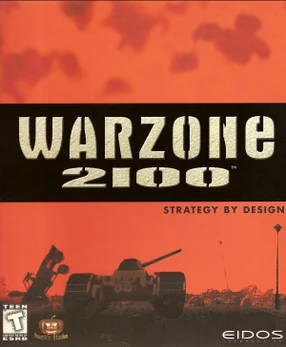
Warzone 2100 (1999) is a legendary sci-fi real-time strategy game that pioneered concepts many modern RTS titles still struggle to implement. Developed by Pumpkin Studios and published by Eidos Interactive, it dropped players into a post-apocalyptic late-21st century where a nuclear defense shield malfunction practically wiped out humanity. As commander of “The Project,” your goal is to scour the ruins, recover pre-war artifacts, and rebuild civilization.
While it stood in the shadow of giants like Command & Conquer and StarCraft at launch, its sheer mechanical depth and forward-thinking design turned it into a massive cult classic.
The Infinite Assembly Line: Unit Customization
Instead of giving you a static menu of pre-built tanks and soldiers, Warzone 2100 relies on a modular unit designer. You don’t build a “Medium Tank”; you design a weapon system on wheels.
- Mix-and-Match Architecture: Units are split into three components: Chassis (dictating health and weight capacity), Propulsion (Wheels, Half-tracks, Tracks, Hover, or VTOL flight), and Weaponry/Systems.
- Massive Tech Tree: The game features an intimidatingly deep tech tree with over 400 distinct technologies. As you research breakthroughs, you can instantly upgrade your assembly lines to field custom creations like a heavy-tracked plasma tank or a high-speed hover machine-gun scout.
The Horizon War: Radar and Counter-Battery Artillery
Warzone 2100 took indirect fire and turned it into an art form. It treats the fog of war with absolute tactical seriousness, placing a heavy emphasis on electronic warfare:
- Sensor Arrays: Your frontline combat units are blind without sensors. Building radar towers or deploying mobile sensor vehicles allows your units to lock onto enemies from extreme distances.
- Counter-Battery Radar: If an enemy hidden in the fog of war fires an artillery shell at your base, your counter-battery radar will automatically calculate the trajectory, pinpoint the exact grid location of the enemy guns, and command your own artillery batteries to instantly return fire.
Persistent Scars: The Expanding Campaign
The single-player campaign completely rejected the traditional “wipe the map and start over next mission” RTS loop.
- The Living Home Base: You manage a single, centralized home base that persists across the entire campaign. When you build defenses, power generators, and research facilities, they remain exactly where you left them.
- Expanding Sectors: Instead of loading onto completely separate maps, “Away Missions” require you to fly troops to a combat zone, clear it out, and then watch the global map dynamically expand, blending your old base seamlessly into the new territory.
- Veterancy Matters: Because units transfer from mission to mission, keeping your experienced squads alive is vital. A high-ranking veteran crew fires faster, moves smarter, and deals significantly more damage than a fresh factory recruit.
The Immortal Open-Source Miracle
The most incredible chapter of Warzone 2100’s history happened after its commercial life ended. In 2004, the source code was liberated and handed over to the community under an open-source license.
Rather than letting it become abandonware, the Warzone 2100 Project has aggressively maintained and upgraded the game for over two decades. The project remains incredibly active, introducing modern graphics rendering pipelines (Vulkan, DirectX 11+, and OpenGL), high-quality water shaders, remastered audio arrays, and even WebAssembly ports that allow the game to run smoothly inside a web browser.
Summary
Warzone 2100 was a game born a decade too early. Its fully 3D rotatable camera, deep unit customization sandbox, and surgical reliance on long-range radar networks set it entirely apart from the frantic “tank rush” meta of its contemporaries. Thanks to one of the most dedicated open-source development communities in gaming history, it remains a pristine, highly competitive tactical playground that costs absolutely nothing to experience.
Modern Availability & Platforms
- Release Date: March 26, 1999 (PC)
- Supported OS: Windows (7–11+), macOS (10.14+), Linux (Flatpak/Snap/Ubuntu), FreeBSD
- Distribution: 100% Free and Open-Source via Steam, itch.io, the Microsoft Store, or directly from the official
wz2100.netarchive.