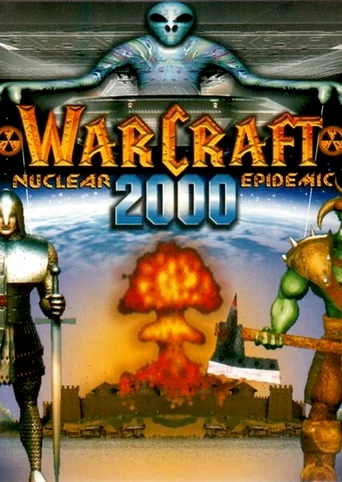
Warcraft 2000: Nuclear Epidemic
 PC
PC GSC Game World
Warcraft 2000: Nuclear Epidemic is an incredible, highly obscure piece of real-time strategy history. To be absolutely clear up front: this is not an official Blizzard Entertainment game. Instead, it is a highly ambitious, unauthorized, and completely wild standalone project created in 1998 by a small Ukrainian development team called GSC Game World—the legendary studio that would later go on to create the Cossacks series and the iconic S.T.A.L.K.E.R. franchise.
Serving as a bizarre, unofficial sequel/spinoff to Warcraft II: Tides of Darkness, the game took ripped audiovisual assets from Blizzard’s masterpiece, injected them with completely unhinged sci-fi elements, and ran them on a revolutionary custom engine designed to handle warfare on an unprecedented scale.
Gameplay
While Warcraft 2000 looks almost exactly like Warcraft II at first glance, the mechanical scale and unit balancing are completely different. The game abandons the intimate, small-scale skirmishes of traditional 90s RTS games in favor of absolute, screen-filling chaos.
Key gameplay mechanics and bizarre additions include:
- Massive Unit Limits: This was the true selling point of the project. While the original Warcraft II engines struggled with small unit caps, GSC’s custom engine allowed for a staggering 8,000 units on the map simultaneously. This completely changed the tactical landscape, turning small border skirmishes into massive, sprawling wars of attrition.
- Nuclear Weaponry: Earning the game its subtitle, the medieval fantasy setting was abruptly shattered by the introduction of modern ballistic missiles. Players could build nuclear silos and launch devastating ICBMs across the map to instantly vaporize massive chunks of an enemy’s army.
- New Factions and Units: The game didn’t just stop at nukes. It introduced bizarre new elements to the Orc and Human conflict, including a completely original third faction of high-tech extraterrestrial aliens.
- Engine Upgrades: Because it wasn’t running on Blizzard’s code, the game supported much higher resolutions than the 1995 original, allowing players to zoom out and command massive formations of troops on expansive, custom-built maps.
Development and Legacy
In 1998, GSC Game World was a young, incredibly talented team looking to prove themselves in the global gaming industry. They developed a brand-new, highly optimized RTS engine capable of rendering thousands of units. To demonstrate its power, they ripped the sprites and sounds from Warcraft II, built Nuclear Epidemic, and allegedly pitched the project to Blizzard Entertainment, hoping to secure a contract to develop an official sequel or spin-off.
Unsurprisingly, Blizzard (who was already hard at work on StarCraft and the early concepts for Warcraft III) declined the unauthorized pitch.
Left with a fantastic engine but no official Warcraft license, GSC released Warcraft 2000: Nuclear Epidemic onto the internet as a free, standalone download in late 1998. The game spread rapidly through Eastern European cybercafes and pirated CD-ROM compilations, becoming a cult classic piece of abandonware.
The story has a massive silver lining. GSC Game World simply took their groundbreaking engine, scrubbed out the copyrighted Orcs and Humans, and used it to develop Cossacks: European Wars in 2000. Cossacks became a massive, multi-million-selling global hit, launching GSC into superstardom and permanently etching their name into PC gaming history.
Key Features:
- Unauthorized Ambition — Experience a fascinating piece of rogue game development that unofficially bridges the gap between Warcraft II and the massive scale of the Cossacks franchise.
- 8,000 Unit Cap — Command literal thousands of Peons, Grunts, and Footmen in sprawling, chaotic battles that the original Blizzard engine could never handle.
- The Nuclear Option — Shatter the medieval fantasy setting by building missile silos and raining apocalyptic nuclear warheads down on your opponent’s Town Hall.
- Extraterrestrial Threats — Battle against wildly out-of-place, high-tech alien units injected directly into the classic Azerothian conflict.
- Abandonware Legend — A quintessential piece of 1990s internet gaming history, preserved today purely through retro-gaming archives and fan-run abandonware sites.
Release Platforms:
- Microsoft Windows (PC) — Late 1998 / Early 1999
- (Released purely as an unofficial, free internet download; never commercially sold).