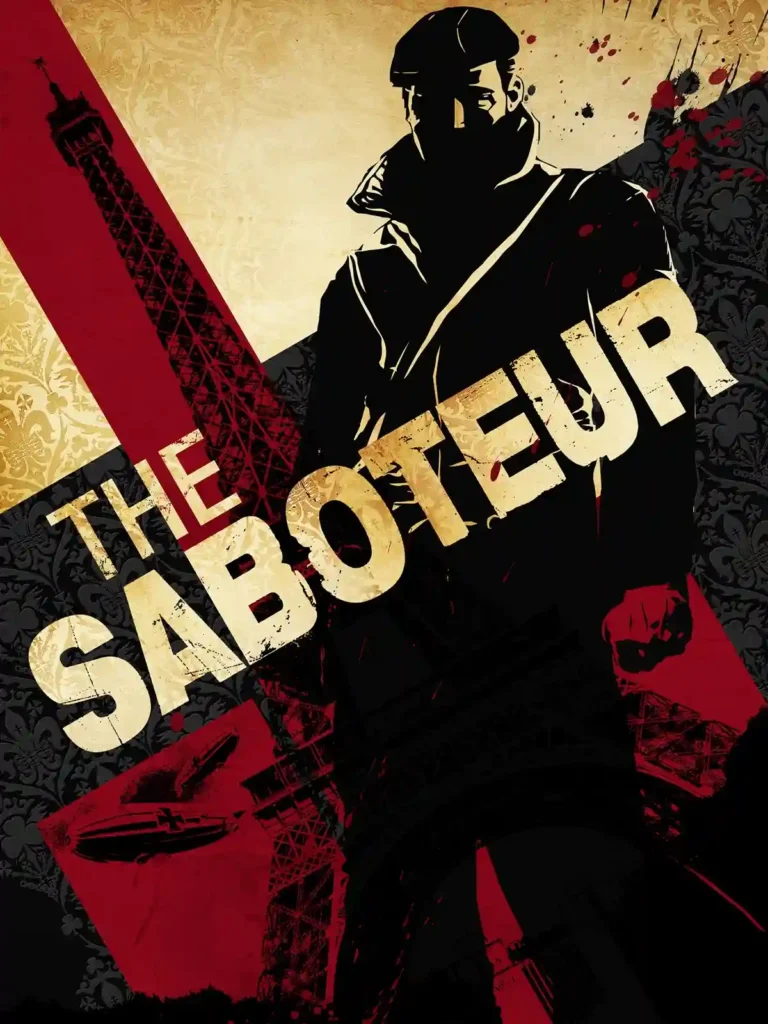
The Saboteur
 73
★ /10
73
★ /10
 PC
PC PS 3
PS 3 Xbox 360
 1C-SoftClub,
  Electronic Arts



The Saboteur is a 2009 open-world action-adventure game developed by Pandemic Studios and published by Electronic Arts. Set against the backdrop of Nazi-occupied Paris during World War II, the game is widely celebrated as a cult classic, highly regarded for its striking visual style and its unique blend of stealth, explosive action, and parkour.
The narrative follows Sean Devlin, a hard-drinking, tough-talking Irish race car mechanic and driver (heavily inspired by the real-life WWII hero William Grover-Williams). Sean’s life is turned upside down when a ruthless Nazi colonel, Kurt Dierker, cheats him out of a major race and subsequently murders Sean’s best friend. Stranded in Paris as the German army rolls in, a grieving and vengeful Sean teams up with the French Resistance and British Special Operations Executive (SOE). What begins as a personal quest for revenge quickly escalates into a full-scale guerrilla war to liberate the city of Paris from the grip of the Third Reich.
Gameplay
The Saboteur blends the open-world city driving and shooting of Grand Theft Auto with the environmental climbing and stealth of Assassin’s Creed.
Key gameplay mechanics include:
- The “Will to Fight” Aesthetic: This is the game’s most iconic feature. Areas of Paris heavily controlled by the Nazis are rendered in striking, neo-noir black and white, with only the bright red of Nazi flags and armbands (and the yellow glow of streetlights) piercing the gloom. As Sean destroys Nazi infrastructure in these zones, he restores the citizens’ “Will to Fight,” causing vibrant, beautiful color to permanently wash back over the neighborhood.
- Sabotage and Demolition: Sean’s primary objective is to dismantle the Nazi war machine. Players are equipped with dynamite and RDX explosives to blow up sniper towers, anti-aircraft guns, fueling stations, propaganda speakers, and armored vehicles scattered across the map.
- Parkour and Verticality: Sean is an incredibly agile climber. Players can scale almost any building in Paris, running across rooftops to avoid street-level patrols, set up sniper perches, or silently drop down behind enemy lines.
- Stealth and Disguises: While going in guns blazing is an option, sneaking is often required. Sean can stealthily execute Nazi soldiers and steal their uniforms to walk right through the front gates of highly restricted military installations. However, enemies will grow suspicious if you run, climb, or act erratically while in disguise.
- Contraband Market: Players earn “Contraband” (the game’s currency) by completing missions and destroying Nazi property, which can be spent at black-market dealers to upgrade weapons, buy explosives, or call in getaway cars and resistance fighters for backup.
Development and Legacy
Developed by Pandemic Studios—the legendary team behind beloved classics like Star Wars: Battlefront (2004), Mercenaries: Playground of Destruction, and Destroy All Humans!—The Saboteur was built on the proprietary Odin engine. The team sought to create a unique take on the heavily saturated WWII genre by focusing on resistance fighters and espionage rather than frontline soldiers.
Tragically, The Saboteur served as Pandemic Studios’ swan song. Electronic Arts shut the studio down in November 2009, just weeks before the game officially hit store shelves.
Upon release, the game received generally positive reviews. Critics heavily praised the transition from black-and-white to color, the gorgeous realization of 1940s Paris, and the incredibly satisfying gameplay loop of blowing up Nazi installations. However, it was also criticized for some clunky combat mechanics, driving physics, and noticeable bugs.
A notable point of controversy at launch was “The Midnight Club” DLC, a premium add-on that unlocked a VIP room in the game’s central cabaret hideout, adding topless dancers and a unique minigame.
Today, The Saboteur is fondly remembered as a highly ambitious, deeply stylish hidden gem of the PS3 and Xbox 360 era. Because it was the final game from a beloved studio, it holds a special, somewhat melancholic place in gaming history.
Key Features:
- A Living Canvas — Watch Paris visually transform from an oppressive, black-and-white neo-noir nightmare into a vibrant, colorful city as you inspire the French Resistance.
- High-Explosive Espionage — Plant dynamite, snipe targets from the Eiffel Tower, and derail trains to systematically dismantle the Nazi occupation.
- Urban Parkour — Scale iconic Parisian landmarks, from the Notre Dame to the Sacré-Cœur, using the rooftops to outmaneuver the Gestapo.
- Undercover Infiltration — Steal enemy uniforms to sneak into heavily fortified bases, utilizing a suspicion meter that reacts to your behavior.
- 1940s Motorhead — Drive a fleet of beautifully modeled, era-appropriate classic cars, engaging in high-speed chases through the European countryside.
Release Platforms:
- PlayStation 3 — December 8, 2009
- Xbox 360 — December 8, 2009
- Microsoft Windows (PC) — December 8, 2009