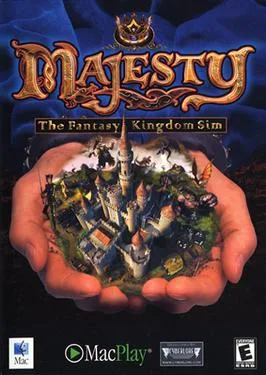
Majesty: The Fantasy Kingdom Sim
 Android,
  iOS (iPhone/iPad),
  PC
PC
 1C Company, Hasbro Interactive, Infogrames, MacPlay, Paradox Interactive


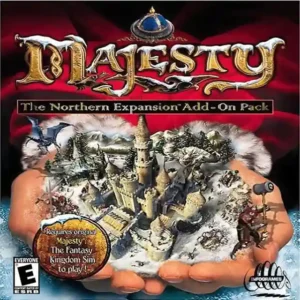
Majesty: The Fantasy Kingdom Sim is a revolutionary “indirect control” strategy game that fundamentally redefined the relationship between the player and their units. Developed by Cyberlore Studios and set in the vibrant, monster-infested land of Ardania, it casts the player not as a typical micromanaging commander, but as a Sovereign who must coax a population of fiercely independent, autonomous heroes into doing their bidding. It is a game where the player’s primary weapons are not move commands, but the allure of gold and the promise of legendary gear.
The Sovereign’s Dilemma: Indirect Control
The defining mechanic of Majesty is the total lack of direct unit control. You cannot click on a Warrior and tell him where to walk or who to fight; every hero in your kingdom is an AI-driven individual with their own personality, needs, and desires. To influence them, you must issue Reward Flags:
- Attack Flags: Place a bounty on a specific monster or enemy building to entice heroes to destroy it.
- Explore Flags: Set a reward on an unmapped area of the fog of war to encourage scouts and rangers to reveal the terrain.
- Hero Motivation: The higher the bounty, the more likely heroes—especially greedy ones like Rogues—will be to drop what they are doing and fulfill the quest.
Ardania’s Economy: The Hero Cycle
Success in Majesty requires mastering a unique circular economy. You start each mission with a treasury used to build Guilds and Temples, which in turn recruit heroes. However, your primary source of long-term income is the money these heroes spend back into the kingdom.
- Supply and Demand: Heroes earn gold by fulfilling your flags or looting monsters. They then visit your Marketplace to buy healing potions, the Blacksmith for better armor, or the Inn for rest.
- Taxation: Your Royal Tax Collectors must then travel from building to building to collect the profits and bring them back to the Palace. If your tax collectors are eaten by giant spiders on their route, your treasury remains empty regardless of how successful your heroes are.
The Heroes of Ardania
The game features a diverse roster of hero classes, each with distinct AI behaviors:
- Rangers & Rogues: Rangers naturally gravitate toward exploring the map, while Rogues are highly motivated by even small bounties but may flee if a fight turns sour.
- Warriors & Paladins: The backbone of your defense, willing to stand their ground against overwhelming odds, especially if supported by a Temple.
- Wizards: Fragile but immensely powerful at high levels; they spend much of their time researching new spells in the Library.
- Cultists & Necromancers: Darker hero types available through specific temples, capable of summoning minions or taming wild beasts.
Key Features
- Pioneering Indirect Control — Manage a kingdom of independent actors who only follow your lead for a price.
- Living World Simulation — Watch as heroes level up, buy equipment, and interact with an ecosystem of over 15 types of monsters.
- Complex Building Trees — Construct over 30 types of upgradable buildings, from simple Guardhouses to elaborate Temples to the Gods.
- Sovereign Spells — Directly intervene in battle by casting powerful spells from your Palace or Guilds, such as lightning bolts or area-of-effect heals.
- Non-Linear Quests — Tackle a variety of scenarios ranging from simple monster hunts to complex political crises.
- Atmospheric Charm — Features a whimsical art style and an iconic narrator who provides dryly humorous updates on the state of your kingdom.
Summary
Majesty: The Fantasy Kingdom Sim is a brilliant subversion of the RTS genre that places the player in the role of a desperate manager rather than an omnipotent commander. By focusing on the motivations of its autonomous heroes, it creates a “fantasy life simulation” that feels dynamic and unpredictable. It is a game where your greatest challenge is not the enemy, but the stubbornness of your own subjects.
Release Platforms:
- PC (Microsoft Windows) — March 21, 2000
- Mac OS — December 2000
- Linux — April 2003
- Android / iOS — 2011