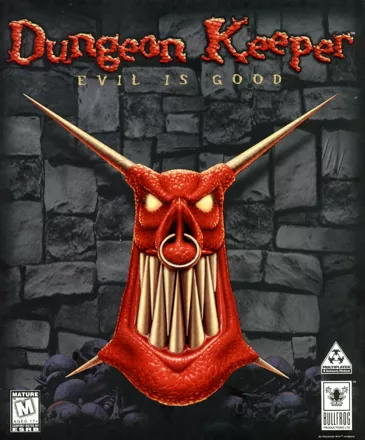
Dungeon Keeper
 PC
PC
 Electronic Arts



Dungeon Keeper is the legendary 1997 real-time strategy and “god game” hybrid that famously flipped the fantasy script by casting the player as the ultimate villain. Developed by Bullfrog Productions and led by Peter Molyneux, it redefined management strategy by tasking players with building, maintaining, and defending a subterranean lair from self-righteous “heroes” intent on stealing your treasure. Known for its dark humor, dank atmosphere, and innovative indirect control, it remains a cornerstone of the dungeon management genre.
The Hand of Evil and Indirect Command
The core of Dungeon Keeper lies in its unique control scheme, centered on the Hand of Evil. Unlike traditional RTS games where players give direct orders, the Keeper influences their minions indirectly. You utilize the Hand to pick up creatures and drop them where they are needed—whether that’s into a training room to hone their skills or directly onto the front lines of a battle.
Perhaps the game’s most iconic mechanic is the Slap. By slapping a minion, you can force them to work faster at the cost of a small amount of their health. This creates a “management by intimidation” loop where you must balance the productivity of your workforce against their overall well-being and loyalty.
Dungeon Ecology and Infrastructure
Success requires building a functional underground society. Every creature that enters your dungeon through a Portal has specific needs: a Lair to sleep in, a Hatchery full of chickens for food, and a steady supply of gold from the Treasury to pay their wages.
The game features a complex “creature ecology” where different monsters have unique personalities and rivalries. For example, flies and spiders are natural enemies and may bicker if housed together, while high-tier creatures like the Bile Demon or the terrifying Horned Reaper require massive, specialized facilities to stay satisfied. If your minions become too unhappy, they may vandalize your rooms or even desert your cause entirely.
The Possession Mechanic
One of the most innovative features for its time was the Possess Creature spell. This allowed the player to transition from a top-down isometric view to a first-person perspective, seeing the dungeon through the eyes of any minion. While possessing a creature, you gain direct control over their movement and attacks, allowing you to personally lead a scouting mission or turn the tide of a skirmish by utilizing a monster’s unique spells and abilities.
Key Features
- Play as the Villain — Experience a dark, humorous campaign where the goal is to conquer idyllic realms and destroy the “Forces of Good”.
- Indirect Command System — Manage your dungeon through the “Hand of Evil,” using plucking, dropping, and slapping to keep your minions in line.
- Complex Base Building — Dig out tunnels and design efficient layouts for Training Rooms, Workshops, Libraries, and Torture Chambers.
- Creature Management — Lure 16 different types of monsters to your dungeon, each with its own needs, strengths, and ecological quirks.
- Possession Mode — Dive into the action with a first-person perspective, exploring your tunnels and fighting battles from the front lines.
- The Dungeon Heart — Protect your central life force at all costs; if your Heart is destroyed by invading heroes or rival Keepers, your reign of terror ends.
Summary
Dungeon Keeper is a masterclass in atmospheric world-building and systemic gameplay. By providing a “near-perfect feedback loop” of expansion, recruitment, and defense, it offered a strategic experience that felt deeply personal and deliciously wicked. It is a game that values the “back of your hand” as much as your tactical mind, ensuring that being bad never felt so good.
Release Platforms:
- DOS / Microsoft Windows (PC) — June 26, 1997
- Digital Re-release (GOG/EA App) — Modernized for current hardware