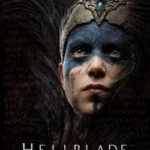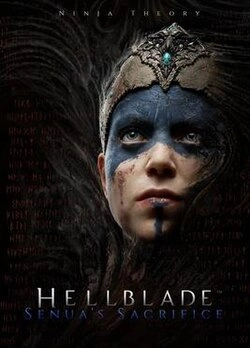
Hellblade: Senua’s Sacrifice
 81
★ /10
81
★ /10
 Nintendo Switch,
  PC,
PC,  PS4,
PS4,  PS5,
PS5,  Xbox One,
  Xbox Series X/S
 Xbox Game Studios
Where to buy



Hellblade: Senua’s Sacrifice is a 2017 dark fantasy action-adventure video game developed and published by the British independent studio Ninja Theory. Released on August 8, 2017, for PlayStation 4 and Microsoft Windows, the game later expanded to Xbox One, Nintendo Switch, and received native next-generation upgrades for Xbox Series X/S and PlayStation 5.
Self-described by the studio as an “Independent AAA” project, the game was created by a small team of around 20 developers on a modest budget but aimed to deliver the production values, visual fidelity, and atmospheric depth of a high-budget retail release.
The game follows Senua, a eighth-century Pict warrior from Orkney, who journeys into the Norse underworld of Helheim to redeem the soul of her murdered lover. Developed in close collaboration with neuroscientists and individuals with lived experience of mental illness, the narrative serves as a profound, metaphorical exploration of severe psychosis, trauma, and grief.
Technical Specifications
| Attribute | Details |
| Developer | Ninja Theory |
| Publisher | Ninja Theory |
| Director | Tameem Antoniades |
| Lead Writer | Tameem Antoniades |
| Starring | Melina Juergens (Senua) |
| Engine | Unreal Engine 4 |
| Platform(s) | PC, PS4, Xbox One, Nintendo Switch, Xbox Series X/S, PS5 |
| Release Date | August 8, 2017 |
| Genre | Action-adventure, Psychological Horror |
| Mode | Single-player |
Setting and Narrative Premise: The Descent into Hel
Set during the Viking Age, the story centers on Senua, a young woman who has suffered from severe, debilitating psychosis since childhood—a condition her abusive father, a shadow-druid named Zynbel, convinced her was a dark, unholy curse.
After finding isolation and unconditional love in the arms of a chieftain’s son named Dillion, Senua’s world is brutally shattered. While away in self-imposed exile, Norse marauders raid her village and subject Dillion to the horrific “Blood Eagle” sacrifice.
“Leave your soul at the door, for you will not need it on the journey ahead. The path to Hel is paved with the bones of those who thought they could outrun their own darkness.”
Driven by immense grief and a refusal to accept his damnation, Senua travels to the borderlands of Helheim (the Norse underworld). Carrying Dillion’s severed head wrapped in cloth, she intends to confront Hela, the Goddess of Death, to forcefully bargain for his soul.
Throughout her journey, her primary antagonist is The Shadow—a dark, manifestation of her father’s voice that abuses her mind—while she is simultaneously guided, mocked, and protected by a chorus of whispering spirits known as The Furies.
Core Gameplay Pillars
Hellblade intentionally eschews traditional video game user interfaces; there are no health bars, quest logs, mini-maps, or floating tutorial prompts on the screen. The gameplay relies entirely on visual and audio cues:
1. The Symphony of Psychosis (Binaural Audio)
The game’s defining mechanical feature is its use of binaural audio technology to simulate auditory hallucinations. Recorded using a specialized dummy-head microphone setup, the voices of the Furies swirl dynamically around the player’s headset.
The voices are not just atmospheric flavor; they serve as an organic gameplay UI. During exploration, they argue over whether the player is solving puzzles correctly. In active combat, they scream warnings out from specific 3D vectors to alert the player of an incoming, off-screen rear strike (“Behind you!”, “Watch out!”, “He’s too fast!”), demanding that the player listen closely to survive.
2. Perspective and Illusion Puzzles
To progress through the gates of Helheim, players must solve environmental puzzles that mirror the real-world psychological phenomenon of apophenia (the human tendency to perceive meaningful patterns in random data).
Gated doors are sealed with glowing Norse runes. To unlock them, players must navigate the geometry of the environment, manipulating cameras and alignment to discover the shape of the rune naturally formed by intersecting tree branches, shadows, or cracks in dilapidated stone walls.
3. Visceral Over-the-Shoulder Combat
Combat is framed via a claustrophobic, tight over-the-shoulder camera, locking Senua into intense 1v1 or small-group sword duels against spectral Norse warriors known as the Northmen.
The mechanics emphasize precise timing, incorporating quick dodges, heavy slashes, and defensive parries that temporarily stagger attackers. If Senua takes successive hits, she is knocked to the dirt; players must furiously mash buttons to force her back to her feet before a final executing blow lands.
The Infamous “Permadeath” Bluff
Upon completing the game’s opening act, Senua’s right arm is corrupted by a black, vine-like visual affliction known as the Dark Rot. The game presents the player with a stark, terrifying textual warning:
“The dark rot will grow each time you fail. If the rot reaches Senua’s head, her quest is over. And all progress will be lost.”
This system ignited a massive wave of media and community discussion at launch, with players terrified that dying too many times would literally delete their active save files.
Following extensive post-launch data analysis by the community, it was discovered that the permadeath threat was a brilliant psychological bluff. The rot grows sequentially across specific narrative milestones but will never actually wipe the player’s save file regardless of how many times they die. Ninja Theory intentionally implemented the text prompt to induce severe, real-world anxiety and paranoia in the player, forcing them to directly empathize with Senua’s constant state of psychological terror.
Critical Acclaim, Impact, and Legacy
Hellblade: Senua’s Sacrifice was a monumental critical triumph, widely lauded for its fearless handling of mental health themes and its masterfully raw motion-capture and voice performance by Melina Juergens—who was originally a video editor at Ninja Theory stepping in as a placeholder before being officially cast.
At The Game Awards 2017, the title swept its categories, walking away with trophies for Best Audio Design, Best Performance, and the prestigious Games for Impact award. Profits from specific sales milestones were routinely donated by the studio to mental health charities like Mental Health America and Rethink Mental Illness.
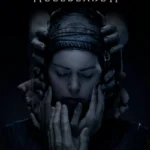
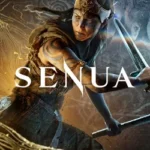
The success of Hellblade permanently transformed Ninja Theory’s trajectory, leading directly to the studio’s acquisition by Microsoft in 2018. This foundational milestone paved the continuous evolutionary highway for the hyper-realistic 2024 sequel Senua’s Saga: Hellblade II, and the subsequent, highly anticipated action-adventure redirection revealed for the franchise in 2026 under the singular title Senua.