Phantom Blade Zero
 PC
PC PS5
PS5Where to buy



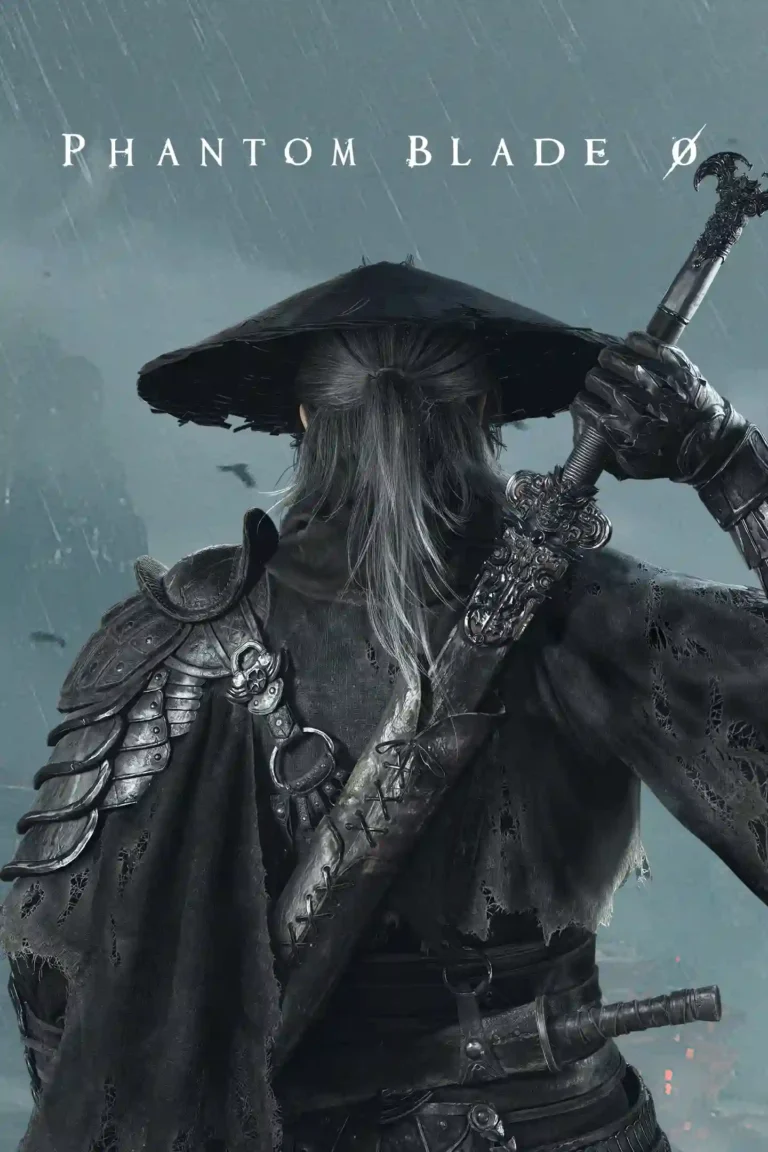
Phantom Blade Zero is an upcoming action role-playing game developed and published by S-GAME, a Chinese studio founded by Soulframe (Liang Qiwei). It was first revealed at the PlayStation Showcase in May 2023 and is scheduled for release on October 29, 2026, for PlayStation 5 and PC via Steam and Epic Games Store — a 50-day delay from its previous September 9 date, announced June 2, 2026 at Sony’s State of Play. A timed console exclusive for PS5, it is one of the most anticipated action games of the year and arguably the most significant AAA release to emerge from Chinese game development.
Its self-coined aesthetic descriptor is “KungfuPunk”: Chinese Wuxia martial arts, 70s–90s Hong Kong cinema, Japanese action manga, and the mechanical intensity of Sekiro and Ninja Gaiden — synthesised through Unreal Engine 5.
Technical Specifications
| Attribute | Details |
|---|---|
| Developer | S-GAME |
| Publisher | S-GAME |
| CEO / Creator | Soulframe (Liang Qiwei) |
| Engine | Unreal Engine 5 |
| Platform(s) | PlayStation 5 (timed console exclusive) · PC (Steam, Epic Games Store) |
| Original Date | September 9, 2026 |
| Current Date | October 29, 2026 |
| Genre | Action RPG |
| Mode | Single-player |
S-GAME and the Phantom Blade Legacy
S-GAME is not a newcomer to the Phantom Blade name. The studio’s origins lie in mobile games — the original Phantom Blade series was a mobile action franchise with an established following in China. Phantom Blade Zero represents a decade-long ambition to bring the property’s visual identity and combat philosophy into a fully realised AAA console and PC format.
The concept for the game began in 2017, was paused in 2018, and was revived in 2021 with Tencent backing. Full development on Unreal Engine 5 began in 2022. The PlayStation Showcase reveal in May 2023 — with a trailer that showed combat fluidity and a visual style unlike anything previously associated with Chinese studios in the AAA space — generated a response that established the game’s standing as a major anticipated title well before any release window was confirmed.
Soulframe has been unusually transparent throughout development, communicating directly with the player community on X and in press interviews about the game’s influences, design philosophy, and constraints.
The Phantom World: Setting
The game is set in the Phantom World — a wuxia fantasy universe combining elements of traditional Chinese mythology, steampunk engineering, and supernatural occult forces into a setting that is neither strictly historical nor standard fantasy. Architecturally and culturally, the world draws on dynastic Chinese aesthetics filtered through the visual grammar of wuxia cinema and manga: dramatic mountain landscapes, layered city districts built vertically, martial orders and secret societies operating in parallel to formal governance, and the presence of supernatural forces that interact with the physical world through combat and ritual.
This setting deliberately diverges from the European medieval framework that dominates the action RPG genre. The visual language — silhouettes of fighters in motion, ink-wash landscape backgrounds rendered in UE5, weapon designs that blend period Chinese blades with anachronistic mechanical elements — establishes an identity the studio has described as specifically Wuxia rather than a generic “eastern” aesthetic.
Soul and the 66-Day Timer
The player character is Soul, an elite assassin in service of a secretive organisation called The Order. In a fateful confrontation, Soul’s master is killed and Soul’s own heart is devastatingly wounded — leaving him with 66 days to live before the injury kills him. This countdown is the game’s central tension: Soul must move through the Phantom World, uncover the conspiracies surrounding his master’s death, and survive long enough to find what he needs.
The 66-day timer provides narrative urgency structurally comparable to Fallout 1‘s water chip deadline or The Legend of Zelda: Majora’s Mask‘s three-day loop. The specifics of how the timer functions mechanically have not been fully detailed, but the premise has been confirmed as driving both the main quest structure and the game’s eight different endings, determined by the choices Soul makes within those 66 days.
Combat: KungfuPunk in Action
The term “KungfuPunk” was coined by Soulframe to describe the game’s aesthetic and mechanical DNA, and the influences are explicit:
Chinese Wuxia martial arts provide the combat’s underlying movement grammar — the exaggerated acrobatics, the weapon technique systems, the sense of fighting styles as expressions of philosophical traditions as much as physical techniques.
Japanese action manga — specifically Vagabond, Berserk, and Claymore — provide the visual weight and body dynamics of combat: the sense of impacts having physical consequence, the contrast between stillness and explosive movement, the aesthetic of the blade.
Mechanical influences: Sekiro: Shadows Die Twice, Nioh, and Ninja Gaiden are cited as the gameplay reference points — fast, high-skill-ceiling action with deliberate weapon mechanics and responsive enemy design. IGN’s preview described the game as “a delightfully punishing action RPG,” placing it firmly in the community associated with r/CharacterActionGames.
Over 30 weapons are available, each with distinct movesets and techniques. Weapons are acquired from defeated bosses — each major encounter rewards the player with new combat options. The game’s combat has been structured so that build variety is real: players can develop meaningfully different fighting styles depending on which weapons they prioritise.
Boss Design and the Second-Phase Checkpoint
A confirmed mechanical detail distinguishes Phantom Blade Zero‘s boss encounters: 2-phase bosses include a checkpoint between phases. Dying in the second phase does not reset the player to the beginning of the full fight — the second phase can be re-entered from its start. This addresses one of the most consistent complaints about high-difficulty action games while preserving the challenge ceiling.
The game also includes a Boss Rush mode with hidden bosses exclusive to that mode — encounters not available in the main campaign, designed for players testing their mastered techniques against content calibrated for that expertise level.
The Narrative Sandbox
Multiple confirmed details establish that side quests alter the main story’s narrative. Pursuing specific side questlines changes what happens in the main storyline, what information Soul discovers, and which of the eight endings becomes accessible. The game operates on a principle that optional content has consequence.
The main story runs 20–30 hours according to the developer. Total playtime including side content and narrative branches would substantially exceed this.
The Delay
On June 2, 2026 — eighteen days before this writing — Sony’s State of Play featured a new trailer alongside pre-order confirmation. Soulframe subsequently posted on X:
“Phantom Blade Zero will now launch on October 29, 2026, moved from its previous date of September 9, 2026. This was not an easy decision. More than anyone, we understand the expectations our players have placed on us. And precisely because of those expectations, we do not want to release Phantom Blade Zero knowing there is still an opportunity to take it one step further.”
The reason is visual polish: character models and environmental assets are being upgraded across the game. “We have upgraded a number of character models and reworked many environments across the game, pushing them toward the highest standard we can currently achieve,” Soulframe explained, adding the studio also wanted to preserve visual quality for players who do not use ray tracing.
The 50-day delay also removes the game from the same release window as The Blood of Dawnwalker (September 3), Insomniac’s Wolverine, and Control 2, all arriving in adjacent weeks. October 29 gives it less direct competition, though it now sits approximately one month before GTA VI’s expected November launch window.
What Comes Before Launch
S-GAME confirmed two additional events before October 29:
A new trailer with entirely new gameplay footage, releasing this summer alongside the opening of pre-orders.
A dedicated Phantom Blade Zero State of Play, 15–20 minutes in length, focused on the game’s world, combat, exploration, and character progression. “The vast majority of what we show there will be brand-new,” said Soulframe. Both dates are unannounced as of June 20, 2026.
Trailer
View on Videos