Onimusha: Way of the Sword
 Nintendo Switch 2,
  PC,
PC,  PS5,
PS5,  Xbox Series X/S
 Capcom
Where to buy




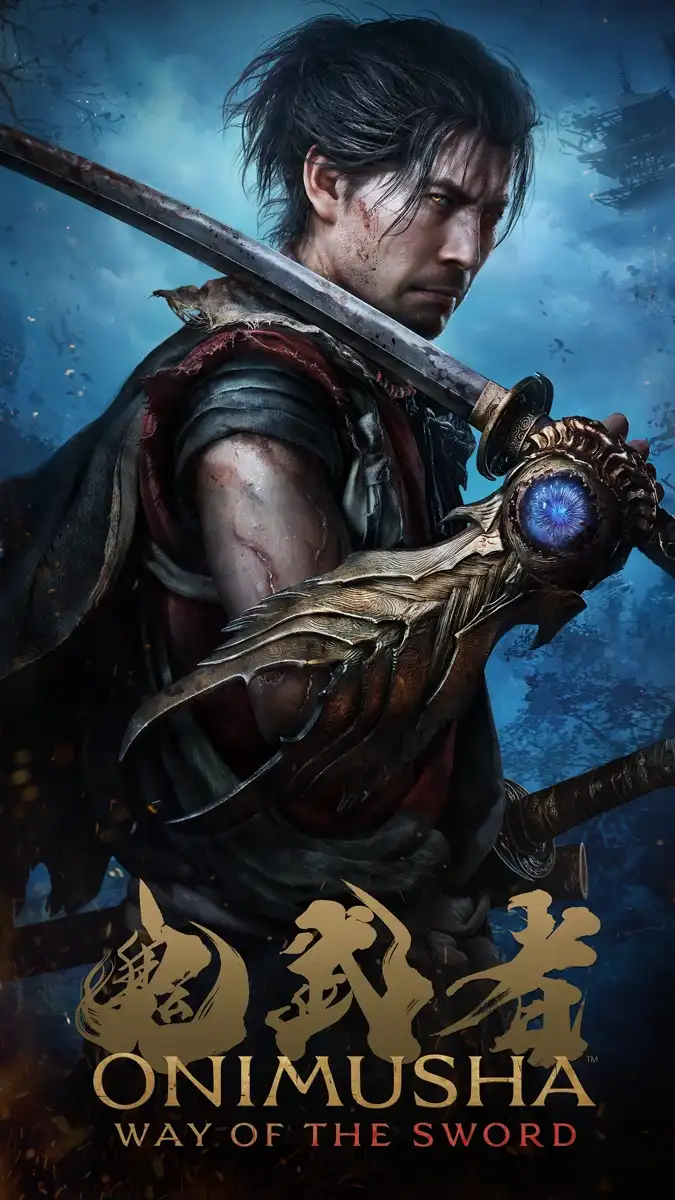
Onimusha: Way of the Sword is an upcoming action-adventure game developed and published by Capcom. It is scheduled for release on September 4, 2026, for PlayStation 5, Xbox Series X/S, and PC via Steam, with a Nintendo Switch 2 version confirmed. It is the first mainline entry in the Onimusha series since Onimusha: Dawn of Dreams (2006) — twenty years between games — and the first to run on Capcom’s RE Engine.
Its protagonist is Miyamoto Musashi, the legendary Japanese swordsman, rendered using the likeness of the late actor Toshiro Mifune — a negotiation that took two years with Mifune Productions. It is not a Soulslike. Director Satoru Nihei has stated this explicitly.
Technical Specifications
| Attribute | Details |
|---|---|
| Developer | Capcom |
| Publisher | Capcom |
| Director | Satoru Nihei |
| Producer | Akihito Kadowaki |
| Engine | RE Engine |
| Platform(s) | PlayStation 5 · Xbox Series X/S · PC (Steam) · Nintendo Switch 2 |
| Release Date | September 4, 2026 |
| Genre | Action-adventure, Swordplay action |
| Mode | Single-player |
Twenty Years Between Games
The original Onimusha series ran from 2001 to 2006: four mainline PS2 games, a collective 9 million copies sold, and a distinctive identity as a swordplay action franchise set in a dark fantasy version of feudal Japan. Onimusha 3: Demon Siege (2004) cast the French actor Jean Reno alongside the series’ samurai protagonist — a bizarre decision that somehow worked. Dawn of Dreams (2006) concluded the original run and the franchise went dormant.
It stayed dormant for two decades. According to producer Akihito Kadowaki, members of Capcom had continuously wanted to continue the series but could not assemble the right team or resources to do it justice. In early 2020, two things changed: the RE Engine — Capcom’s proprietary technology, best known as the engine behind Resident Evil Village, Devil May Cry 5, and Monster Hunter Wilds — received a massive expansion of its capabilities; and Capcom formally greenlit a new Onimusha title. Six years of development followed. Capcom acknowledged this revival explicitly in an April 2026 tweet: “We’re not done with 2026 yet,” posted alongside the Way of the Sword logo, after their three other major 2026 releases had shipped.
Miyamoto Musashi and Toshiro Mifune
The protagonist of Way of the Sword is Miyamoto Musashi — one of the most significant figures in Japanese history, a legendary swordsman, artist, and philosopher who lived from approximately 1584 to 1645. The historical Musashi is credited with developing the two-sword fighting style (nitōjutsu), authored The Book of Five Rings (a text on strategy still read today), and won over 60 duels before retiring to write and paint.
Capcom renders their Musashi using the likeness of Toshiro Mifune, the Japanese actor who died in 1997 and who defined the visual grammar of the samurai film for a generation: Rashomon (1950), Seven Samurai (1954), Yojimbo (1961), and dozens of others. Capcom considered Mifune “the quintessential samurai action actor” — the person most visually associated with the archetype the game is building around. Securing the right to use his likeness from Mifune Productions (which manages his estate) took two years of negotiation.
The result is a protagonist whose face carries the weight of decades of samurai cinema before the game begins. Players who know Mifune’s work will see Yojimbo in Musashi’s posture. Players who don’t will see a face with unusual presence for a video game character. Both readings are available and both are correct.
Edo Kyoto: Dark Fantasy History
Way of the Sword departs from the original series’ Sengoku period (1467–1615) and moves into the early Edo period (1603–1868). The setting is Kyoto — Japan’s imperial capital for over a millennium and one of the most architecturally and historically significant cities in East Asia.
The game’s Kyoto is “twisted by malevolent clouds of Malice” — the supernatural corruption that is the Onimusha franchise’s signature intrusion into historical settings. Genma, the demonic entities that have appeared as antagonists throughout the series, are present in force. The city is recognisably Kyoto — its temples, gates, and street layouts are represented with historical accuracy — but overlaid with a supernatural siege that has corrupted and occupied what was once civilised space.
Capcom consulted with officials at Kiyomizu-dera, a real UNESCO World Heritage temple in Kyoto founded in 778, to ensure the historical rendering met the standard of authenticity they were targeting. The RE Engine’s visual fidelity — which can handle the lighting of Resident Evil‘s photorealistic horror and Monster Hunter‘s open landscapes — is here applied to the paper lanterns, wooden architecture, and atmospheric rain of feudal Japan.
Combat: Issen and the Way of the Sword
The game’s combat system centres on Issen — a term from classical Japanese swordsmanship describing a single decisive strike, the moment when perfect timing and technique align to end a fight. Capcom is using the term to name a combat philosophy: deliberate, observational, rewarding patience over aggression.
Director Satoru Nihei described the design intent: “We wanted to modernise the series and express the clashing of blades through the action.” Combat requires watching opponents, reading their movements, and choosing the timing of each strike. Musashi’s sword can be used to attack, to parry incoming strikes, and to deflect projectiles. A “prolonged parry” allows Musashi to steer an enemy — applying pressure to guide their fall in a specific direction, which creates openings for follow-up strikes.
The hands-on previews and the Gamescom 2025 playable demo generated responses that cluster around two consistent impressions: the combat feels weighty and consequential (each exchange feeling like a genuine contest rather than a numbers game), and the one-against-many scenarios test resourcefulness under pressure without the health-depletion frustration of pure attrition mechanics.
The director’s insistence that the game is not a Soulslike — stated as a deliberate design position, not a defensive one — connects to the broader intent to make Onimusha accessible to players who want cinematic swordplay without the genre conventions of extreme difficulty and opaque progression. The game is expected to be approximately 20 hours long, with a largely linear structure, open areas, and side quests.
The Oni Gauntlet and Key Characters
Musashi carries the Oni Gauntlet, a mystical artefact that grants its bearer the power to slay Genma demons. The gauntlet is inhabited by an entity called the Oni Lady — a supernatural presence who communicates with Musashi from within the gauntlet and occasionally appears before him. This maintains the franchise’s tradition of the Oni power as a supernatural compact rather than simply a weapon.
Sasaki Ganryu (historically known as Sasaki Kojiro, Musashi’s legendary rival and the man he famously defeated at the duel on Ganryūjima in 1612) is confirmed as a major antagonist — the game’s human villain around whom much of the conflict centres, in counterpoint to the supernatural Genma threat.
Ono no Takamura is a veteran swordsman. Izumo no Okuni — modelled on the historical figure credited with creating kabuki theatre — is a young dancer who has taken up arms against the Genma.
Standalone Story
The narrative of Way of the Sword has no connection to the previous Onimusha games or the Netflix Onimusha animated series (2023). Capcom specifically designed this as an entry point — a game a player who has never heard of Onimusha can begin with, understand, and complete. The Genma remain the enemy type (franchise consistency), but the protagonist, the period, the location, and the entire cast are new.
Pre-Release Context
Onimusha: Way of the Sword was announced at The Game Awards in December 2024 and has been shown at Sony’s State of Play (February 2025), Summer Game Fest (June 2025), and Gamescom (August 2025, where a playable demo was available at the Microsoft booth). Multiple press hands-on sessions have taken place; Eurogamer’s preview called it “one of those rare game previews that made me think ‘ok yeah I’m going to platinum this one'” — one of the more enthusiastic pre-release characterisations in the 2026 release calendar.
It releases September 25, 2026 — three months from today, directly adjacent to a crowded autumn window that includes The Blood of Dawnwalker (September 3) and Phantom Blade Zero (October 29). The Grand Theft Auto VI shadow over the November window means September has become the primary target for major releases seeking space before the year’s largest commercial event. Onimusha sits at the far end of September, giving it the maximum possible distance from Blood of Dawnwalker‘s September 3 arrival while remaining before GTA VI territory.
Pre-orders include an Ancestral Samurai Set cosmetic pack. No Metacritic score is available; critic reviews are embargoed until closer to release.